
Yoruba Thorn Wood Figures, Nigeria
Collection Overview
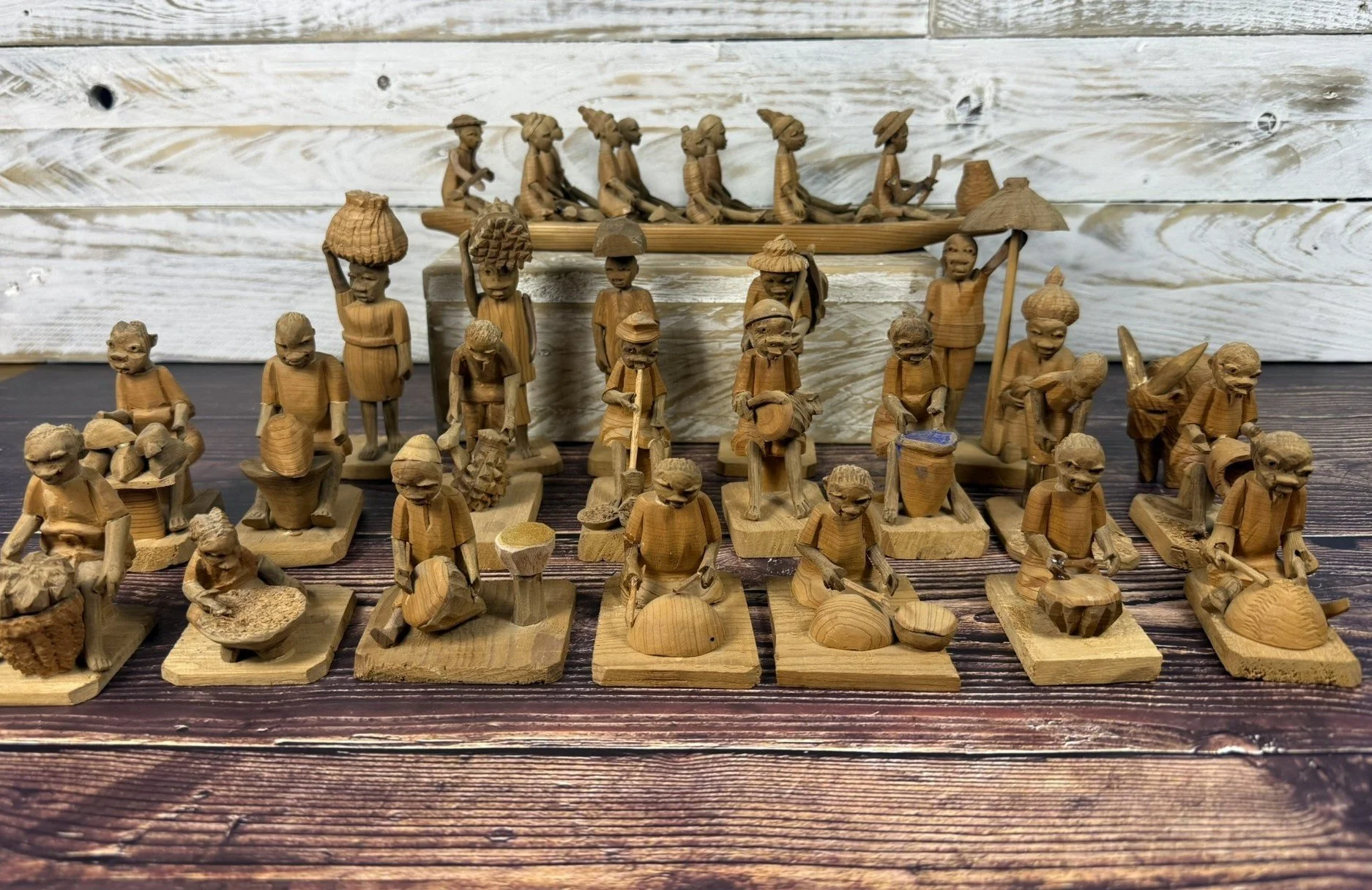
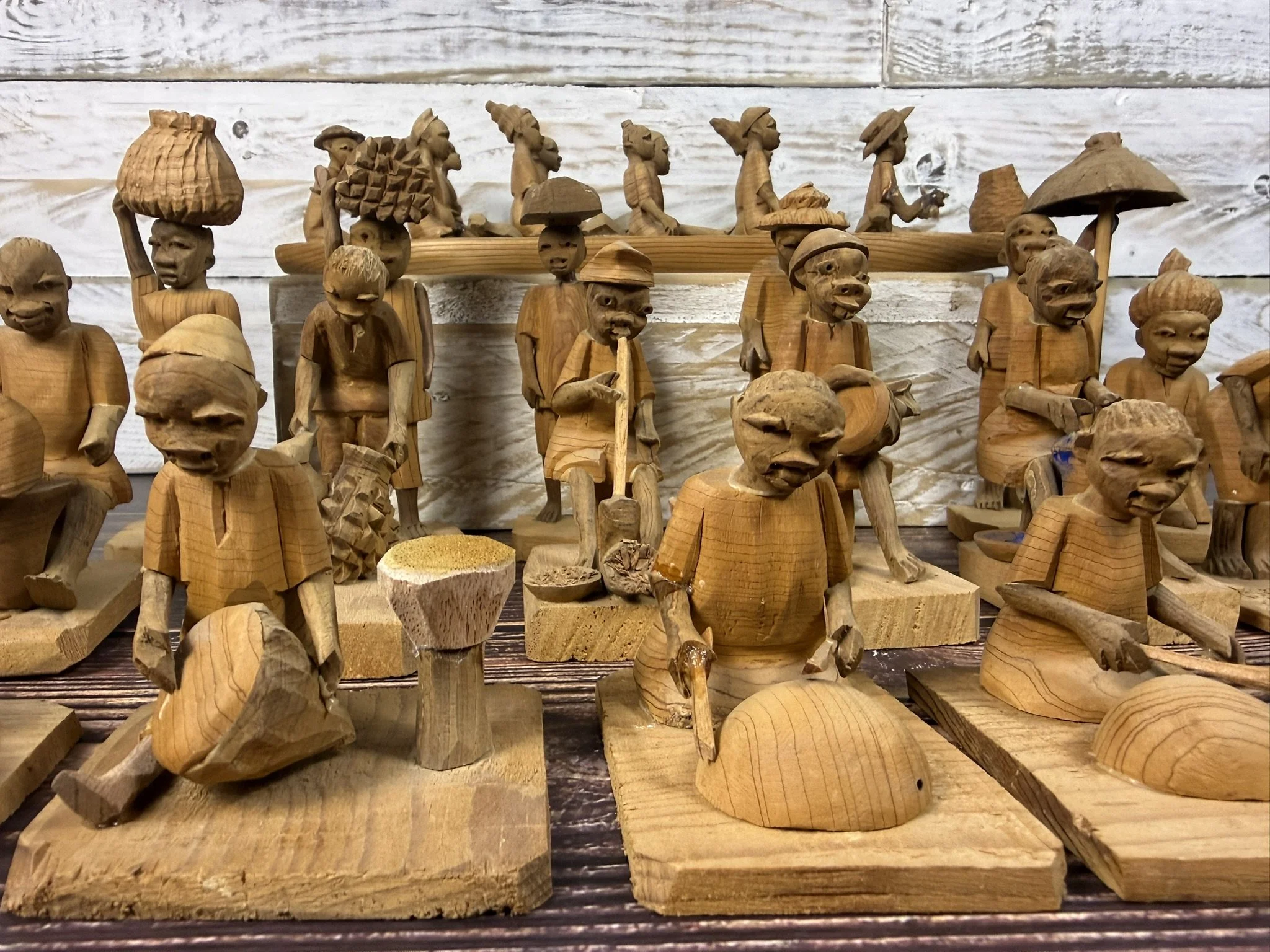
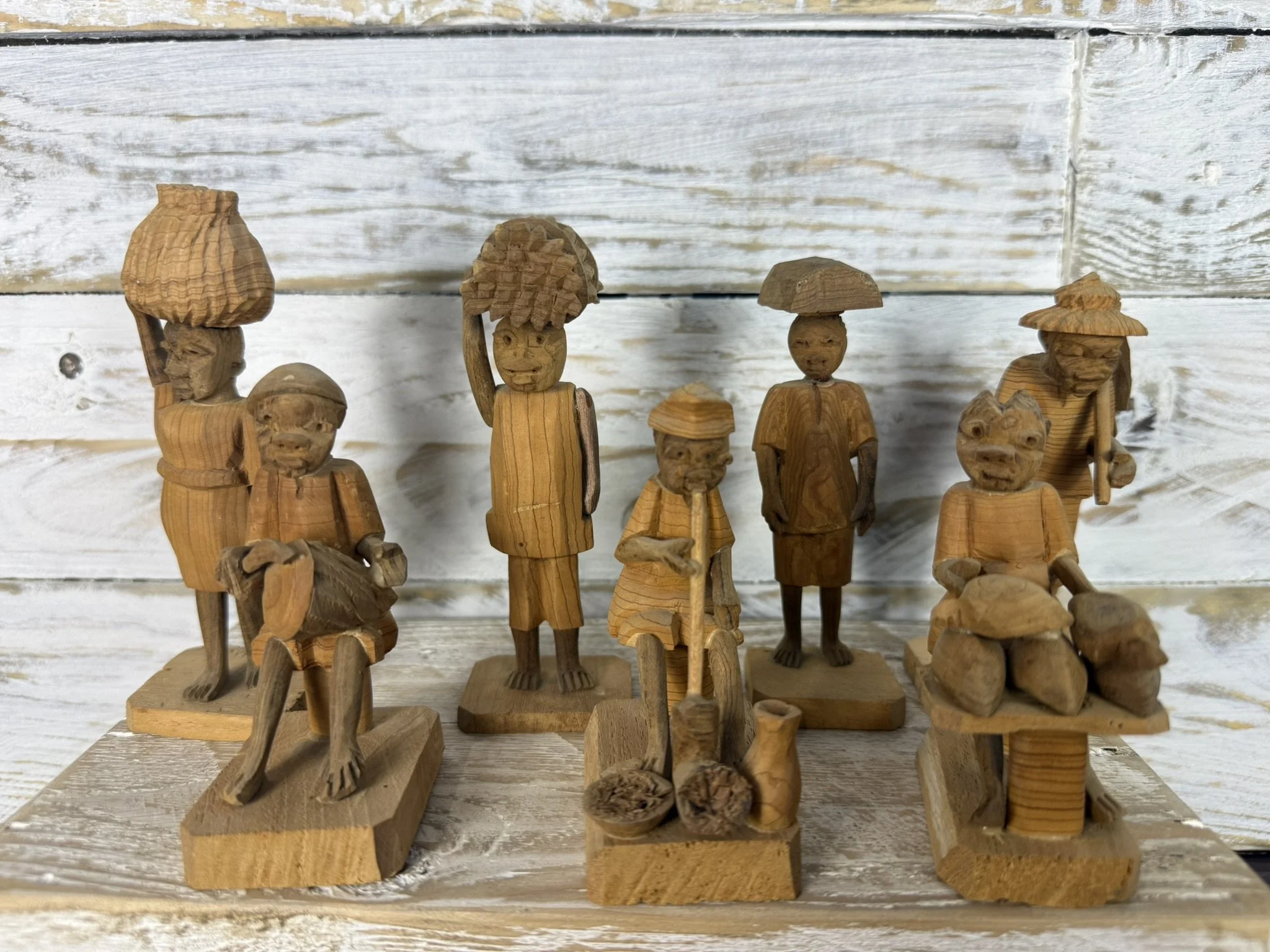
This collection of carved thorn wood figures originates from the Yoruba cultural region of southwestern Nigeria and dates most likely to the mid-to-late 20th century, circa the 1970s. The figures depict scenes of everyday life, work, travel, music, carrying goods, domestic tasks, rendered with a directness and economy of form that is characteristic of Yoruba tourist and export carvings of the period.
Carved from thorn wood, a dense but fragile material, these figures were produced individually by hand. Each carries subtle variations in posture, expression, and proportion, giving the group a strong sense of rhythm and narrative when displayed together.
Collected as a single group, they offer a snapshot of social life and labour, distilled into small, tactile sculptural forms.
Material & Craft
Thorn wood was widely used by Yoruba carvers in the mid-20th century due to its availability and fine grain, but it is also prone to cracking and surface wear over time. These qualities make surviving examples especially characterful, bearing the marks of age, handling, and use.
The figures are carved in the round, often with simplified facial features and exaggerated gestures that prioritise movement and storytelling over realism.
Condition & Restoration
Due to their age and the inherently delicate nature of thorn wood, some figures showed signs of wear or minor damage when acquired. Where necessary, careful, sympathetic restoration has been carried out to stabilise the wood and ensure the figures remain structurally sound.
Any restoration has been kept minimal and respectful, intended to preserve the integrity of the carving rather than to disguise age or over-refinish the surface. Signs of handling, wear, and small imperfections remain visible and are considered part of each figure’s history.
Figures are offered in small curated groups. Each grouping has been assembled to reflect shared themes such as work, music, travel, or domestic life, allowing the figures to be appreciated both as standalone objects and as part of a broader narrative.
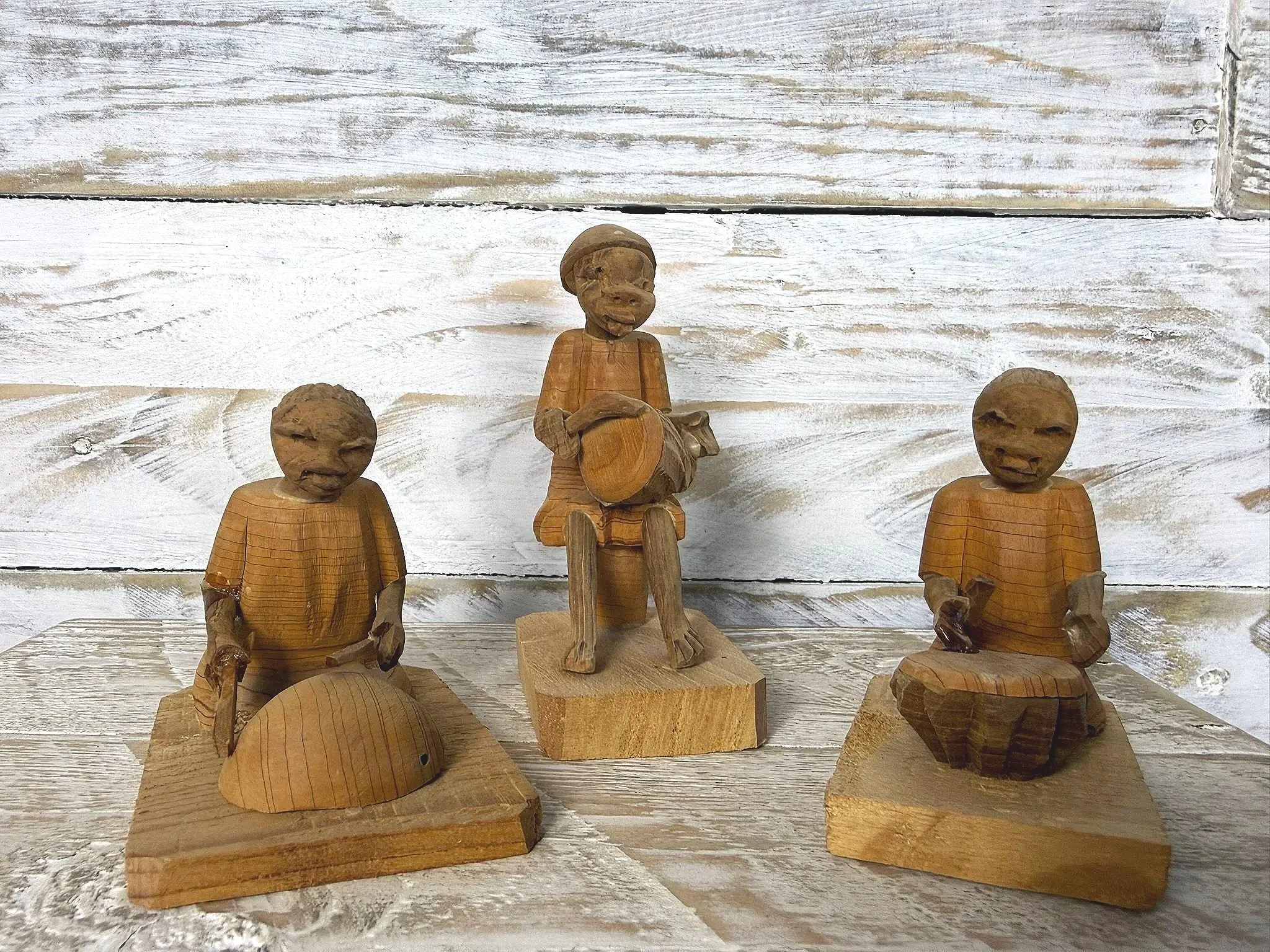
These carved thorn wood figures originates from the Yoruba cultural region of Nigeria and date from the mid-to-late 20th century. The figure depicts a moment of everyday life, rendered with a simplified but expressive form that emphasises posture and movement.
The surface shows natural wear consistent with age and material, with a warm, matte patina developed through handling. Minor restoration has been undertaken where required to stabilise the carving, without obscuring signs of age.
Each figure is hand-carved and unique, making small variations and imperfections an essential part of its character.
These figures celebrate music as a central element of Yoruba cultural life. Simplified forms and exaggerated stances suggest movement and sound, allowing the viewer to imagine rhythm and performance beyond the static object. Displayed together, they create a strong sense of energy and communal gathering.
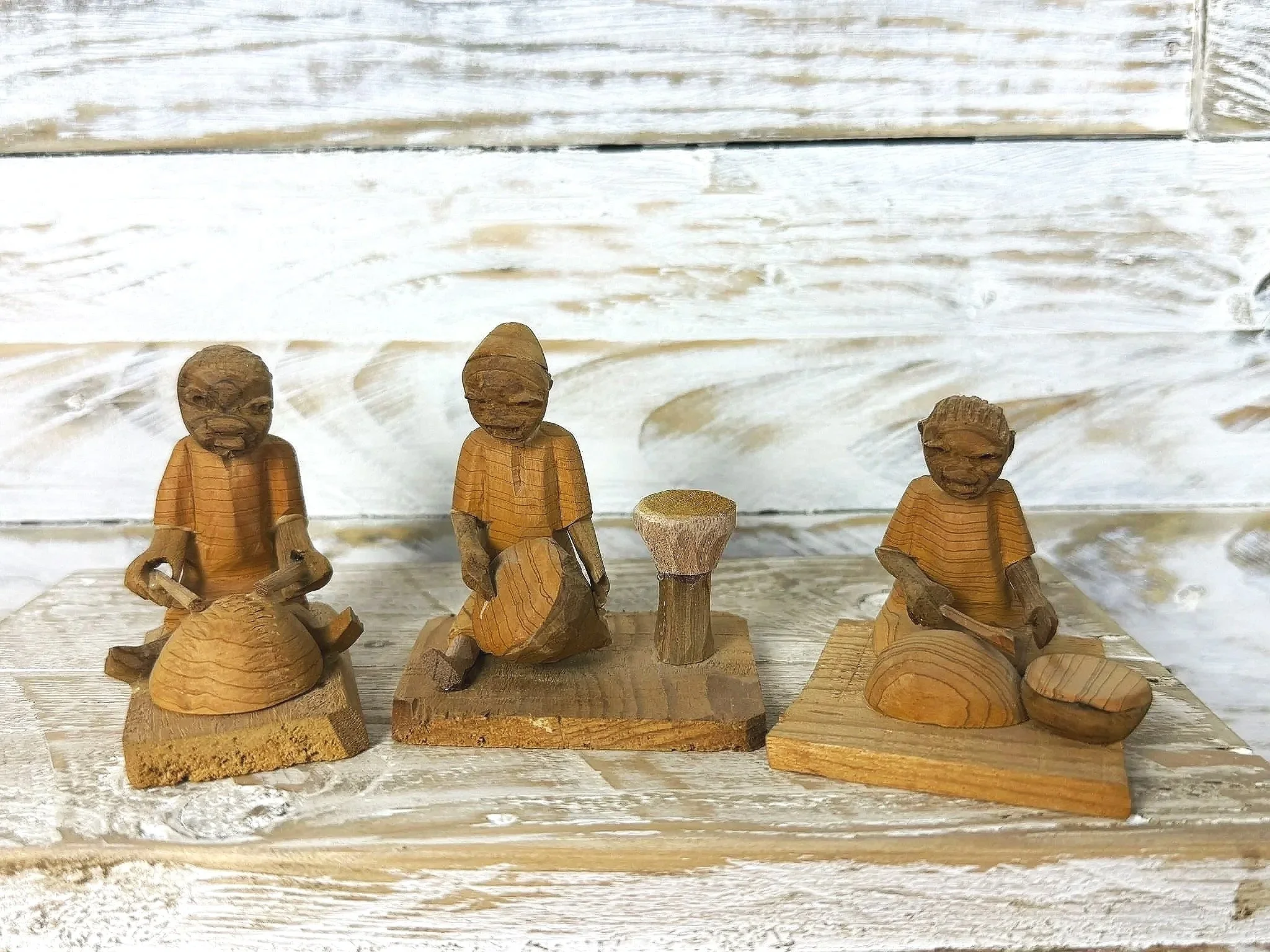
These carved thorn wood figures originates from the Yoruba cultural region of Nigeria and date from the mid-to-late 20th century. The figure depicts a moment of everyday life, rendered with a simplified but expressive form that emphasises posture and movement.
The surface shows natural wear consistent with age and material, with a warm, matte patina developed through handling. Minor restoration has been undertaken where required to stabilise the carving, without obscuring signs of age.
Each figure is hand-carved and unique, making small variations and imperfections an essential part of its character.
These figures celebrate music as a central element of Yoruba cultural life. Simplified forms and exaggerated stances suggest movement and sound, allowing the viewer to imagine rhythm and performance beyond the static object. Displayed together, they create a strong sense of energy and communal gathering.
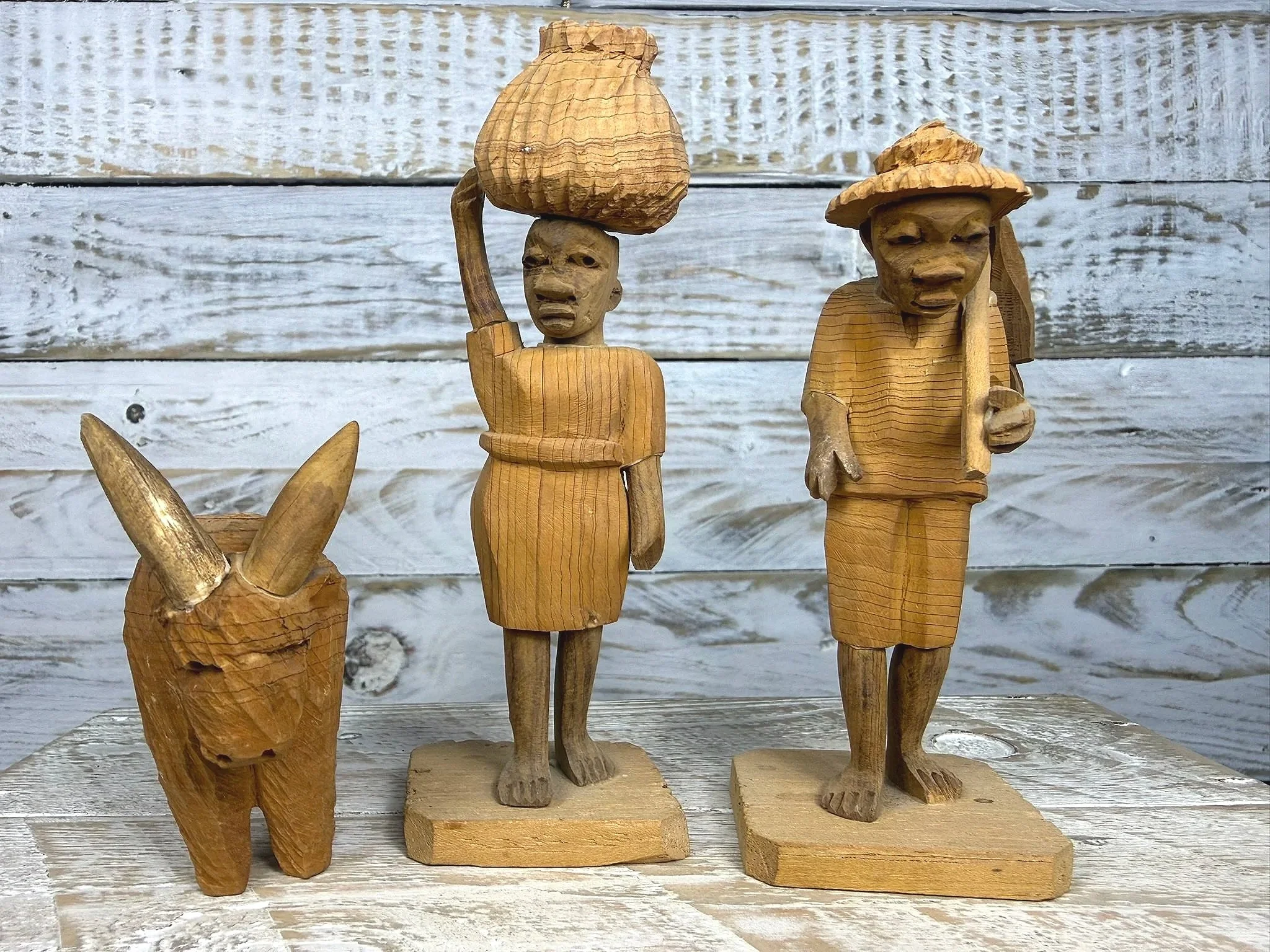
These carved thorn wood figures originates from the Yoruba cultural region of Nigeria and date from the mid-to-late 20th century. The figure depicts a moment of everyday life, rendered with a simplified but expressive form that emphasises posture and movement.
The surface shows natural wear consistent with age and material, with a warm, matte patina developed through handling. Minor restoration has been undertaken where required to stabilise the carving, without obscuring signs of age.
Each figure is hand-carved and unique, making small variations and imperfections an essential part of its character.
This group reflects movement through landscape and community — figures carrying goods, travelling, or engaged in exchange. The carvings emphasise balance and forward motion, echoing the physical demands of travel and trade in everyday life.
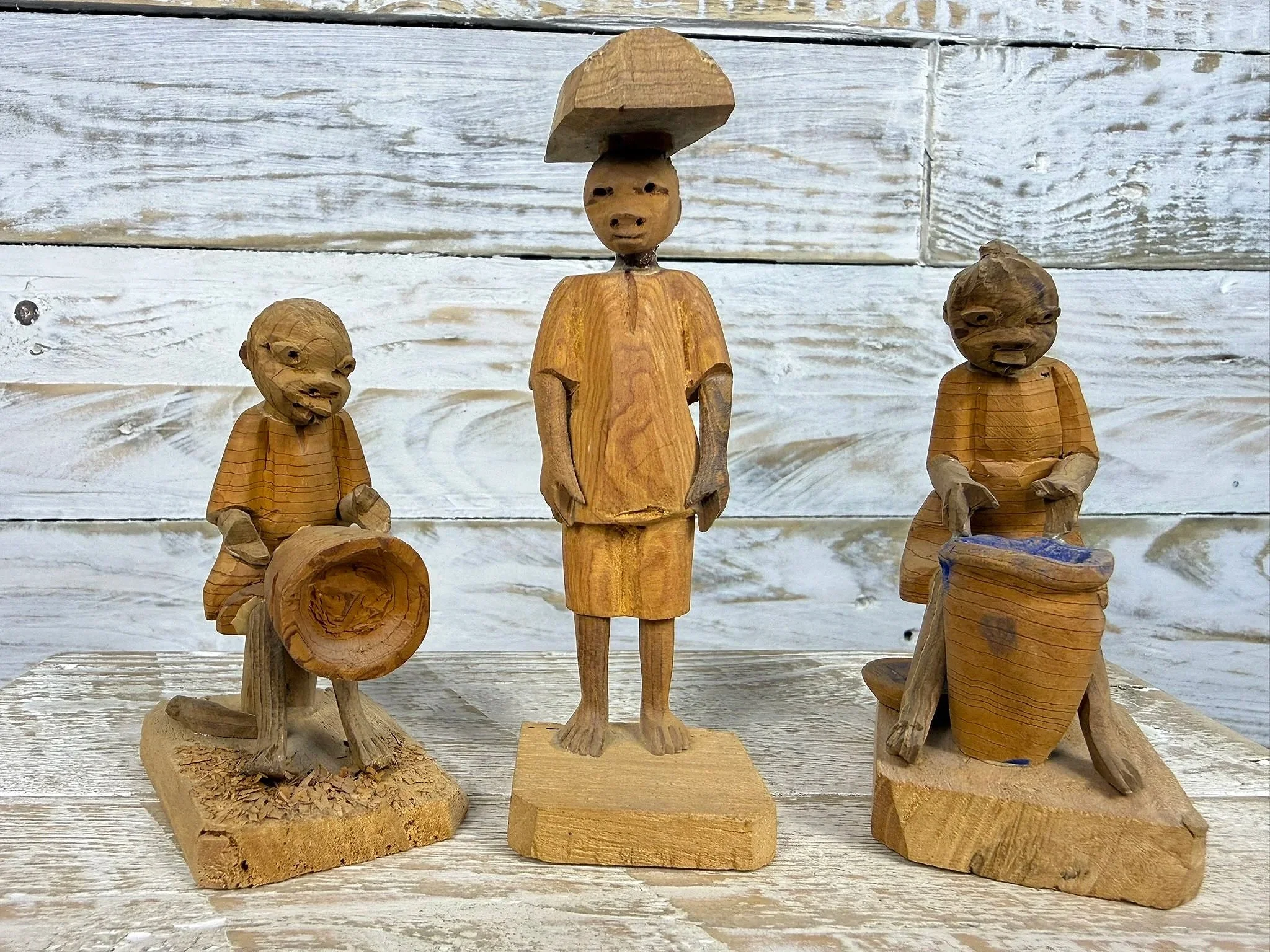
These carved thorn wood figures originates from the Yoruba cultural region of Nigeria and date from the mid-to-late 20th century. The figure depicts a moment of everyday life, rendered with a simplified but expressive form that emphasises posture and movement.
The surface shows natural wear consistent with age and material, with a warm, matte patina developed through handling. Minor restoration has been undertaken where required to stabilise the carving, without obscuring signs of age.
Each figure is hand-carved and unique, making small variations and imperfections an essential part of its character.
This group reflects movement through landscape and community — figures carrying goods, travelling, or engaged in exchange. The carvings emphasise balance and forward motion, echoing the physical demands of travel and trade in everyday life.
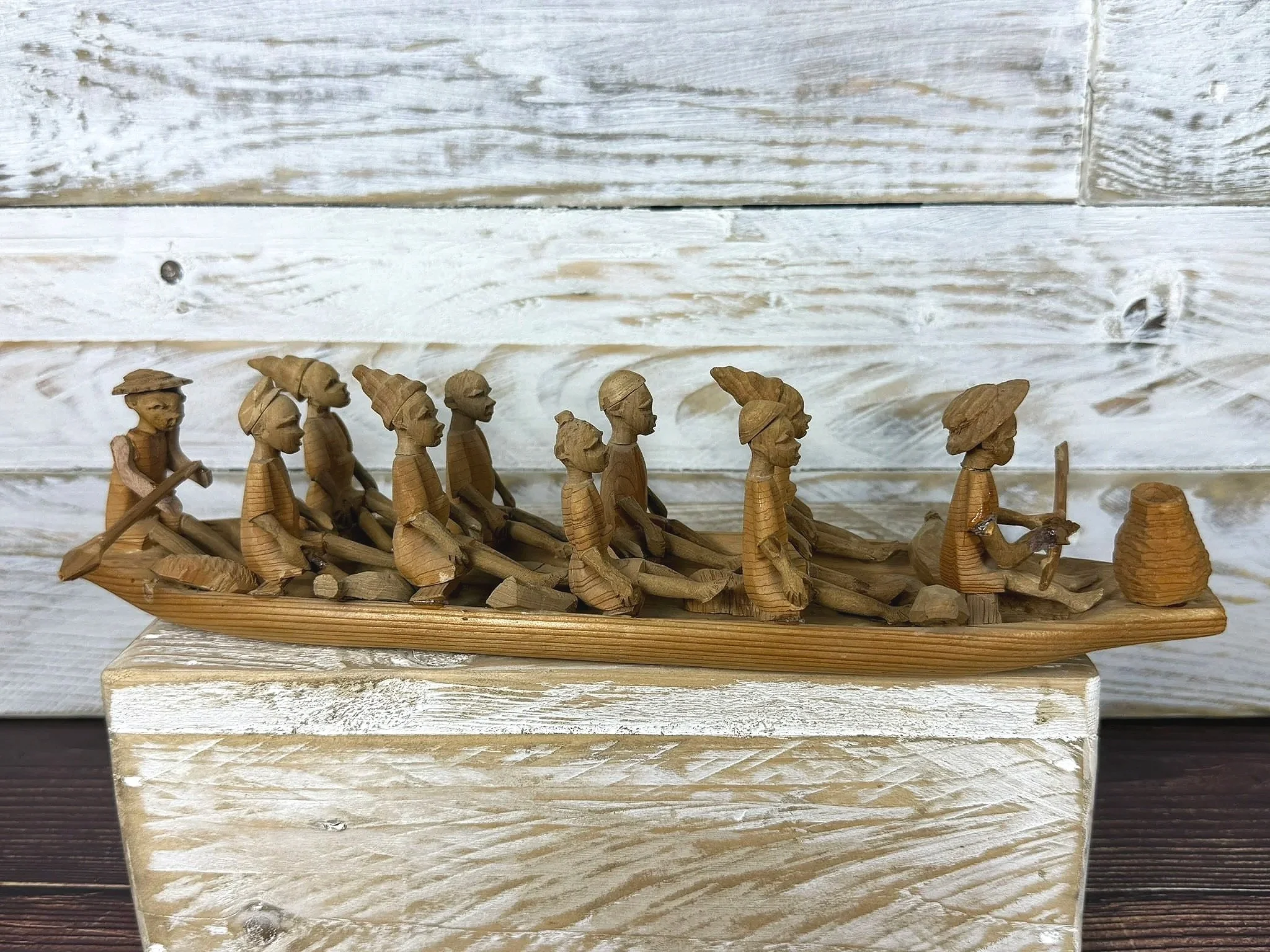
These carved thorn wood figures originates from the Yoruba cultural region of Nigeria and date from the mid-to-late 20th century. The figure depicts a moment of everyday life, rendered with a simplified but expressive form that emphasises posture and movement.
The surface shows natural wear consistent with age and material, with a warm, matte patina developed through handling. Minor restoration has been undertaken where required to stabilise the carving, without obscuring signs of age.
Each figure is hand-carved and unique, making small variations and imperfections an essential part of its character.
This group reflects movement through landscape and community — figures carrying goods, travelling, or engaged in exchange. The carvings emphasise balance and forward motion, echoing the physical demands of travel and trade in everyday life.
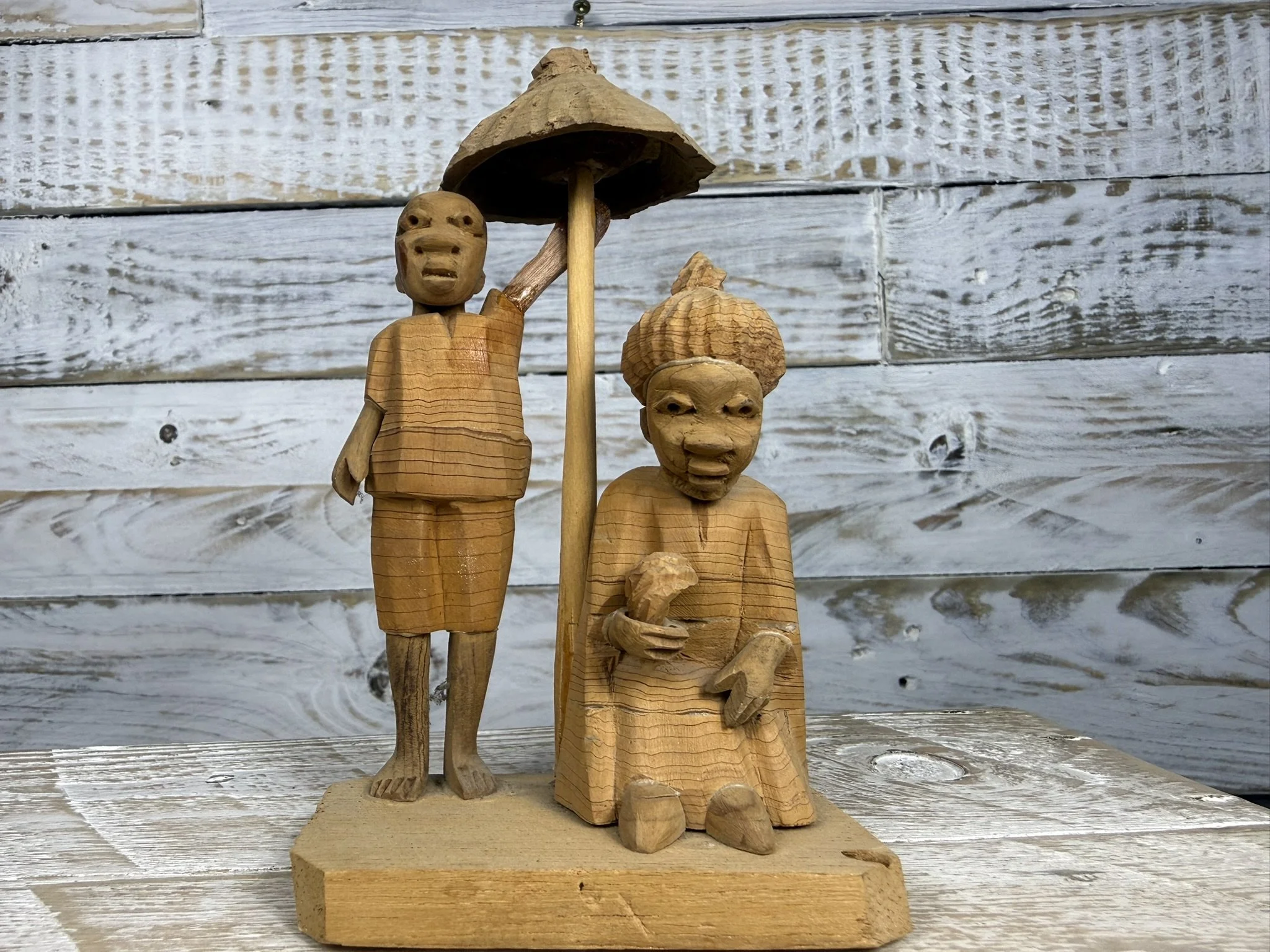
These carved thorn wood figures originates from the Yoruba cultural region of Nigeria and date from the mid-to-late 20th century. The figure depicts a moment of everyday life, rendered with a simplified but expressive form that emphasises posture and movement.
The surface shows natural wear consistent with age and material, with a warm, matte patina developed through handling. Minor restoration has been undertaken where required to stabilise the carving, without obscuring signs of age.
Each figure is hand-carved and unique, making small variations and imperfections an essential part of its character.
This carved thorn wood group shows a seated woman accompanied by a standing figure holding a parasol, a motif commonly associated with travel, trade, or social standing in Yoruba carving traditions. The parasol suggests protection from the sun and may indicate importance, respect, or seniority, while the seated figure’s calm posture conveys authority and presence. Whether interpreted as a woman of importance with an attendant, or a household scene, the figures evoke everyday movement and social relationships within mid-20th century Nigerian life.
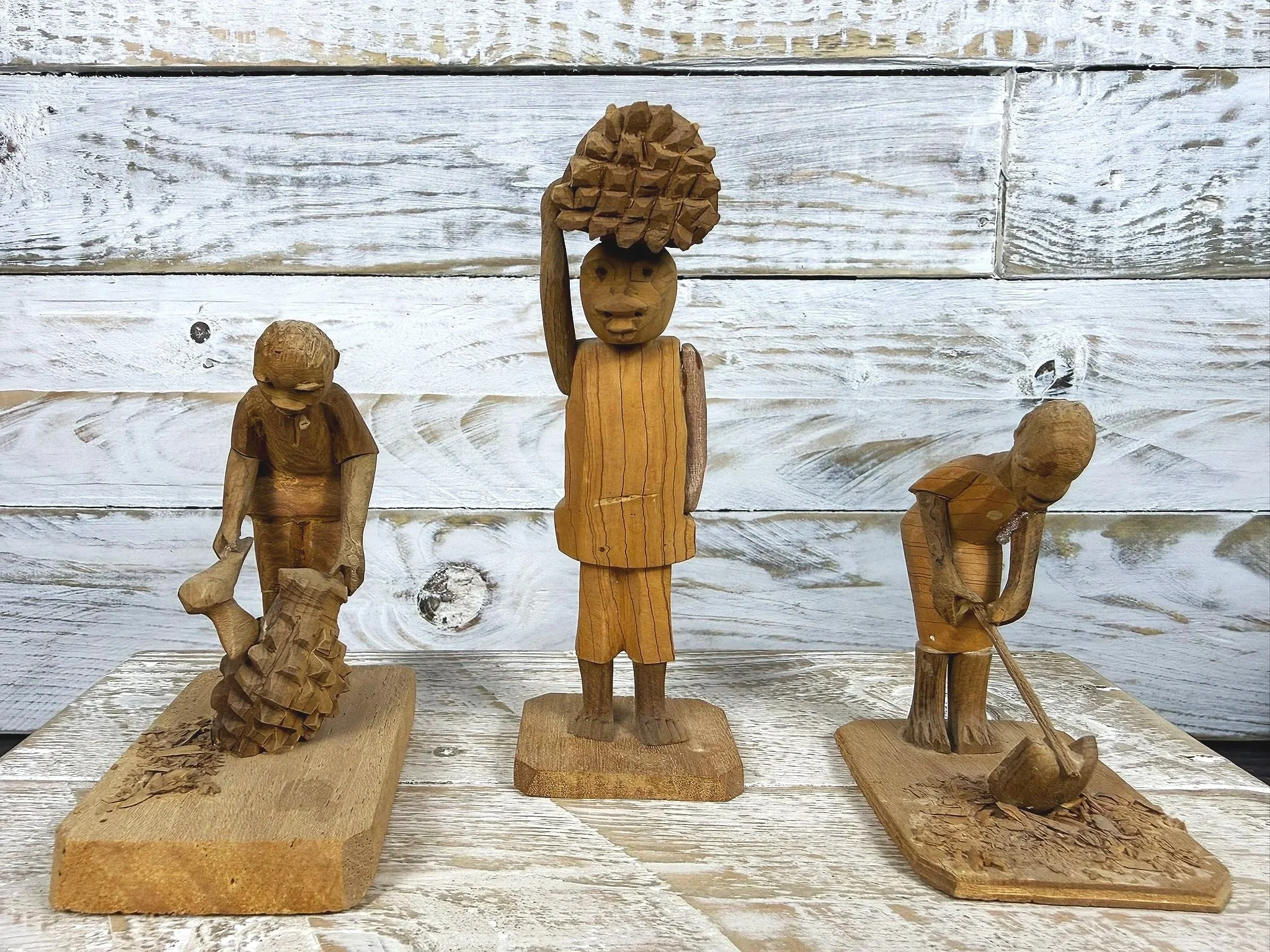
These carved thorn wood figures originates from the Yoruba cultural region of Nigeria and date from the mid-to-late 20th century. The figure depicts a moment of everyday life, rendered with a simplified but expressive form that emphasises posture and movement.
The surface shows natural wear consistent with age and material, with a warm, matte patina developed through handling. Minor restoration has been undertaken where required to stabilise the carving, without obscuring signs of age.
Each figure is hand-carved and unique, making small variations and imperfections an essential part of its character.
This group focuses on scenes of labour and craft, depicting the everyday tasks that underpin domestic and community life. Carved with an emphasis on gesture and posture, these figures convey effort, rhythm, and repetition rather than fine detail. Together they form a quiet record of work as a shared, lived experience.
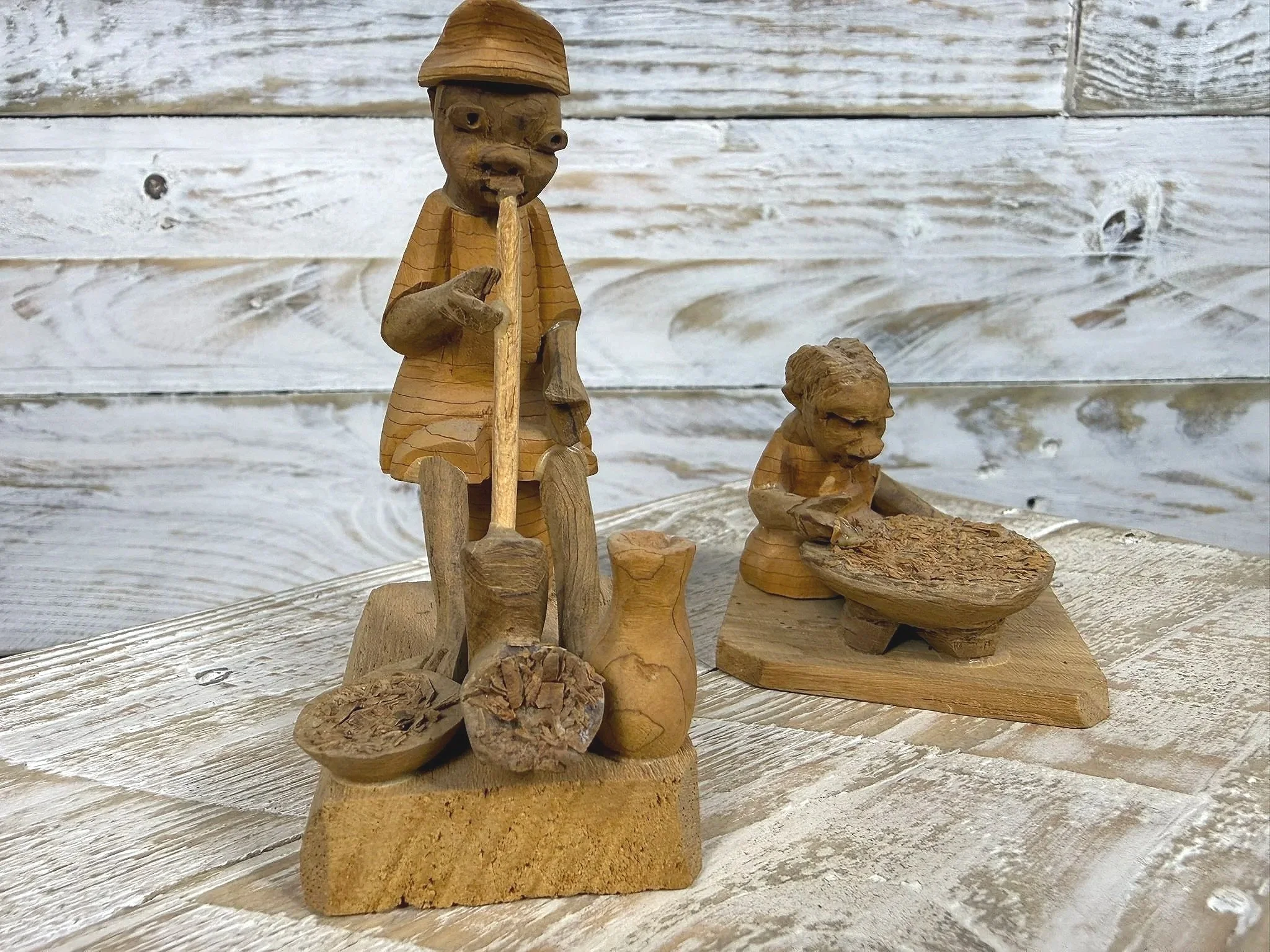
These carved thorn wood figures originates from the Yoruba cultural region of Nigeria and date from the mid-to-late 20th century. The figure depicts a moment of everyday life, rendered with a simplified but expressive form that emphasises posture and movement.
The surface shows natural wear consistent with age and material, with a warm, matte patina developed through handling. Minor restoration has been undertaken where required to stabilise the carving, without obscuring signs of age.
Each figure is hand-carved and unique, making small variations and imperfections an essential part of its character.
Focusing on quieter, inward-facing moments, this husband and wife group depicts domestic tasks and daily routines. The carvings are understated and intimate, offering a counterpoint to the more dynamic figures of labour and travel.