
 Image 1 of 7
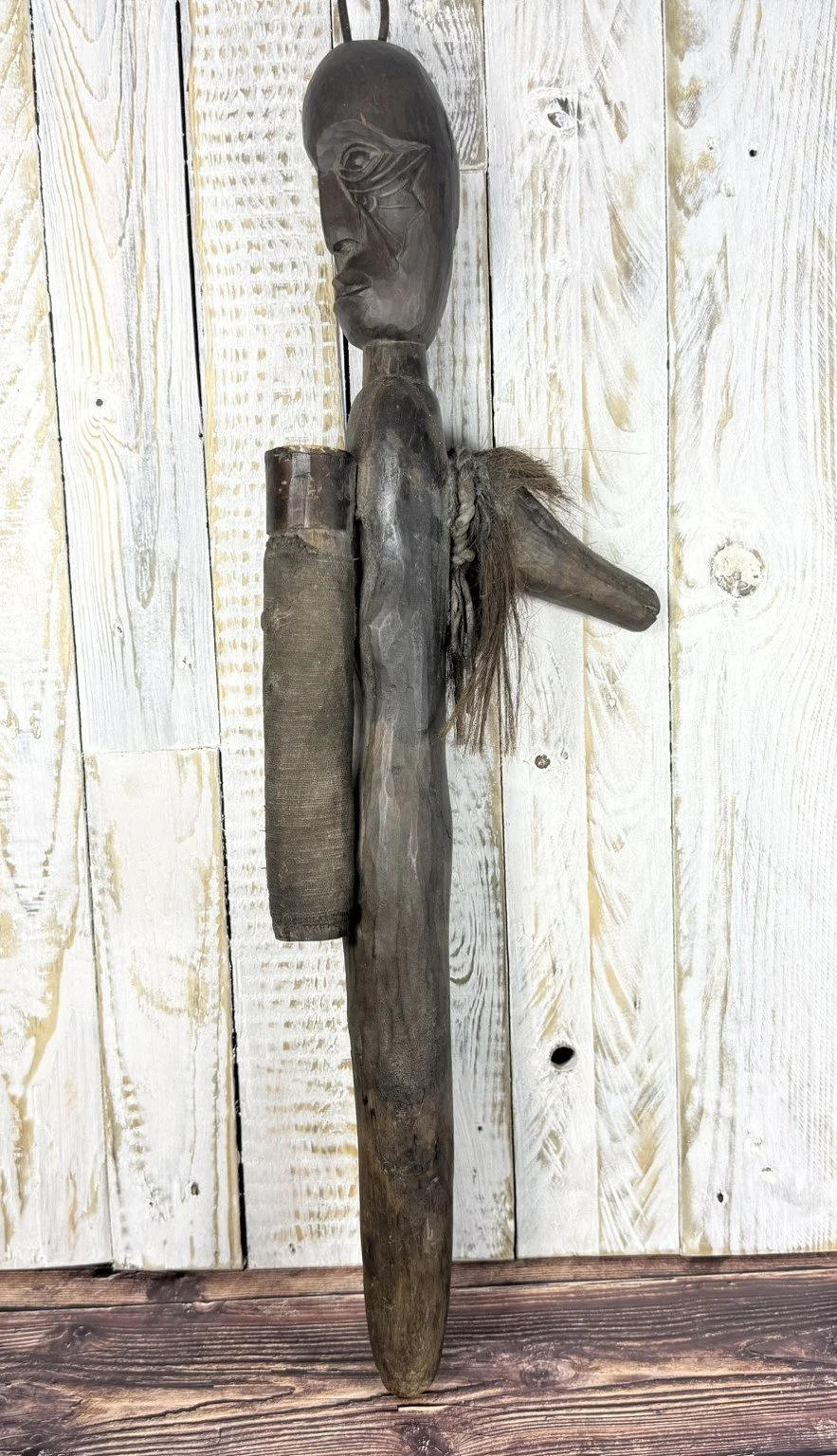 Image 2 of 7
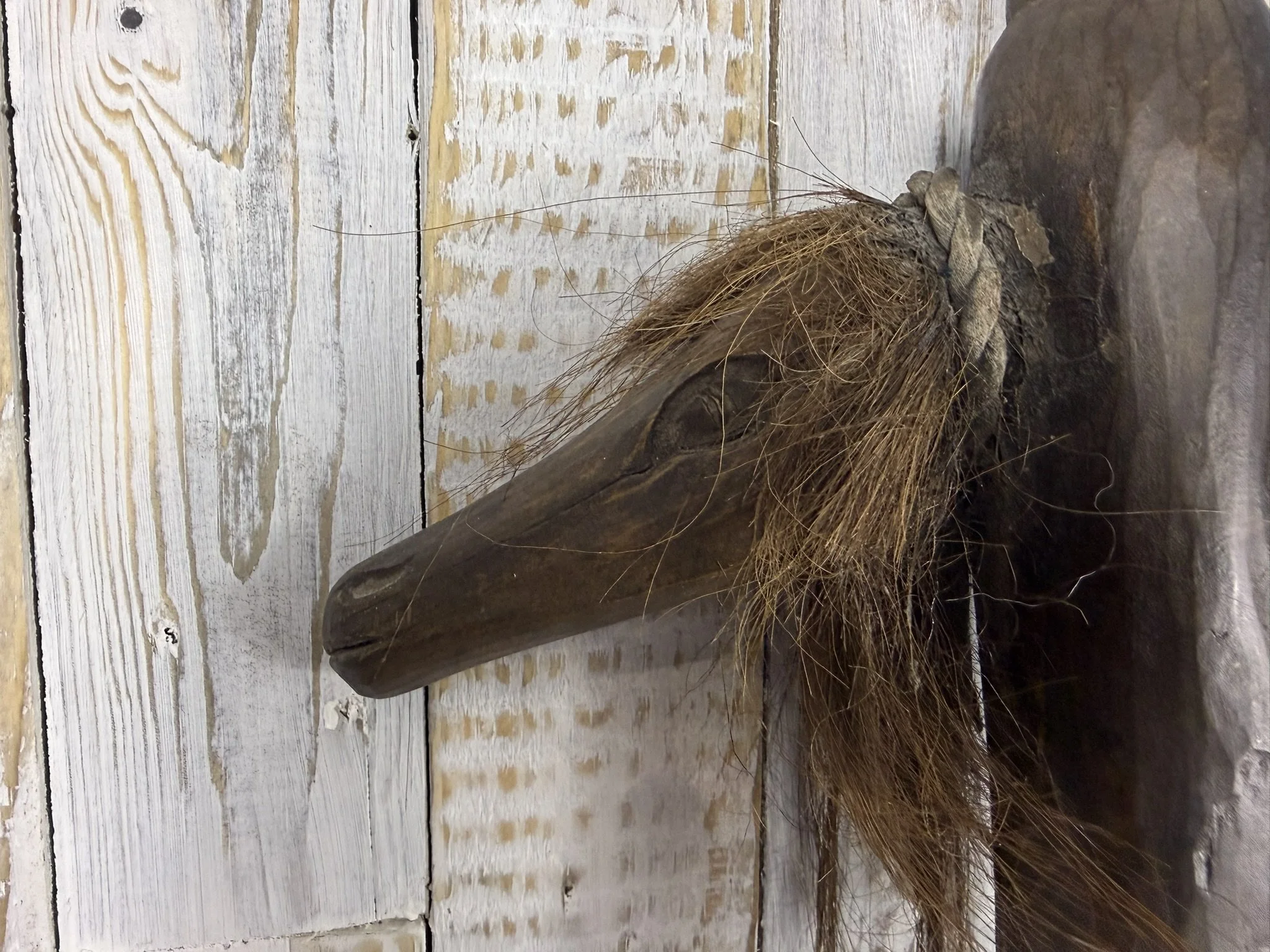 Image 3 of 7
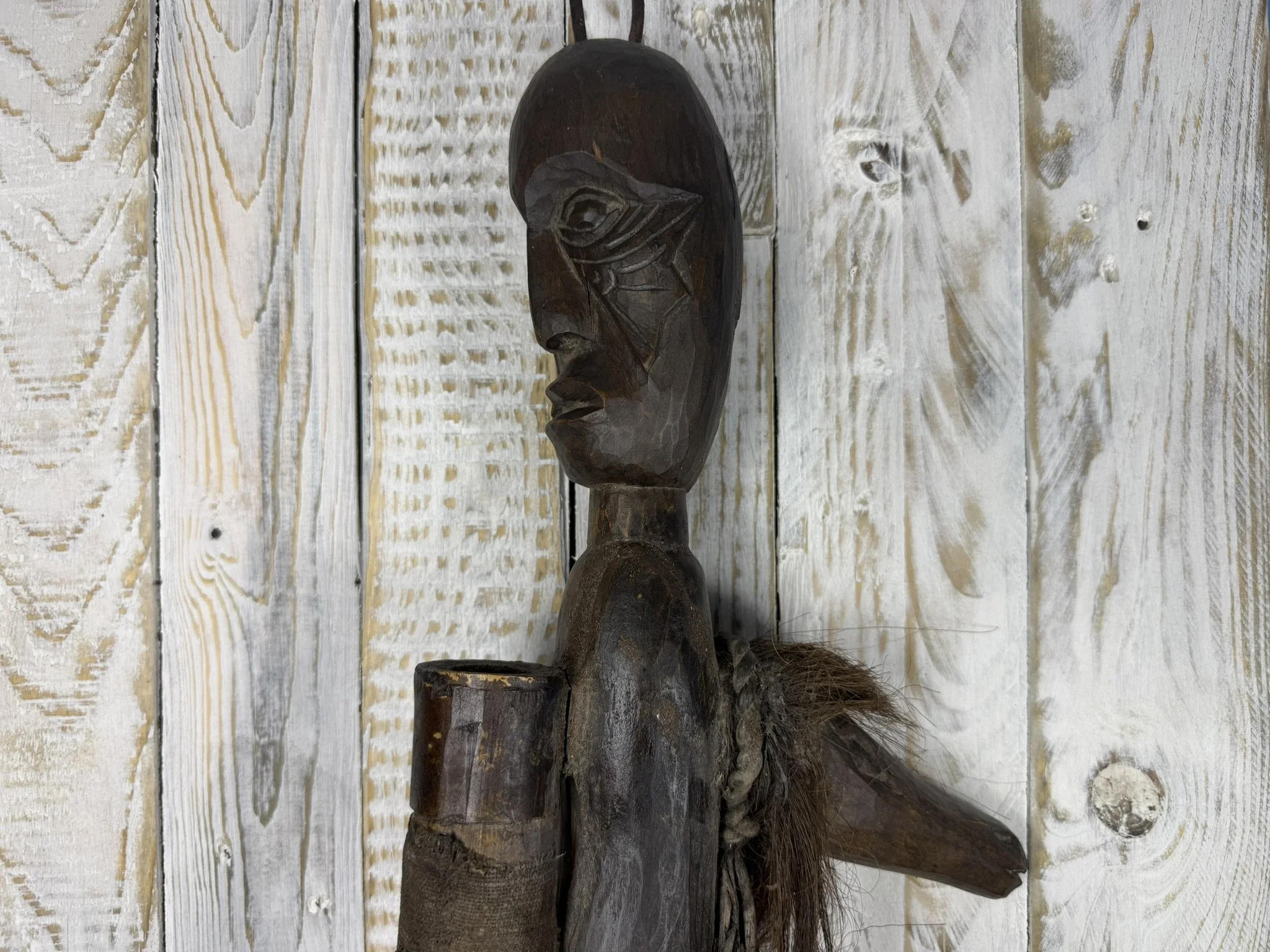 Image 4 of 7
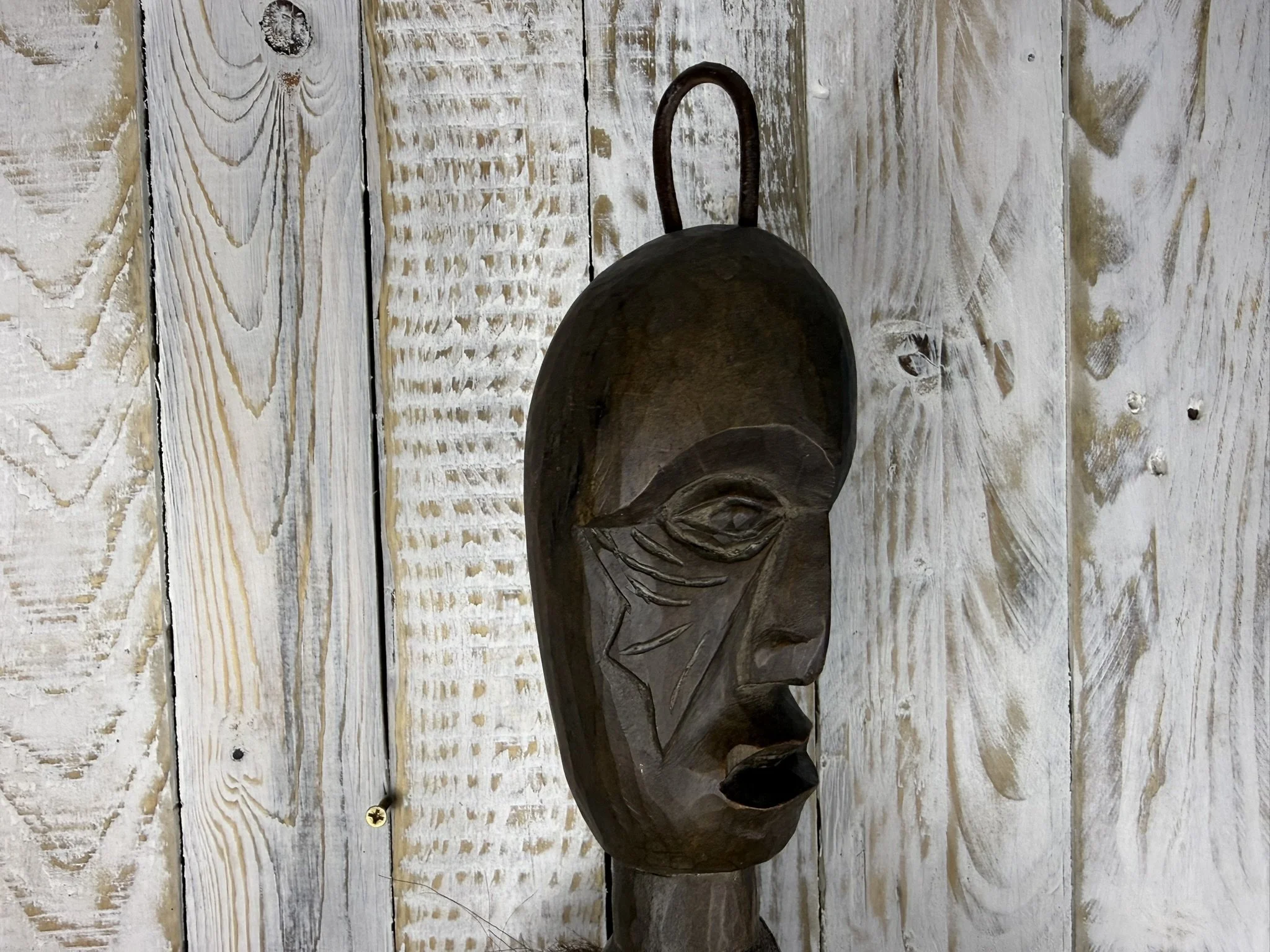 Image 5 of 7
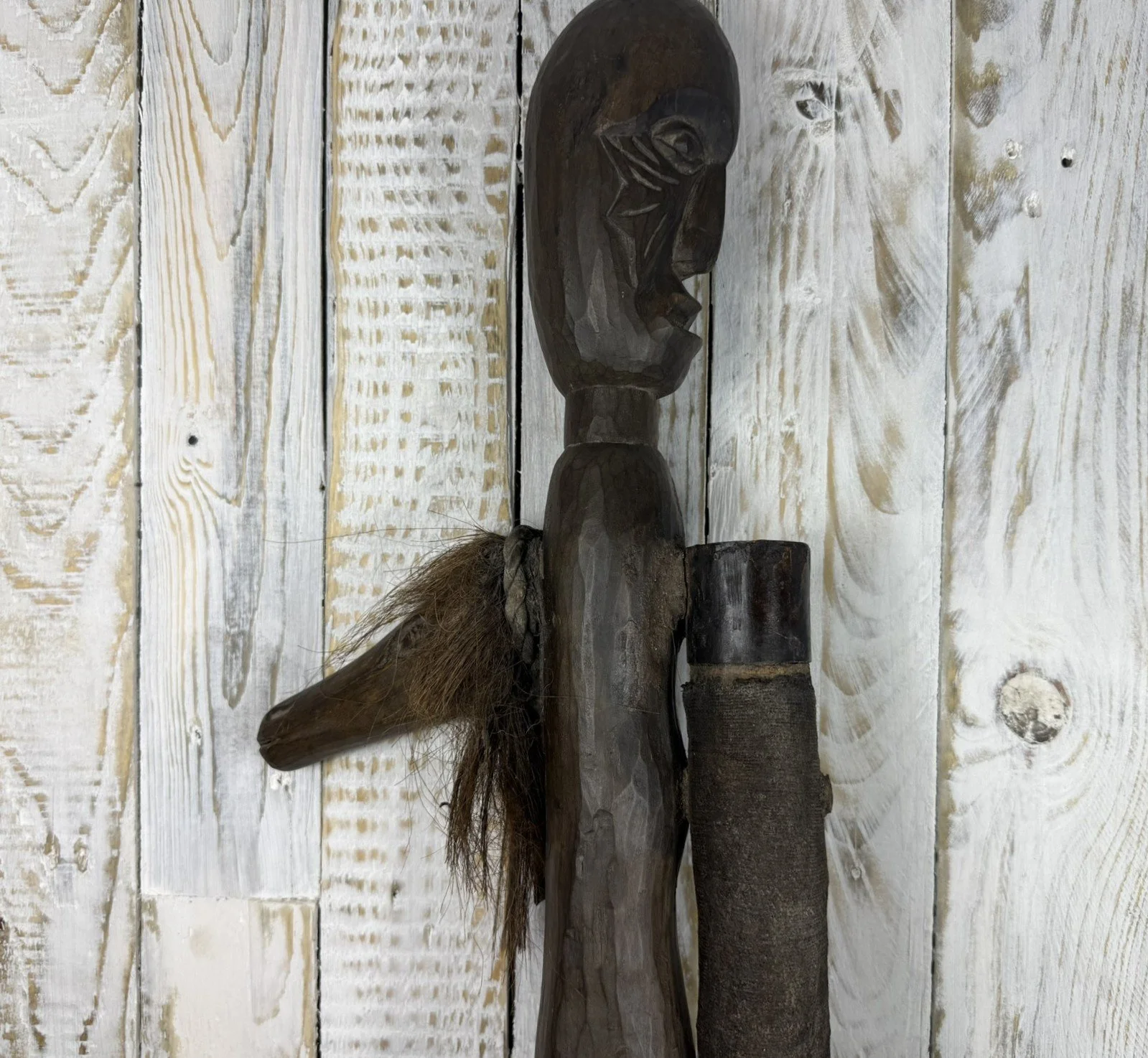 Image 6 of 7
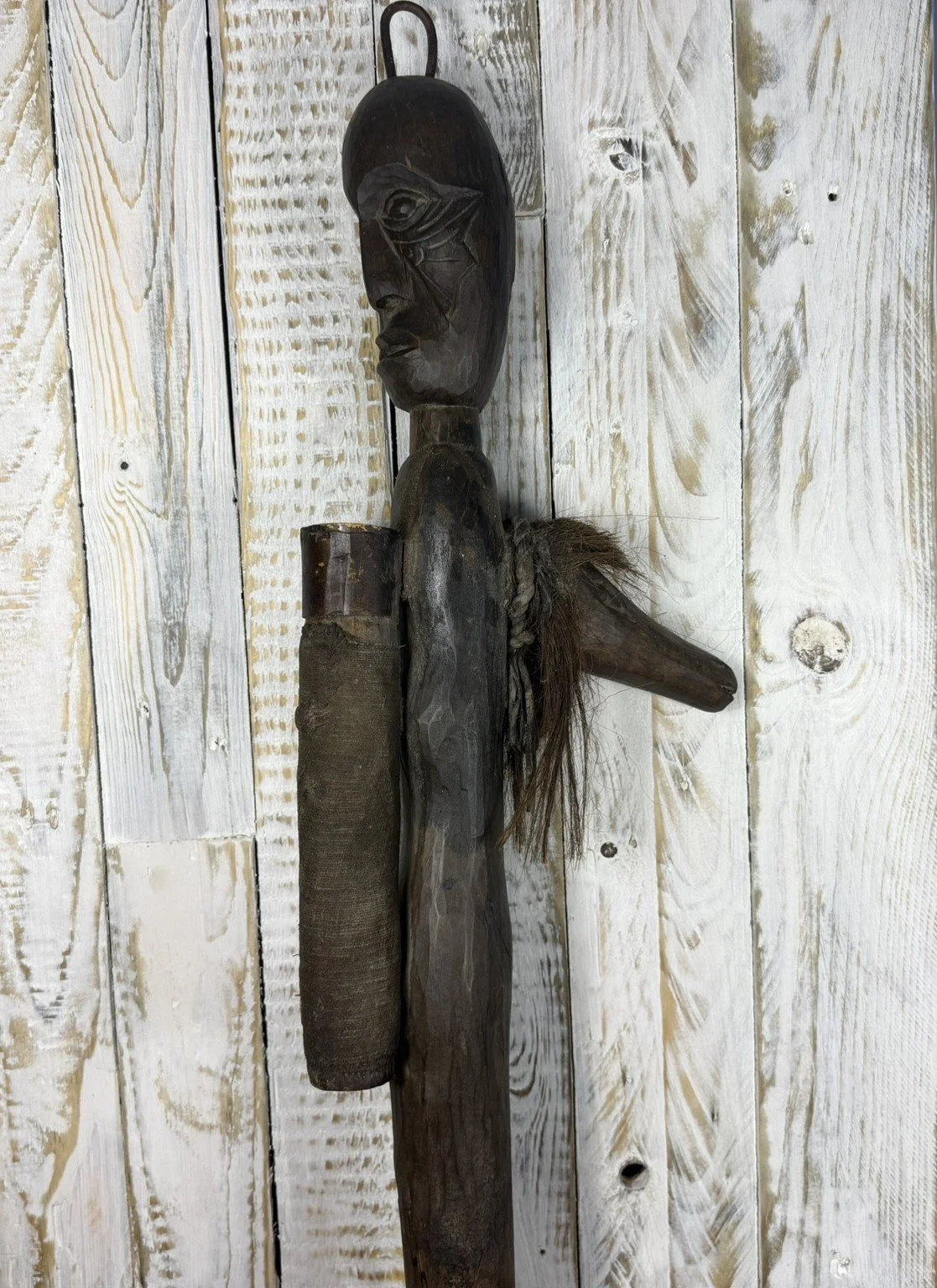 Image 7 of 7
Cultural & Ritual Context
Across many parts of Indonesia — particularly in Java, Bali, Sulawesi, and eastern island regions — carved wooden figures have long been used in agricultural and fertility-related rituals. These objects were not idols in the formal religious sense, but rather working ritual tools, intended to act as intermediaries between people, land, and unseen forces.
Such figures were commonly used to:
Bless seeds before planting
Protect crops from misfortune or poor harvest
Invoke ancestral or earth spirits connected to fertility
Mark seasonal transitions in the agricultural cycle
Bundles attached to ritual figures often contained seeds, plant fibres, soil, or symbolic offerings, reinforcing the object’s connection to land and cultivation.
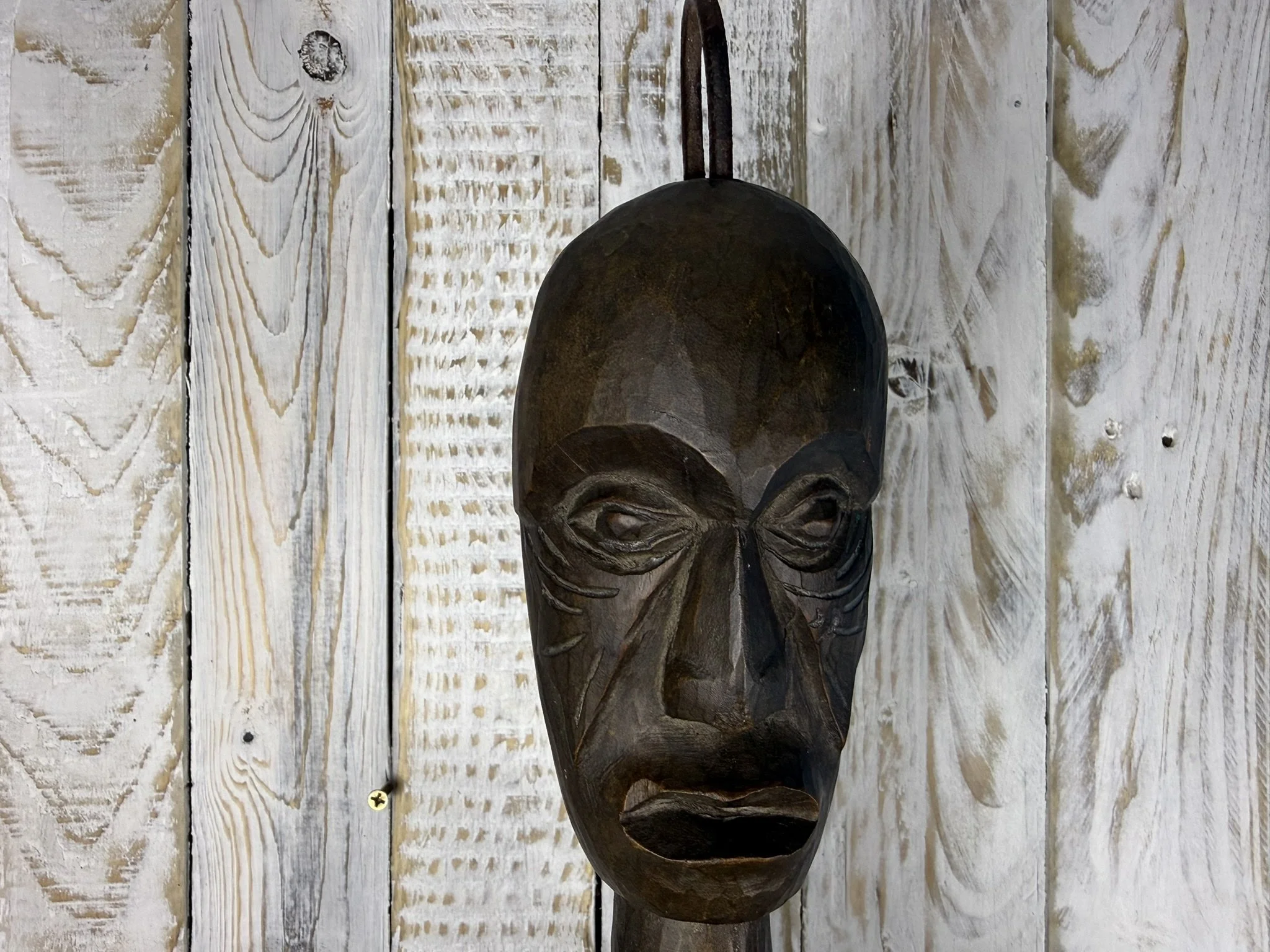
The restrained carving style and lack of decorative embellishment suggest this piece was made for local use rather than the tourist trade, prioritising purpose and symbolism over ornament.
Notes on Attribution & Use
Often broadly described as an Indonesian agricultural or fertility figure
Precise regional or ethnic attribution is difficult, although this item was bought on Lombok
The use in blessing seeds or fields aligns closely with known Indonesian folk ritual practices
Condition Notes
Hand-carved wood with pronounced surface wear and patina
Fibre or cloth-wrapped bundle present and intact
Areas of erosion and smoothing consistent with age and handling
Overall condition reflects genuine use rather than decorative ageing
Display Suggestions
This piece displays particularly well:
Hung vertically as originally intended
As a focal object in a cabinet of curiosities
In an ethnographic or folk art setting
As a statement piece in a minimal or contemporary interior
Its scale and presence give it a strong sculptural quality.