Indonesian Folk Figure – Hand-Carved Wood & Cloth

£35.00

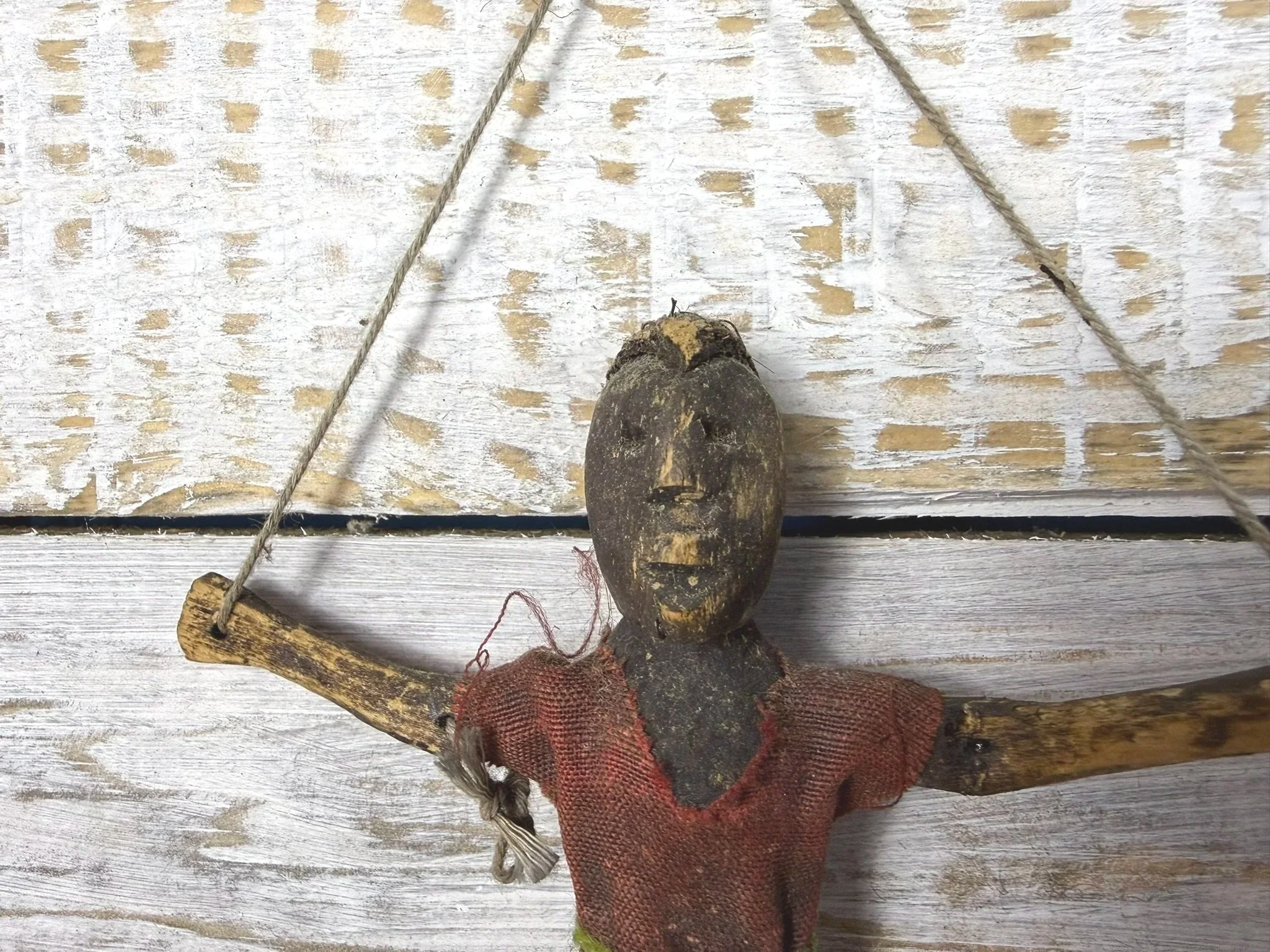
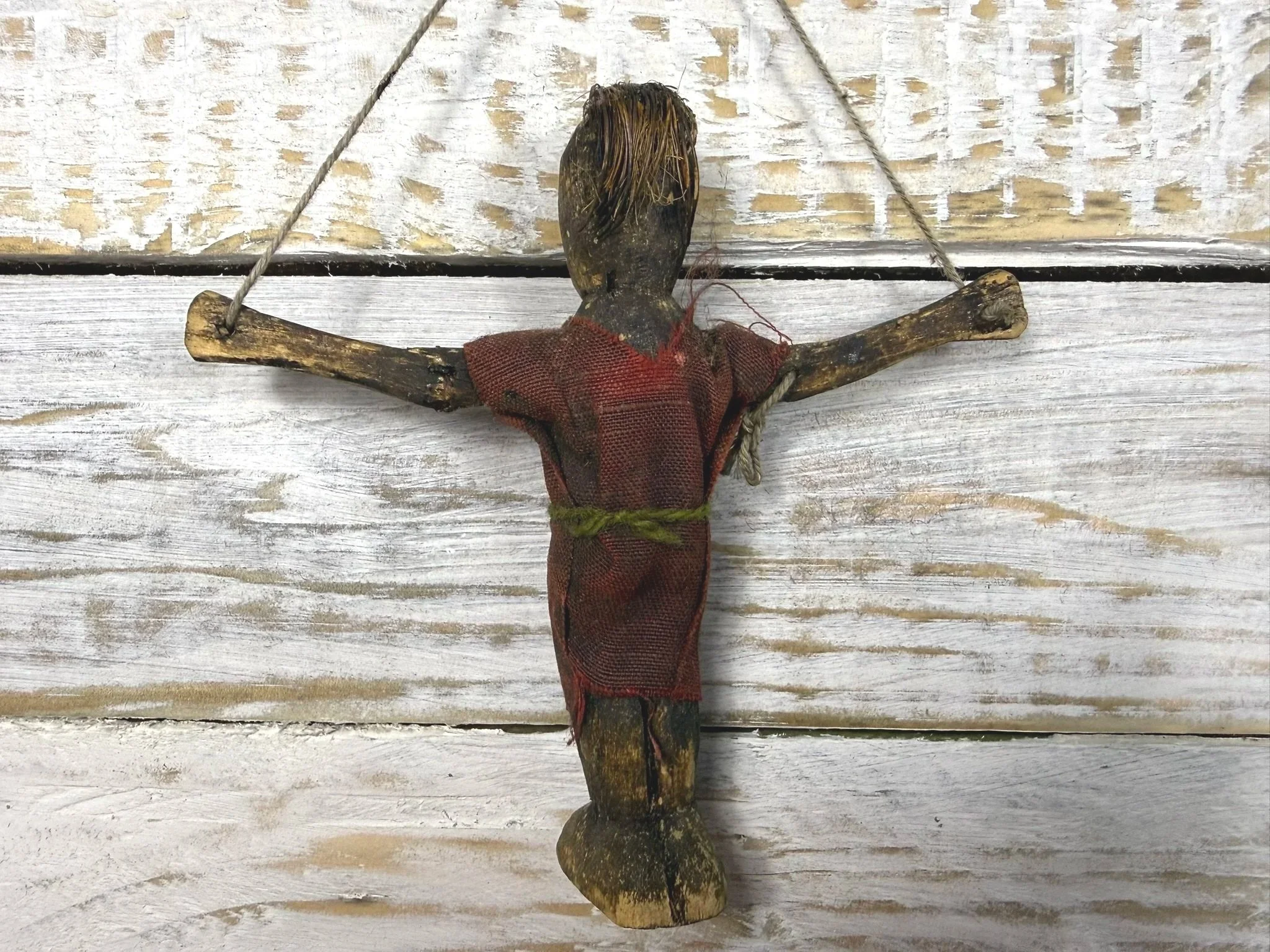
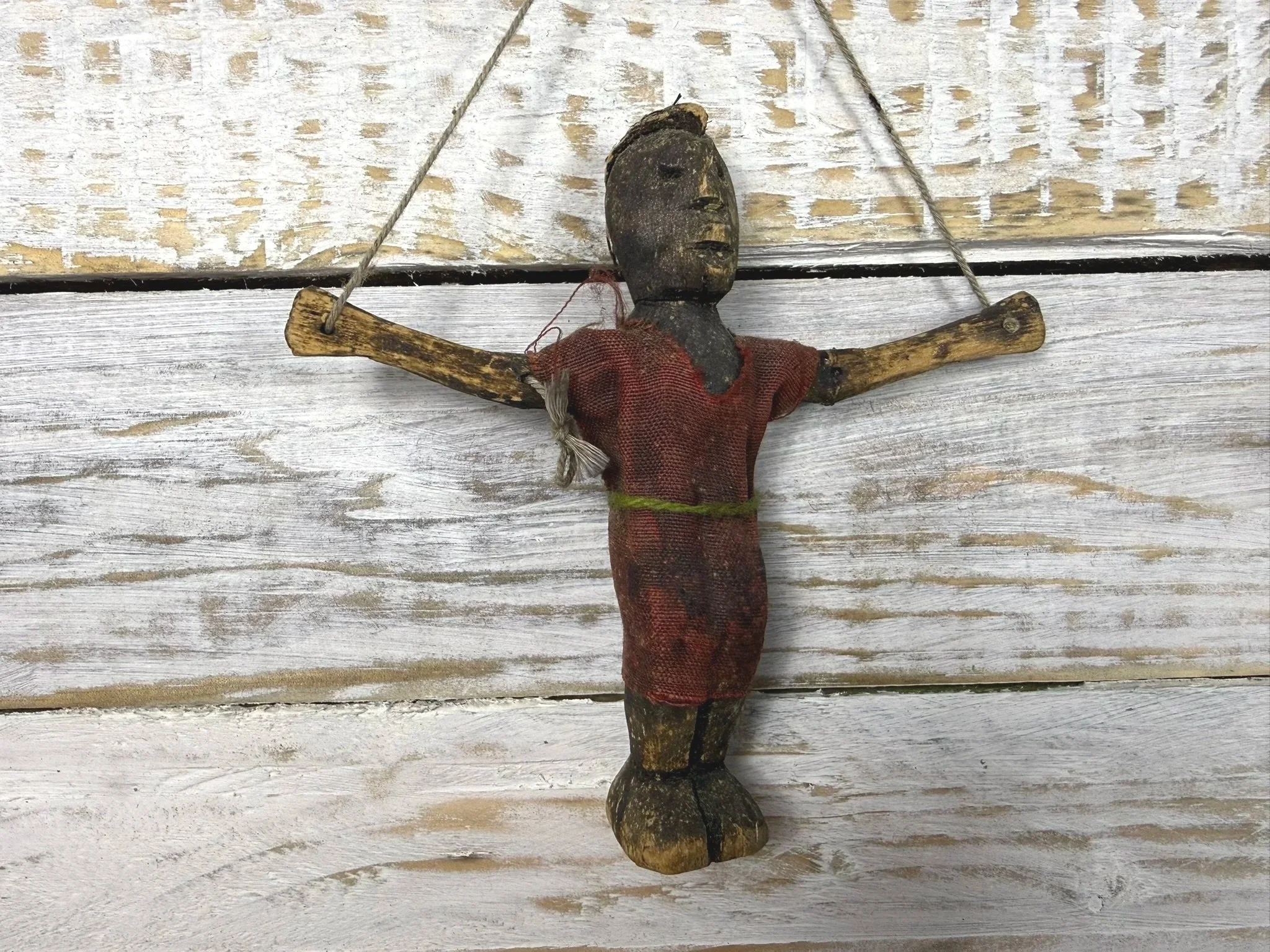
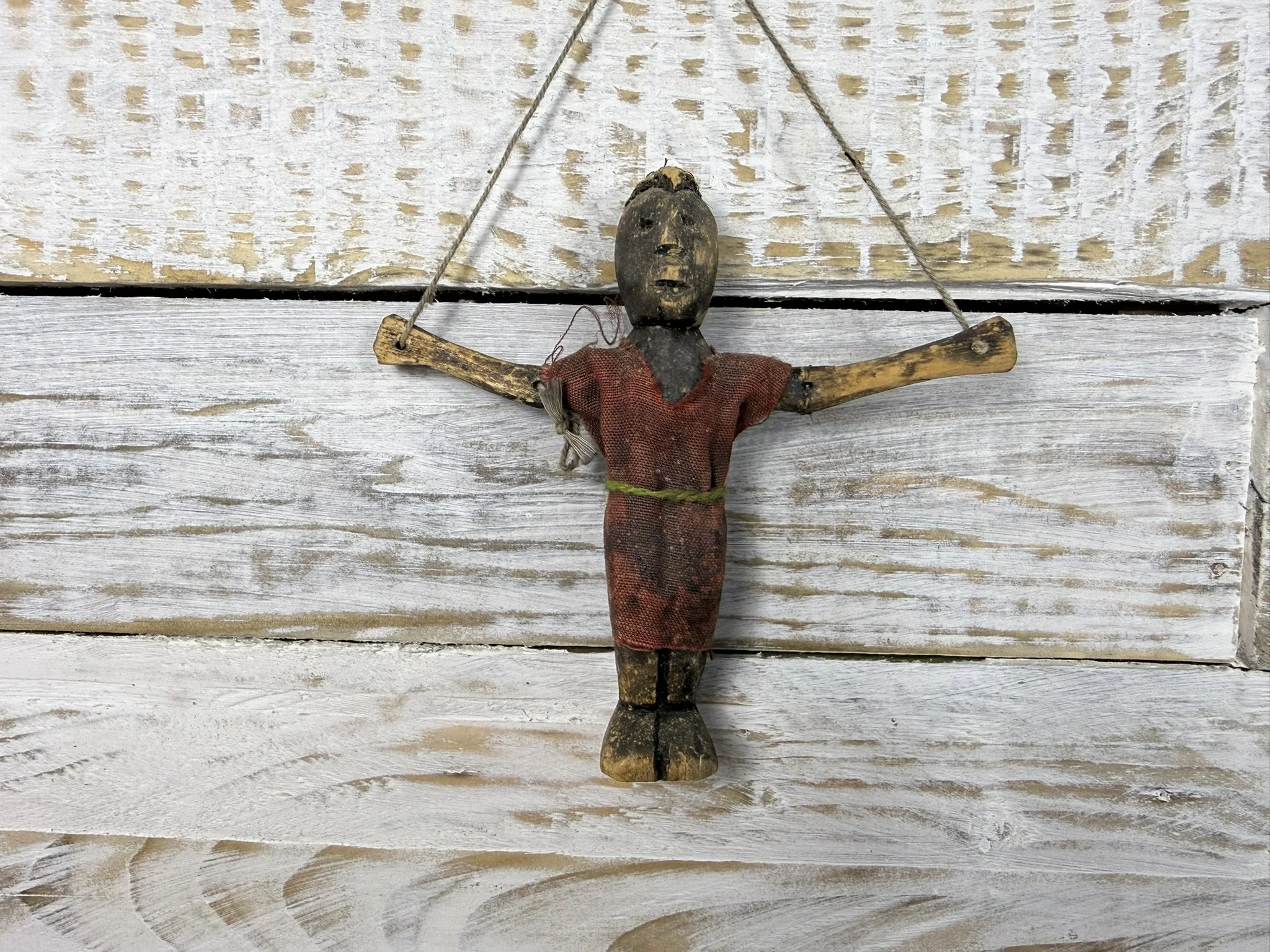
This evocative hand-carved wooden figure (12 x 12 cm) originates from Indonesia and reflects the long tradition of vernacular folk art found across the archipelago. Simply carved and dressed in a hand-stitched textile tunic, the figure has an expressive, pared-back form that emphasises character and presence over fine detail.

Figures of this kind were commonly made for household, ritual, or protective purposes, often suspended or displayed within the home. The outstretched arms and suspension cord suggest it may once have been hung on a wall or beam, where such objects were believed to offer protection, guidance, or a symbolic human presence within the domestic space.

The surface shows clear signs of age and handling, with a rich, worn patina to the wood and naturally aged fabric, giving the piece a strong sense of authenticity and quiet power.

This evocative hand-carved wooden figure (12 x 12 cm) originates from Indonesia and reflects the long tradition of vernacular folk art found across the archipelago. Simply carved and dressed in a hand-stitched textile tunic, the figure has an expressive, pared-back form that emphasises character and presence over fine detail.

Figures of this kind were commonly made for household, ritual, or protective purposes, often suspended or displayed within the home. The outstretched arms and suspension cord suggest it may once have been hung on a wall or beam, where such objects were believed to offer protection, guidance, or a symbolic human presence within the domestic space.

The surface shows clear signs of age and handling, with a rich, worn patina to the wood and naturally aged fabric, giving the piece a strong sense of authenticity and quiet power.

Across Indonesia—particularly in Java, Bali, and parts of Eastern Indonesia—small carved human figures have long been created as folk objects rather than formal sculpture. These were not mass-produced but made locally, often anonymously, using readily available materials such as softwood, cotton cloth, and plant fibres.

Such figures can be associated with:

  • Household protection

  • Ancestor symbolism

  • Folk ritual or offering practices

  • Spiritual guardianship

Unlike temple carvings or courtly art, these objects were utilitarian and symbolic, valued for their presence and meaning rather than perfection. Each example is therefore unique.

Condition Notes

  • Original carved wooden body with visible tool marks

  • Aged textile garment with wear consistent with age

  • Natural surface patina throughout

  • Suspension cord present (likely a later replacement but in keeping with use)

Styling / Display Suggestions

This piece works particularly well:

  • Hung as a wall object

  • Displayed within a cabinet of curiosities

  • Paired with other ethnographic or folk art items

  • As a contemplative or symbolic accent in a modern interior