
 Image 1 of 4
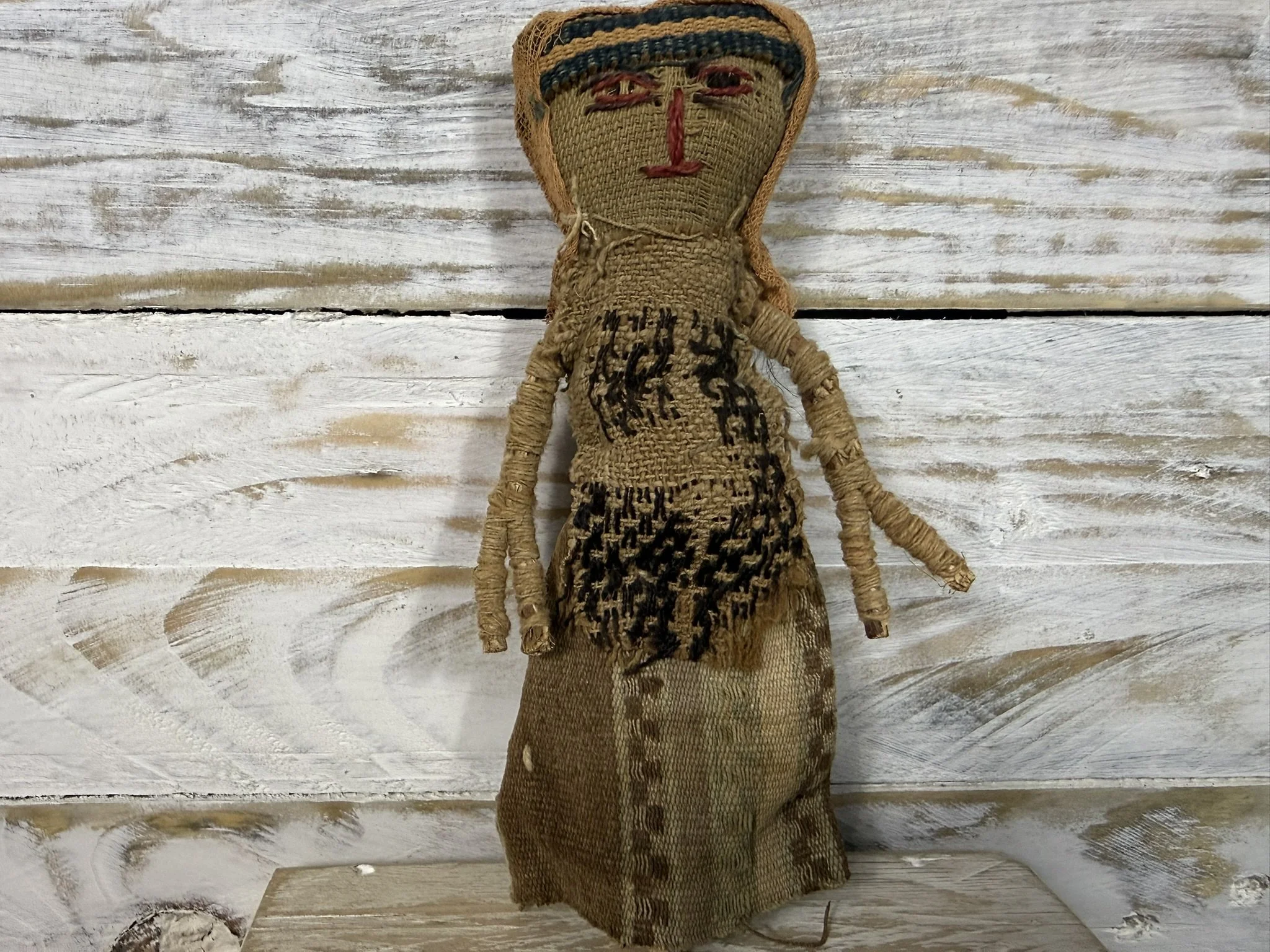 Image 2 of 4
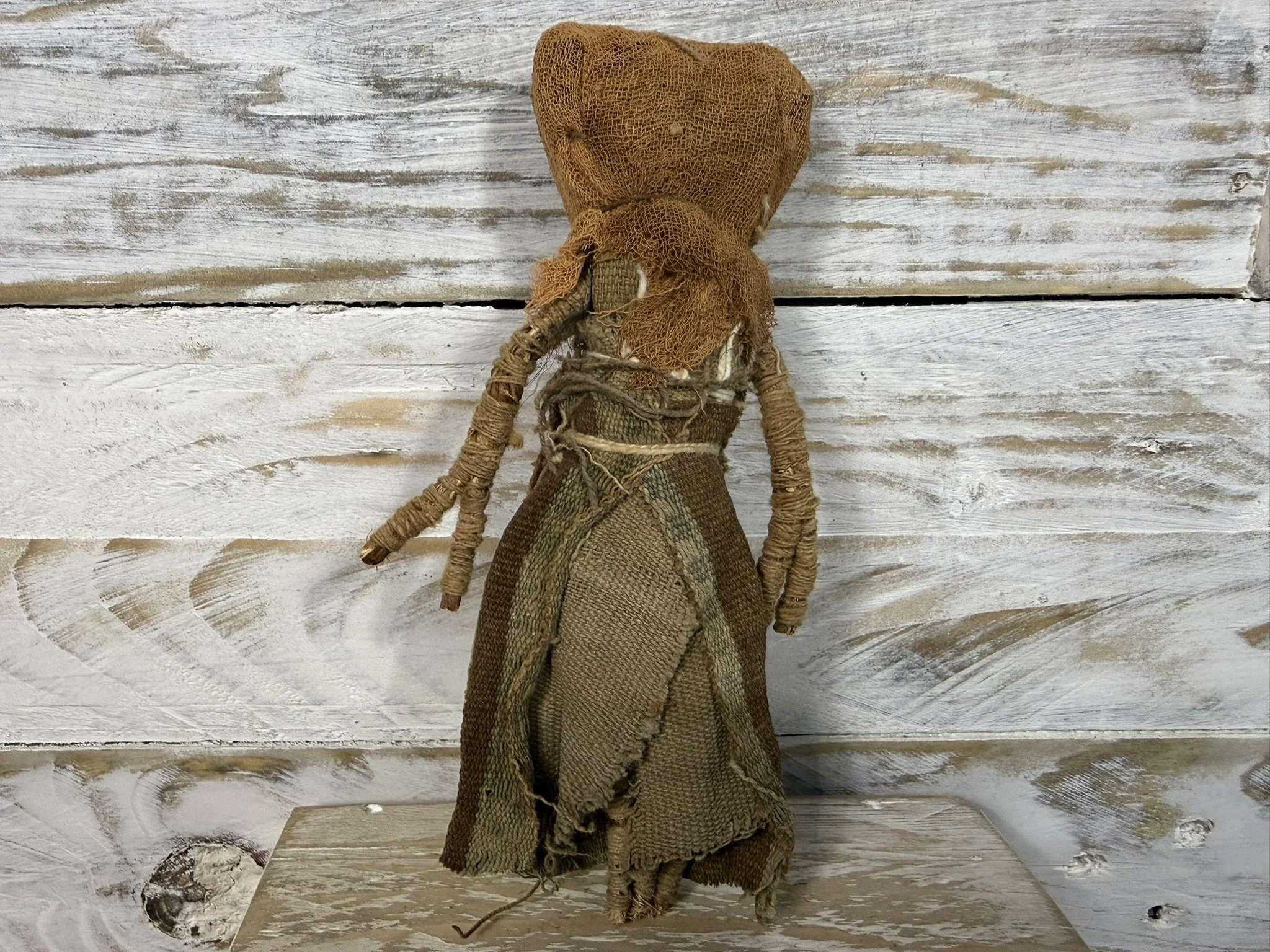 Image 3 of 4
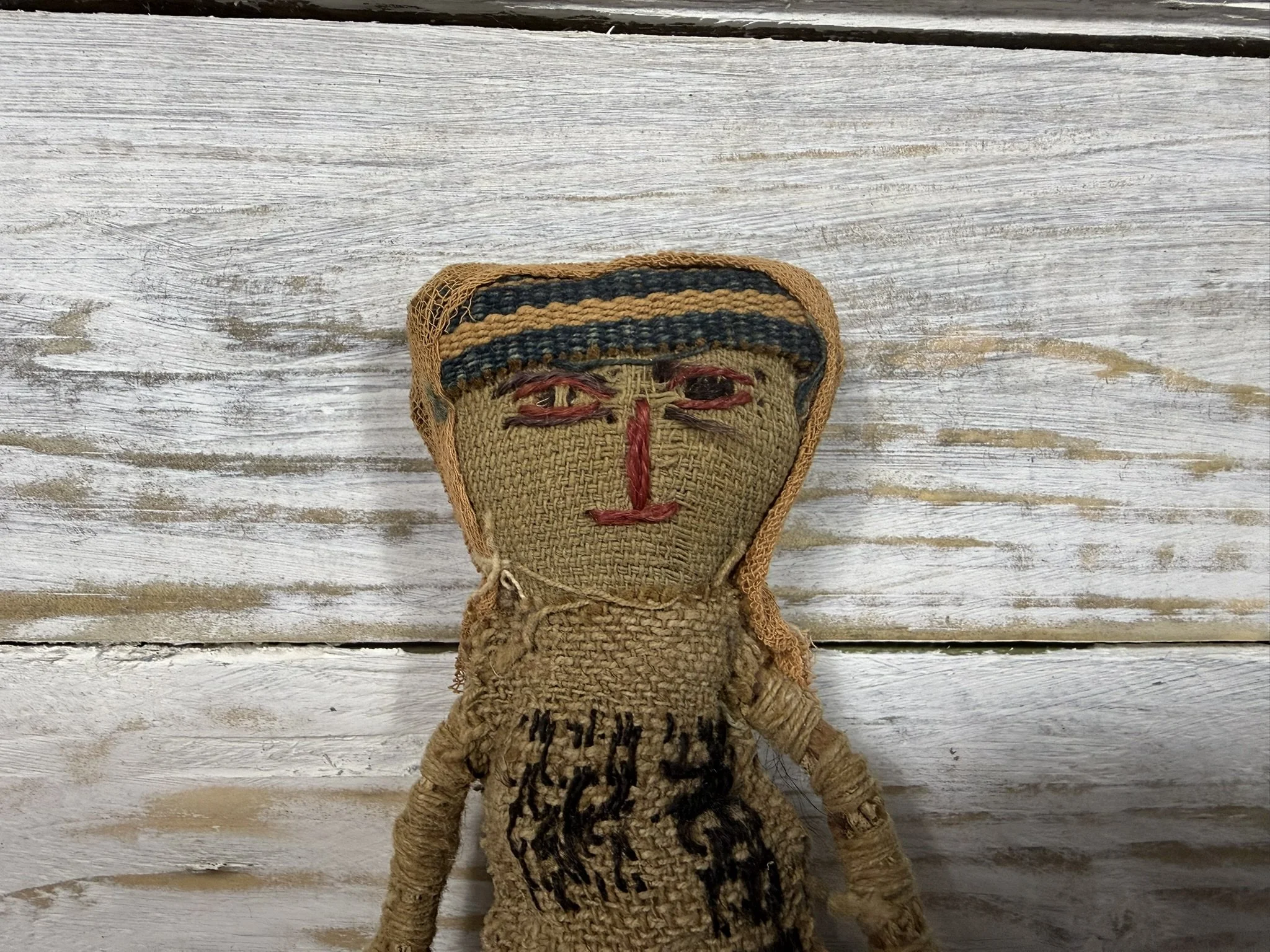 Image 4 of 4
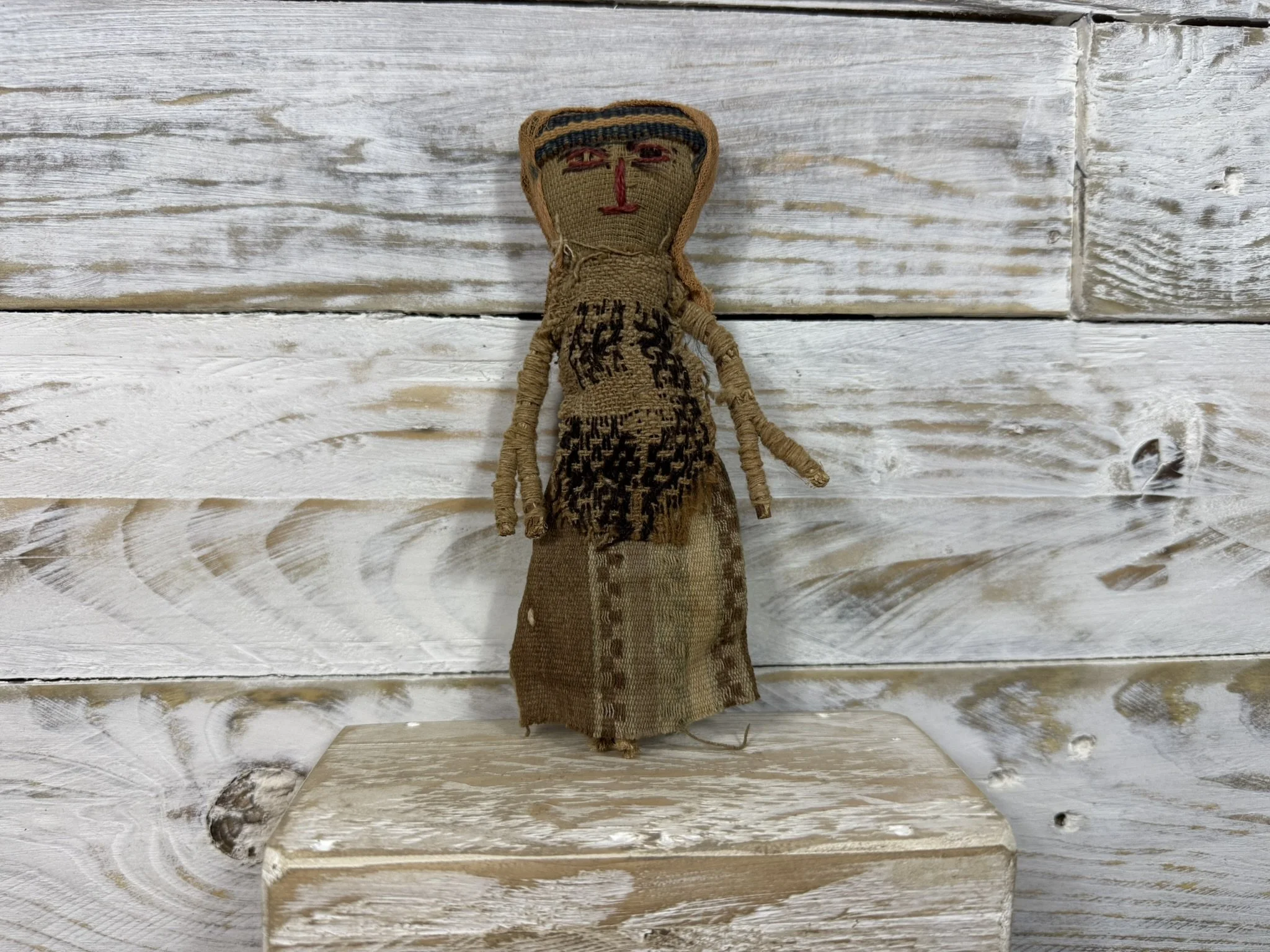
Chancay dolls originate from the Chancay culture of coastal Peru (c. 1000–1470 CE) and were traditionally made using woven cotton, plant fibres, and simple dyes. Such figures are often associated with funerary practices and everyday spiritual life, placed within burials or domestic spaces as symbolic companions, offerings, or protective figures.
While highly stylised, each doll is individual, shaped by the maker’s hand rather than strict pattern. Over time, surfaces soften, fibres darken, and small imperfections emerge, all contributing to the object’s authenticity and presence.
Today, Chancay dolls are valued as cultural artefacts and powerful decorative objects. This piece works beautifully displayed on a shelf or within a curated interior, offering a tactile connection to Andean textile heritage and a reminder of the enduring role of craft in human ritual and expression.