Yoruba Thorn Wood Figures - Travel & Trade 2

£65.00

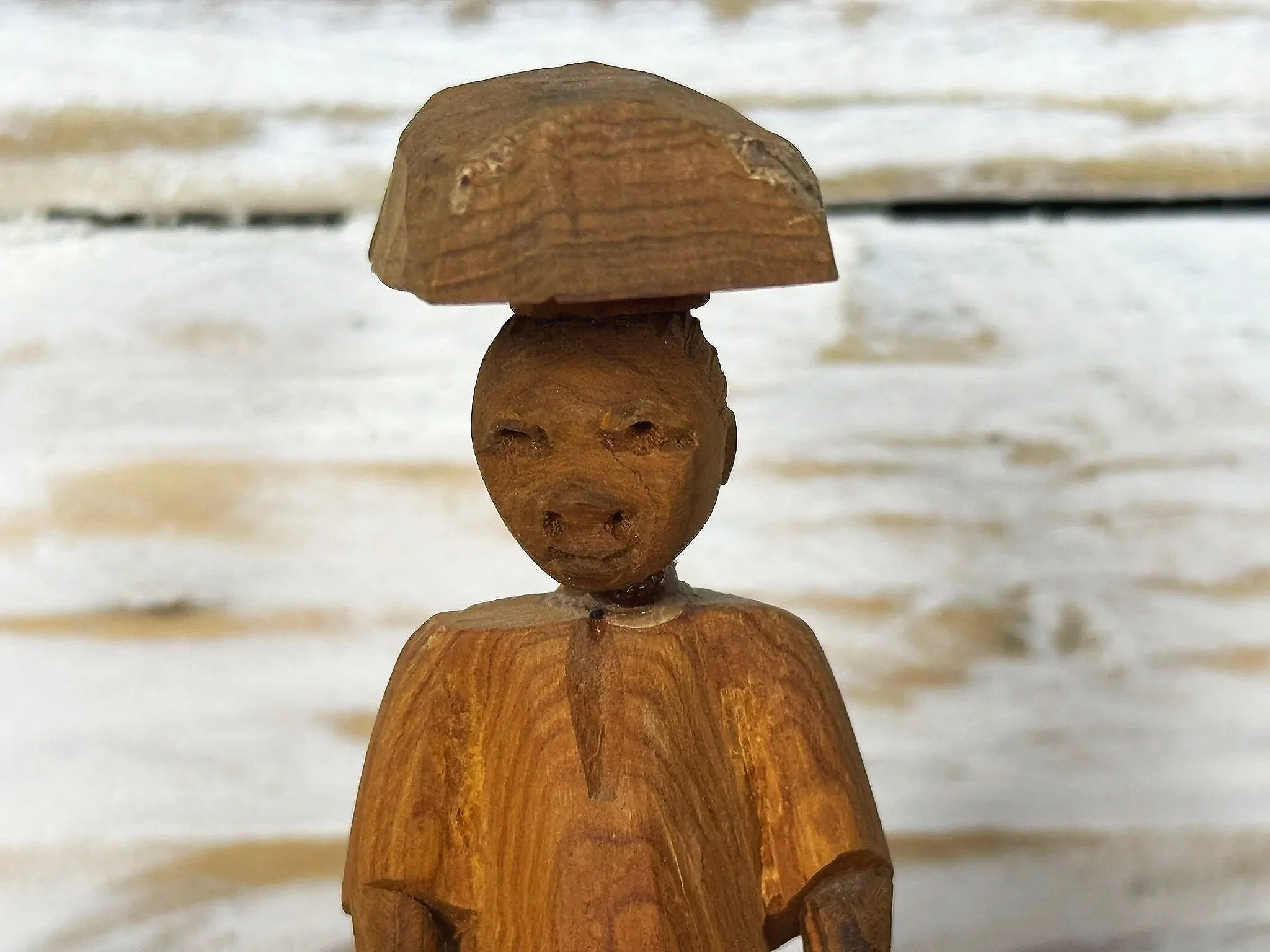
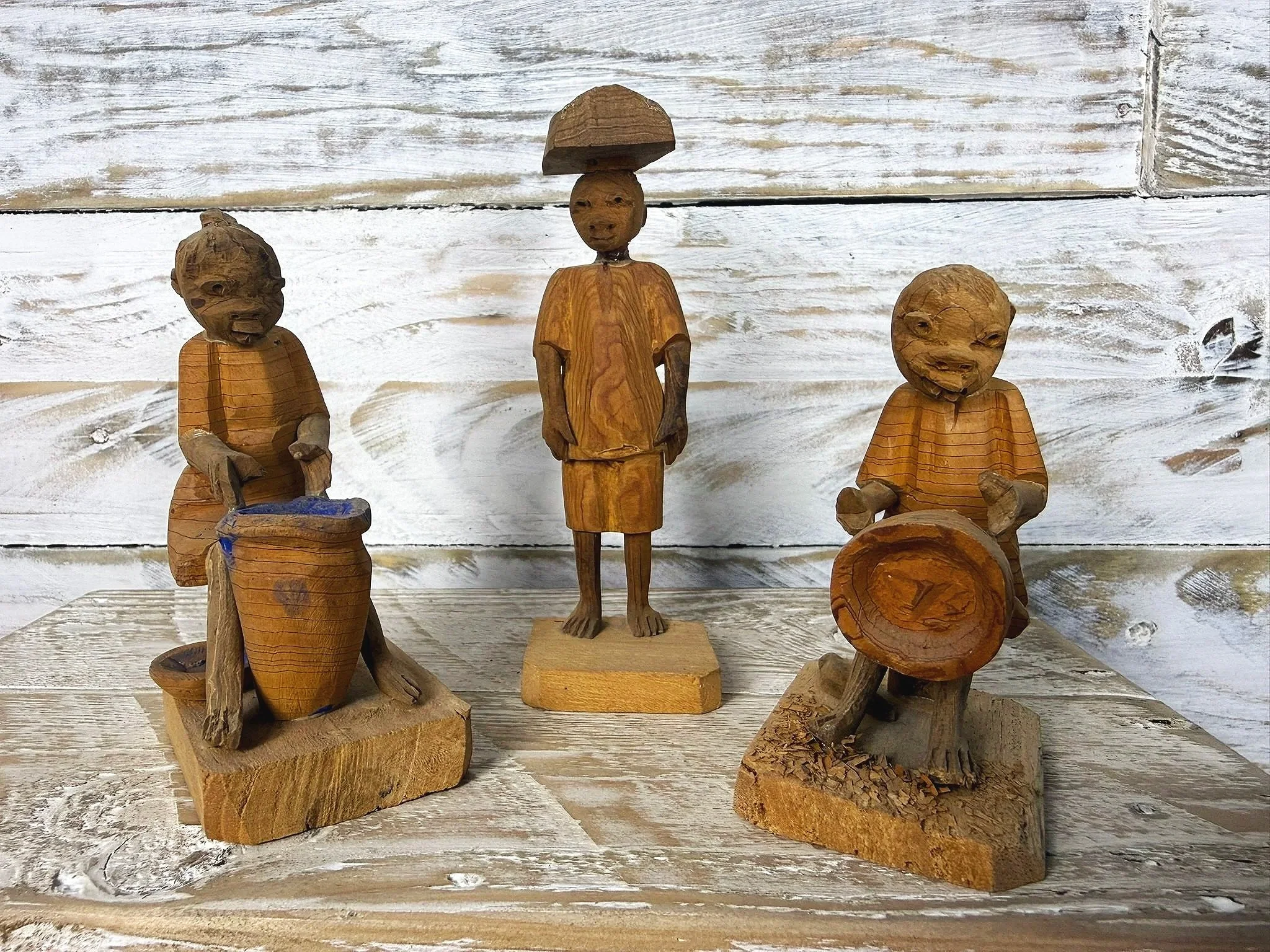
These carved thorn wood figures originates from the Yoruba cultural region of Nigeria and date from the mid-to-late 20th century. The figure depicts a moment of everyday life, rendered with a simplified but expressive form that emphasises posture and movement.

The surface shows natural wear consistent with age and material, with a warm, matte patina developed through handling. Minor restoration has been undertaken where required to stabilise the carving, without obscuring signs of age.

Each figure is hand-carved and unique, making small variations and imperfections an essential part of its character.

This group reflects movement through landscape and community — figures carrying goods, travelling, or engaged in exchange. The carvings emphasise balance and forward motion, echoing the physical demands of travel and trade in everyday life.

These carved thorn wood figures originates from the Yoruba cultural region of Nigeria and date from the mid-to-late 20th century. The figure depicts a moment of everyday life, rendered with a simplified but expressive form that emphasises posture and movement.

The surface shows natural wear consistent with age and material, with a warm, matte patina developed through handling. Minor restoration has been undertaken where required to stabilise the carving, without obscuring signs of age.

Each figure is hand-carved and unique, making small variations and imperfections an essential part of its character.

This group reflects movement through landscape and community — figures carrying goods, travelling, or engaged in exchange. The carvings emphasise balance and forward motion, echoing the physical demands of travel and trade in everyday life.

Additional Information

  • Origin: Yoruba region, Nigeria

  • Date: Circa 1970s

  • Material: Thorn wood

  • Condition: Age-related wear; some figures sympathetically restored

  • The figures aresold in curated groups, as described

Display Suggestions

These figures work particularly well:

  • Displayed in small groups on shelves or cabinets

  • As part of a curated folk art or ethnographic collection

  • In a cabinet of curiosities or study

  • Alongside books, textiles, or ceramics from West Africa

Grouped together, they create a strong sense of narrative and movement