Yoruba Thorn Wood Figures - Domestic Life

£45.00

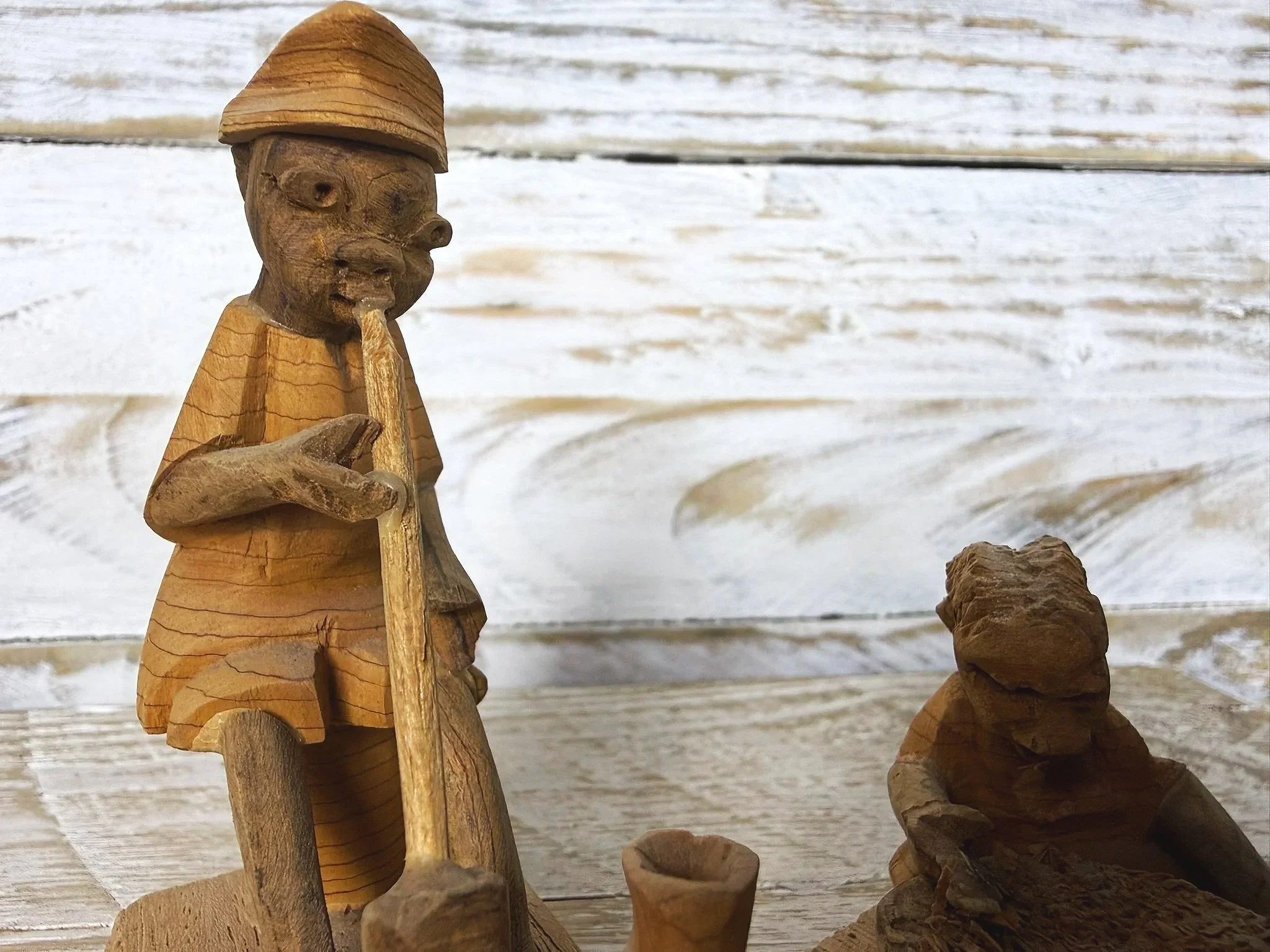
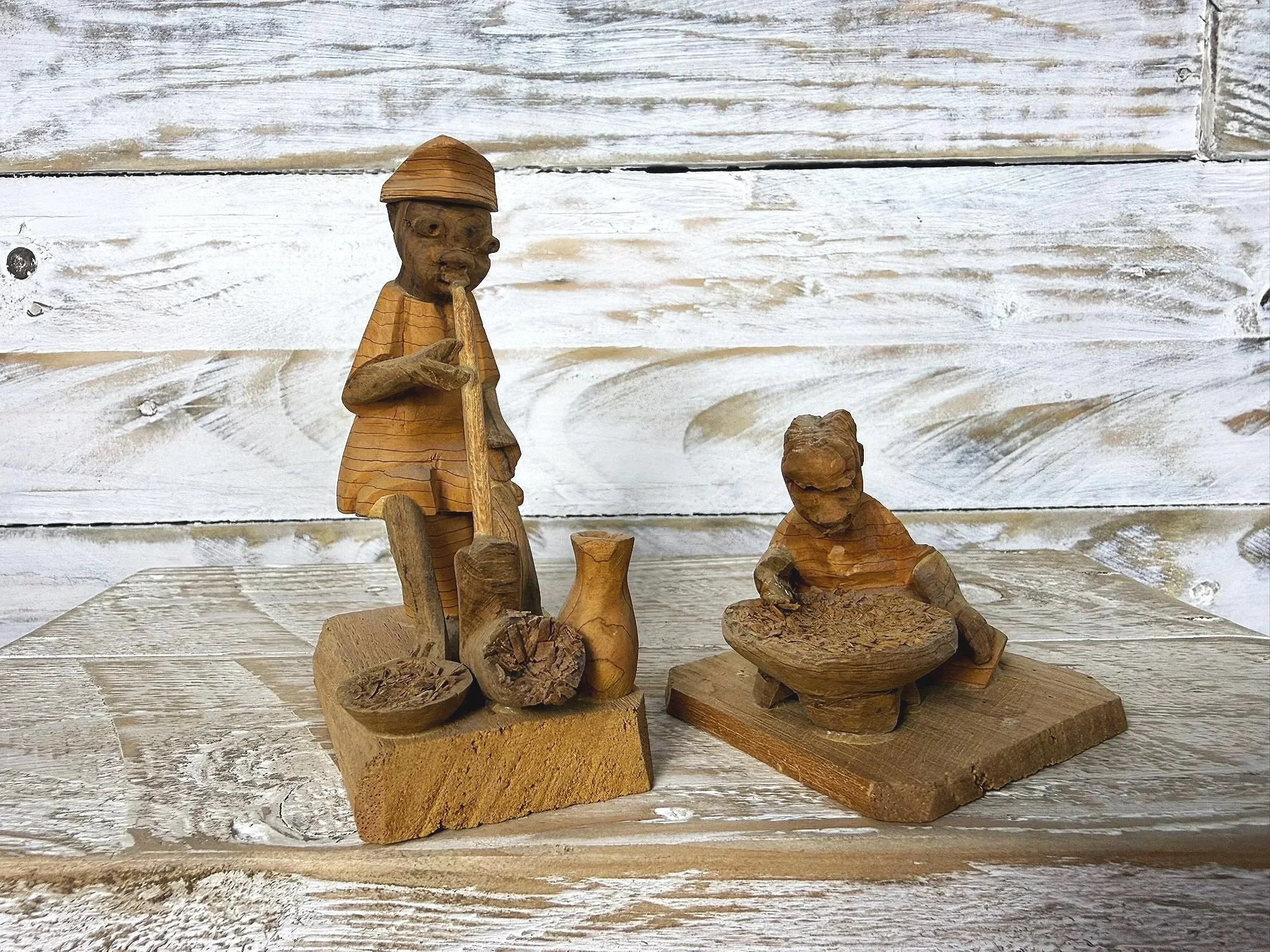
These carved thorn wood figures originates from the Yoruba cultural region of Nigeria and date from the mid-to-late 20th century. The figure depicts a moment of everyday life, rendered with a simplified but expressive form that emphasises posture and movement.

The surface shows natural wear consistent with age and material, with a warm, matte patina developed through handling. Minor restoration has been undertaken where required to stabilise the carving, without obscuring signs of age.

Each figure is hand-carved and unique, making small variations and imperfections an essential part of its character.

Focusing on quieter, inward-facing moments, this husband and wife group depicts domestic tasks and daily routines. The carvings are understated and intimate, offering a counterpoint to the more dynamic figures of labour and travel.

These carved thorn wood figures originates from the Yoruba cultural region of Nigeria and date from the mid-to-late 20th century. The figure depicts a moment of everyday life, rendered with a simplified but expressive form that emphasises posture and movement.

The surface shows natural wear consistent with age and material, with a warm, matte patina developed through handling. Minor restoration has been undertaken where required to stabilise the carving, without obscuring signs of age.

Each figure is hand-carved and unique, making small variations and imperfections an essential part of its character.

Focusing on quieter, inward-facing moments, this husband and wife group depicts domestic tasks and daily routines. The carvings are understated and intimate, offering a counterpoint to the more dynamic figures of labour and travel.

Additional Information

  • Origin: Yoruba region, Nigeria

  • Date: Circa 1970s

  • Material: Thorn wood

  • Condition: Age-related wear; some figures sympathetically restored

  • The figures aresold in curated groups, as described

Display Suggestions

These figures work particularly well:

  • Displayed in small groups on shelves or cabinets

  • As part of a curated folk art or ethnographic collection

  • In a cabinet of curiosities or study

  • Alongside books, textiles, or ceramics from West Africa

Grouped together, they create a strong sense of narrative and movement