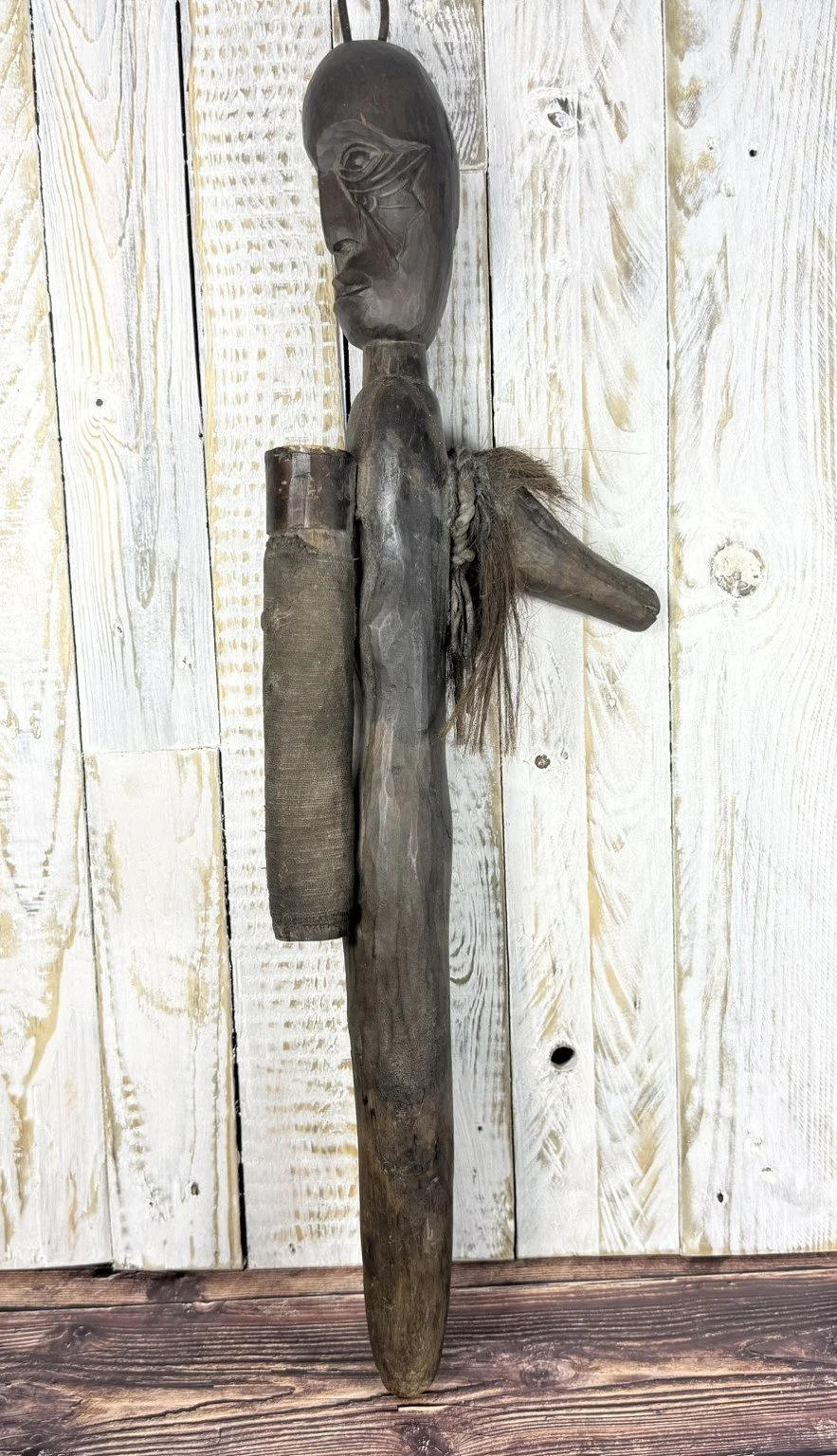
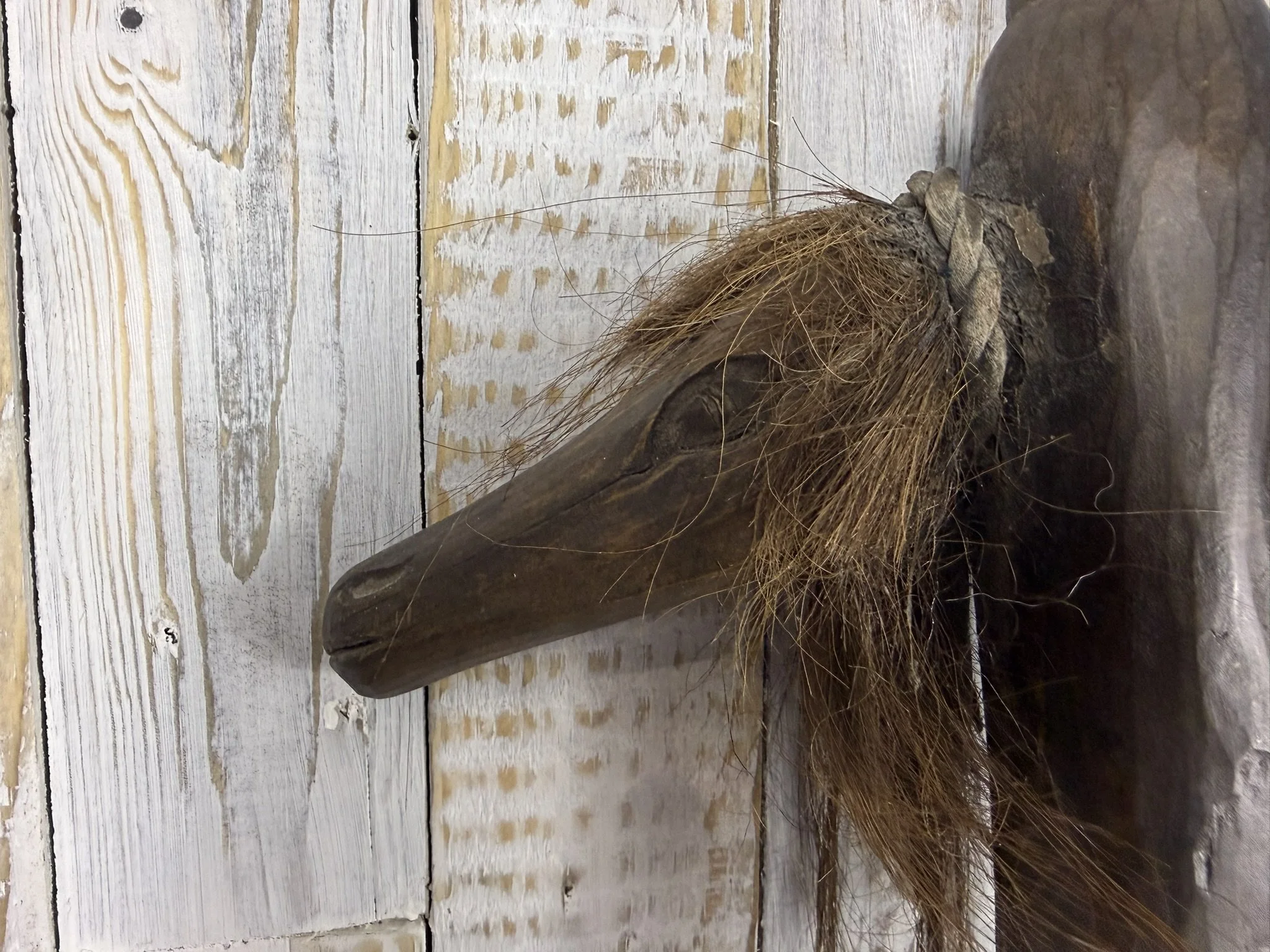
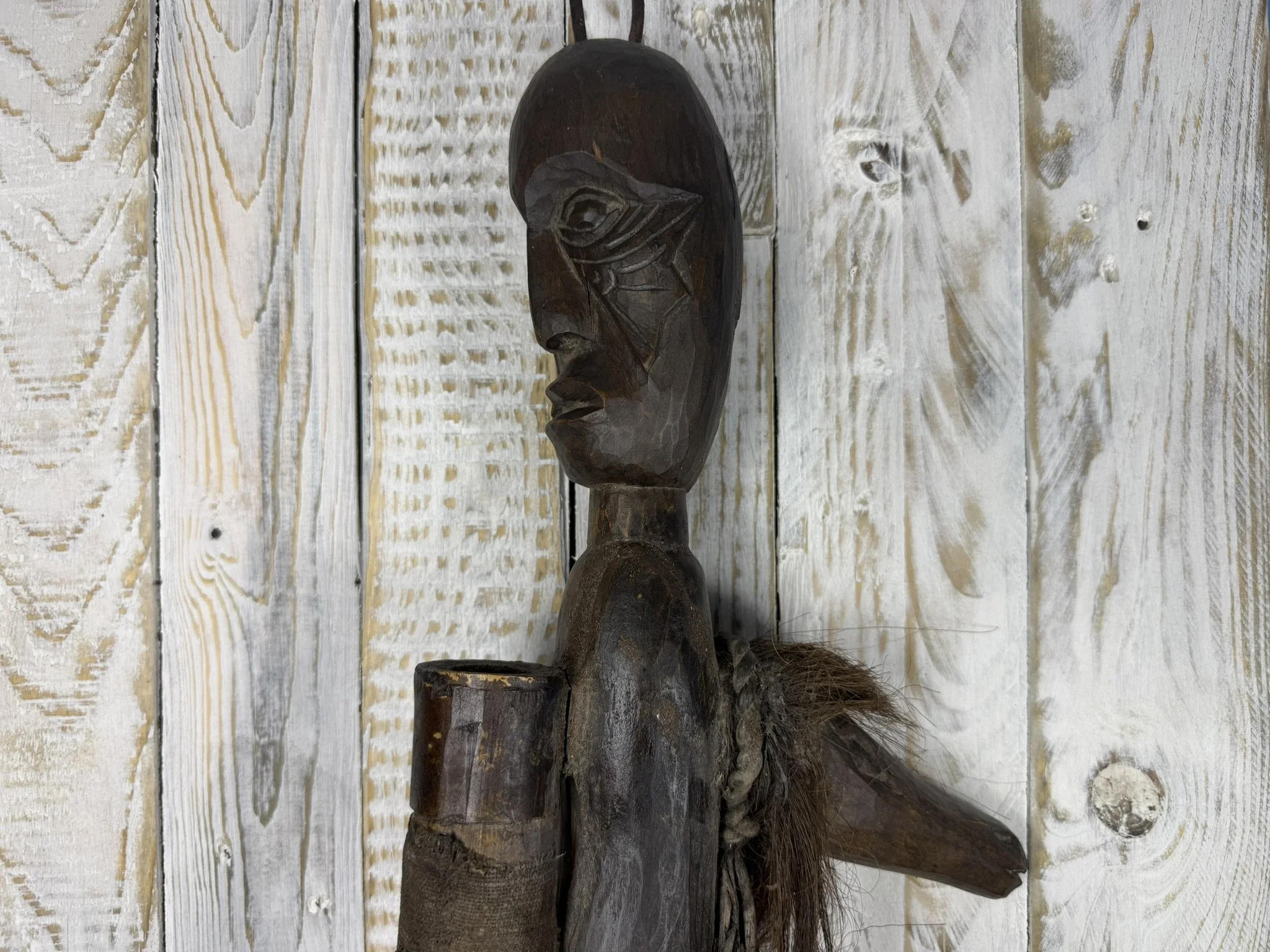
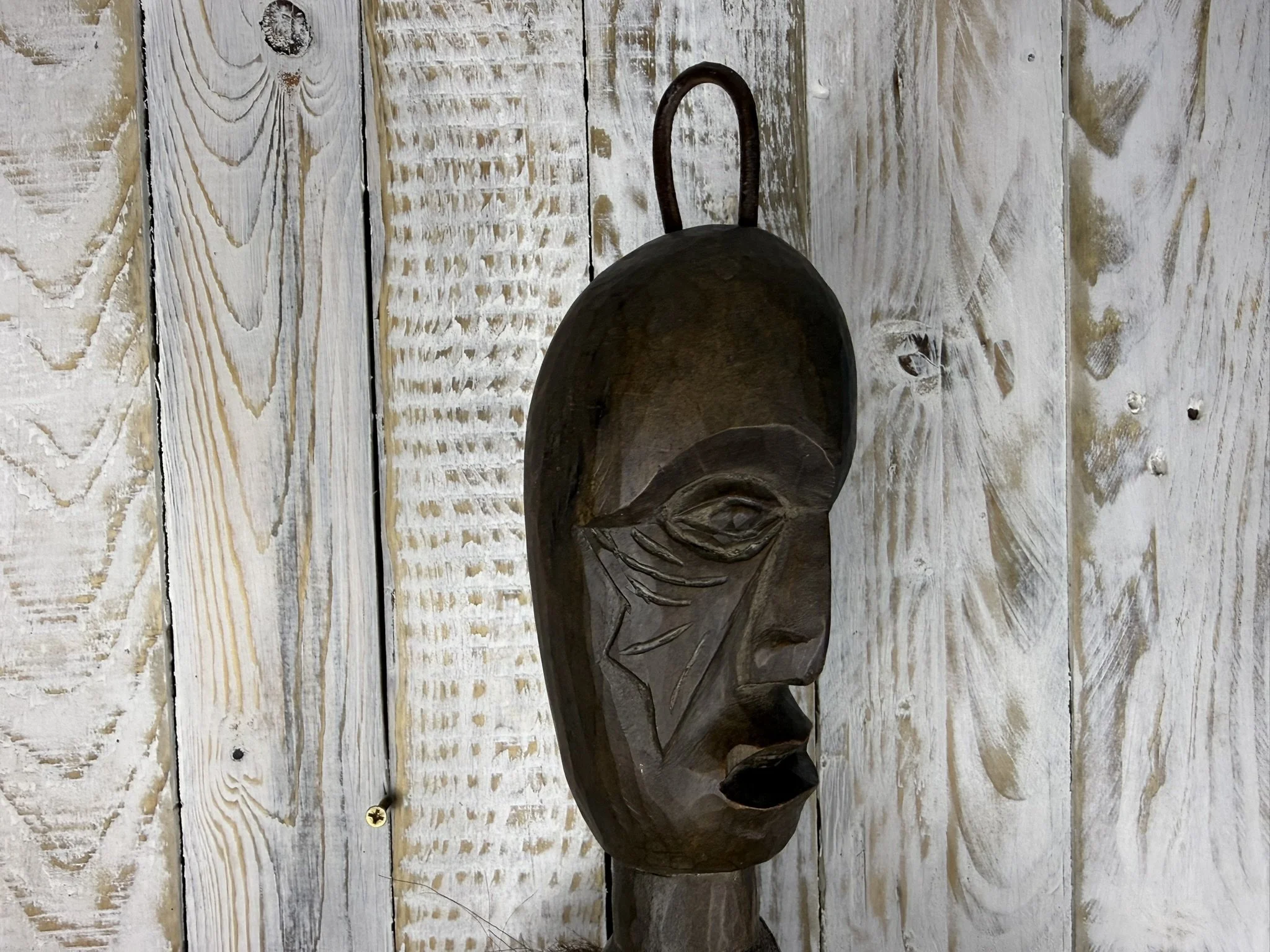
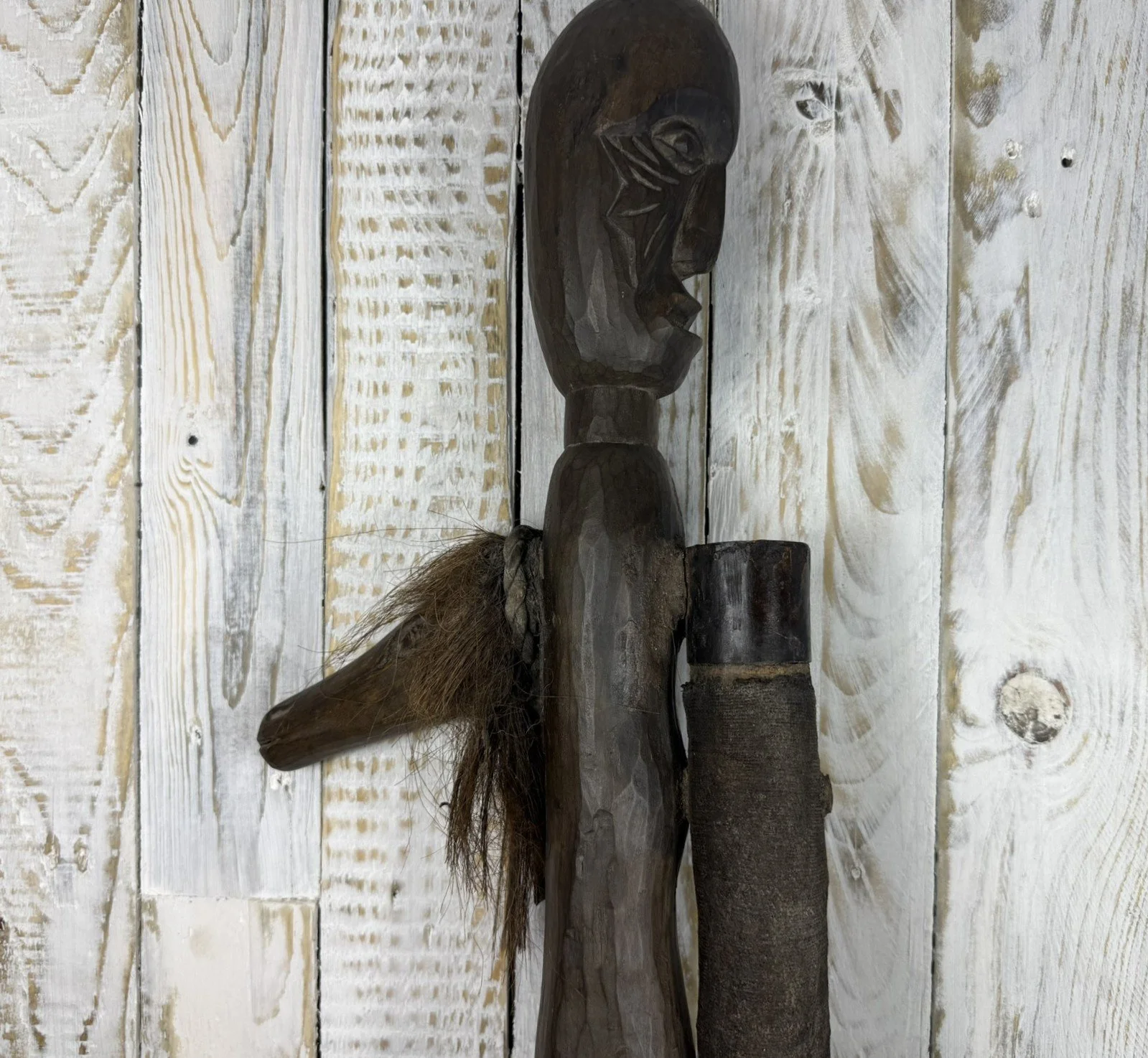
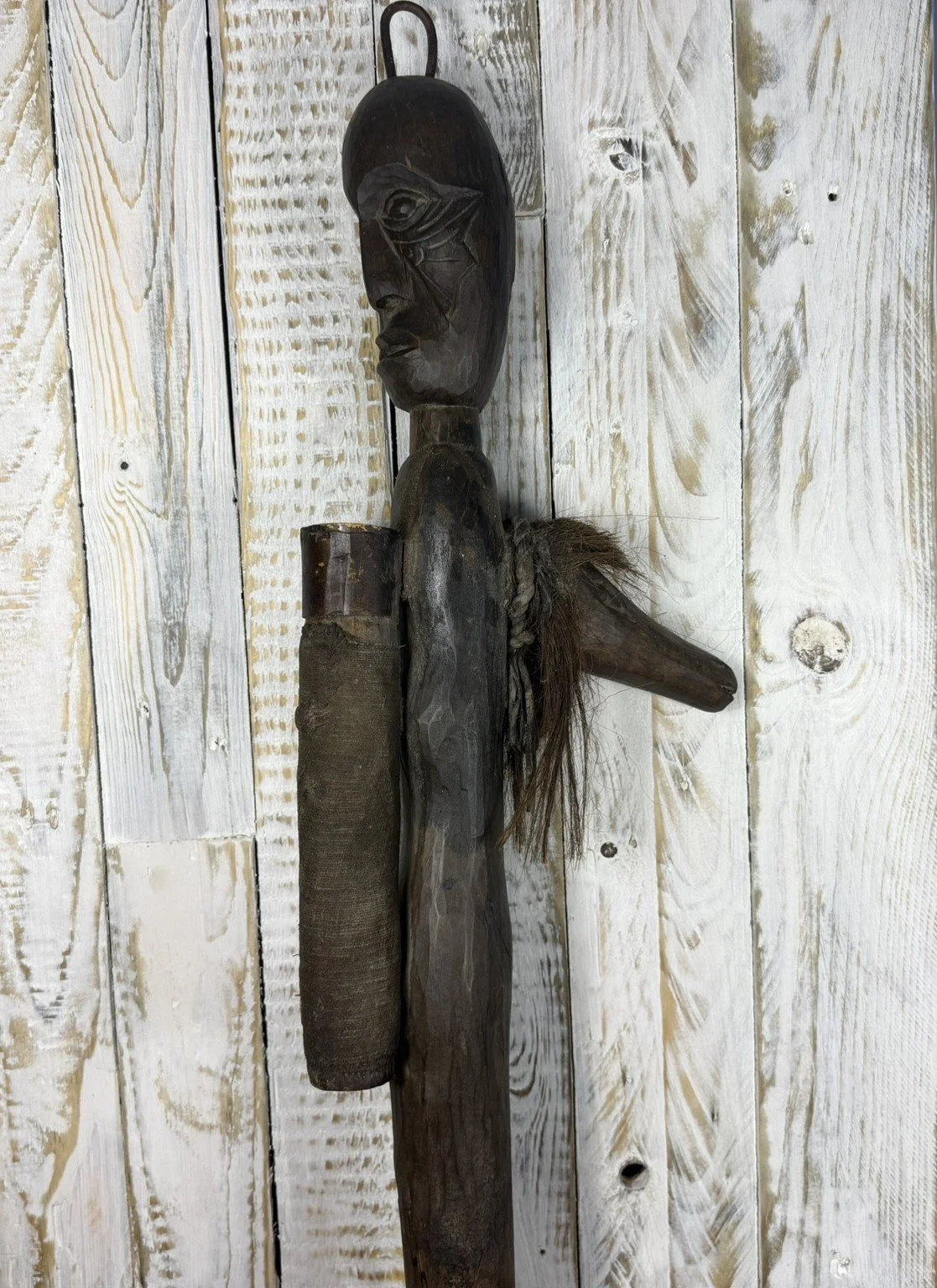
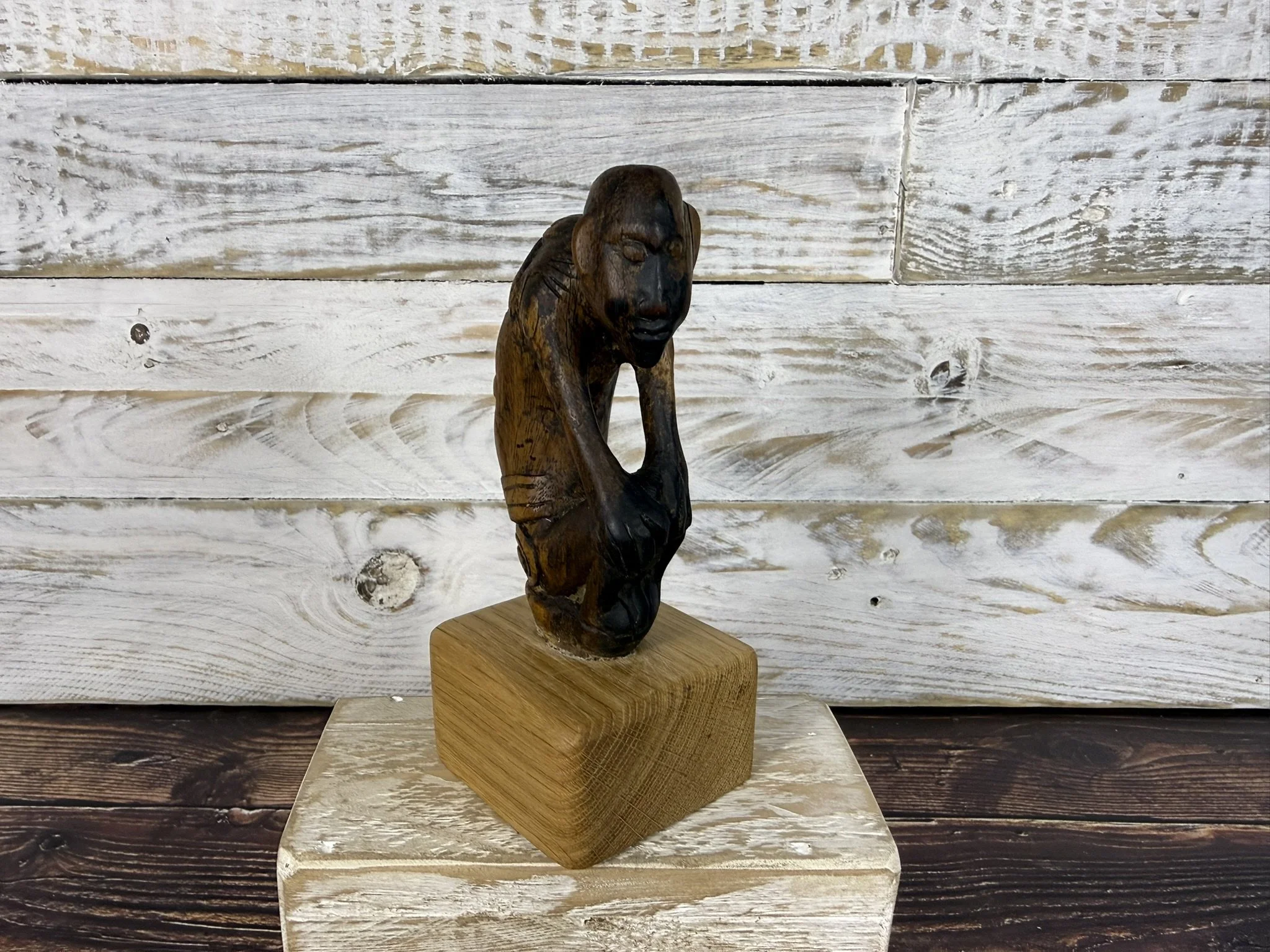
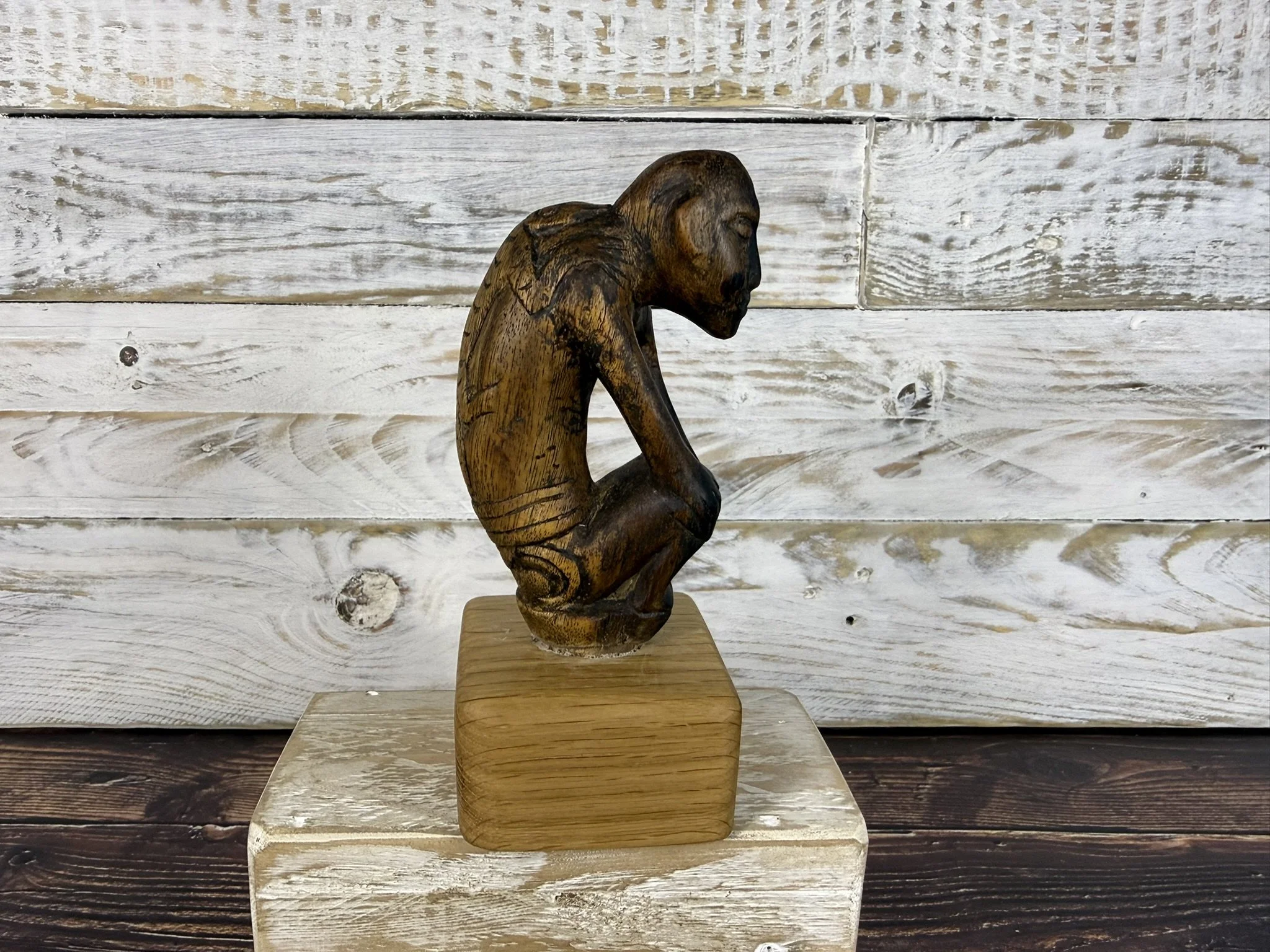
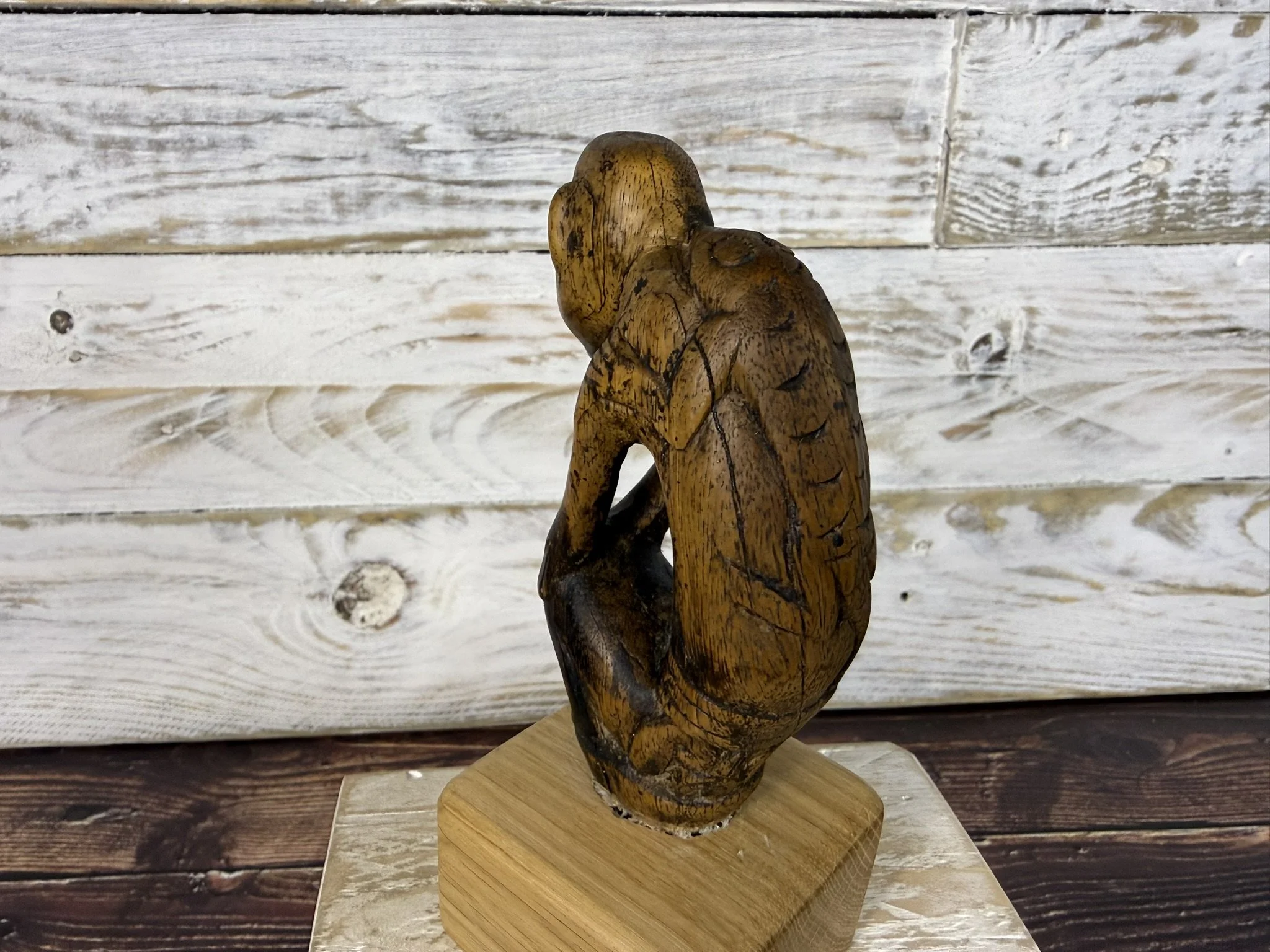
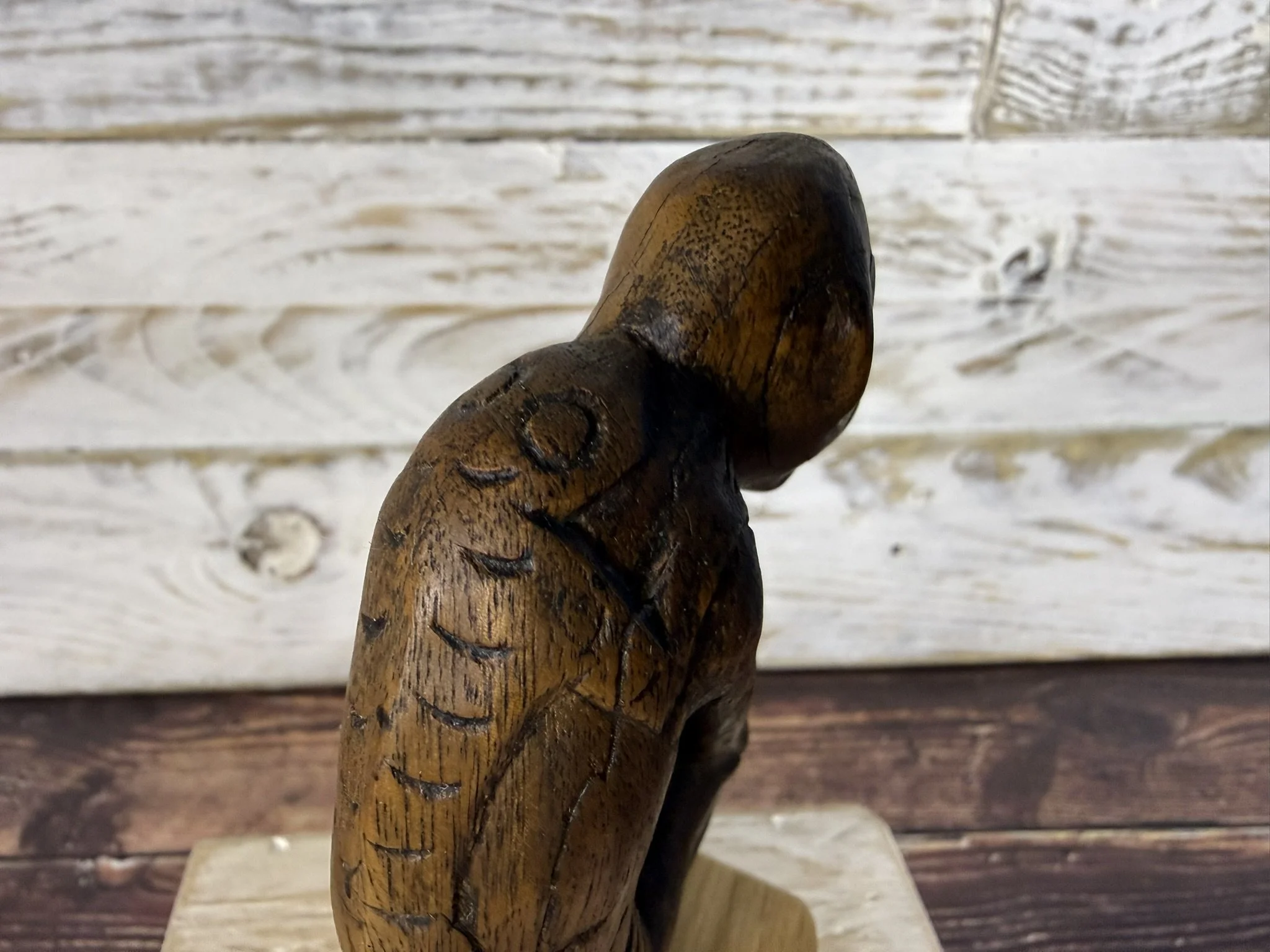
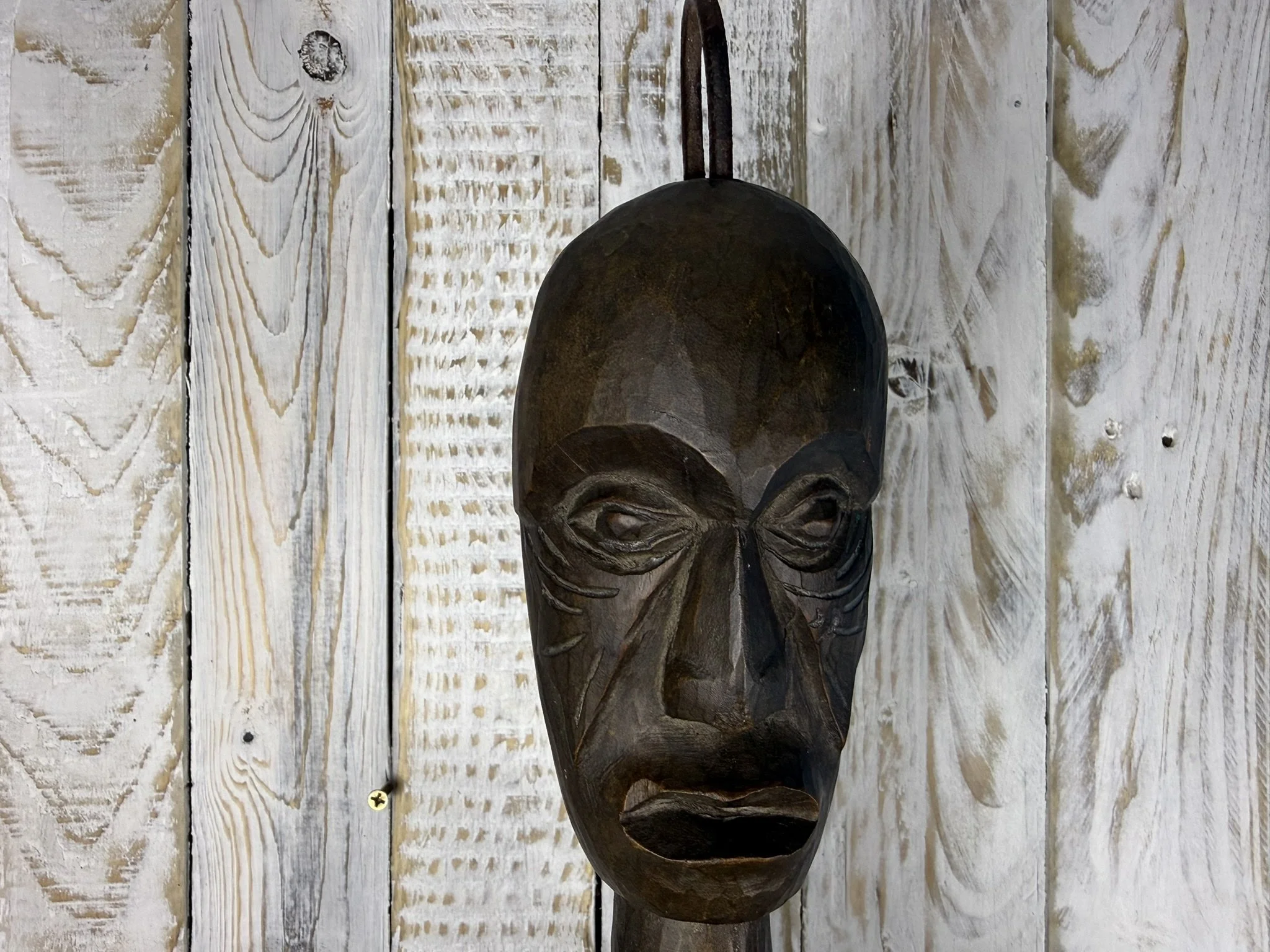
This 68 cm tall hand-carved wooden figure, depicting a man’s and horse’s head originates from Indonesia and is believed to relate to agricultural blessing or fertility practices, used symbolically to invoke protection and abundance before planting.
The figure is carved in a deliberately elongated form, with a simplified but expressive face and minimal detailing. Attached to the body is a cylindrical fibre or cloth-wrapped bundle, suggesting the object once held ritual or symbolic material rather than serving a purely decorative function.
The overall form, combined with the method of suspension and evidence of handling, indicates this was a functional ritual object, likely employed in the preparation of seeds, fields, or agricultural space prior to planting.
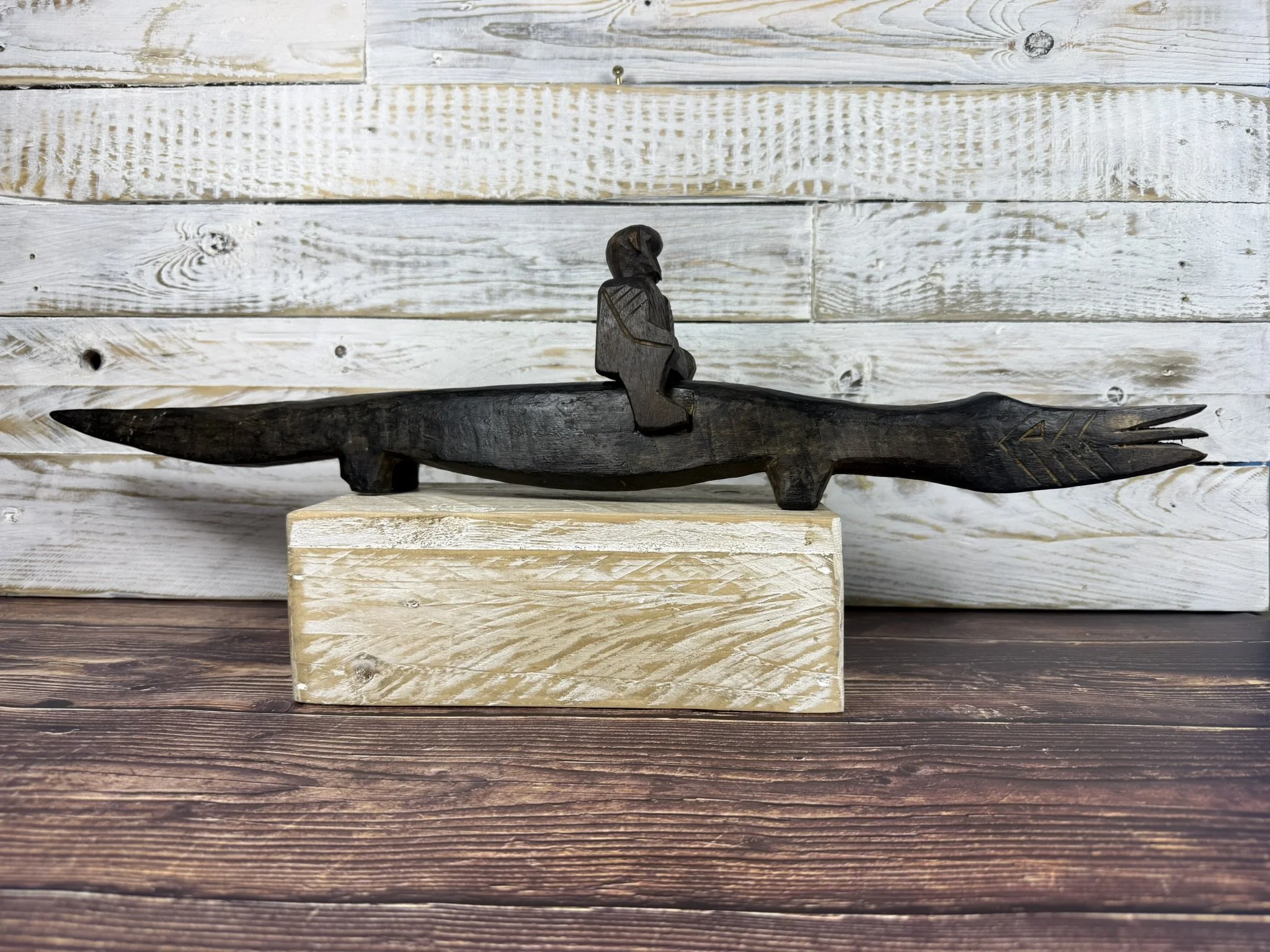
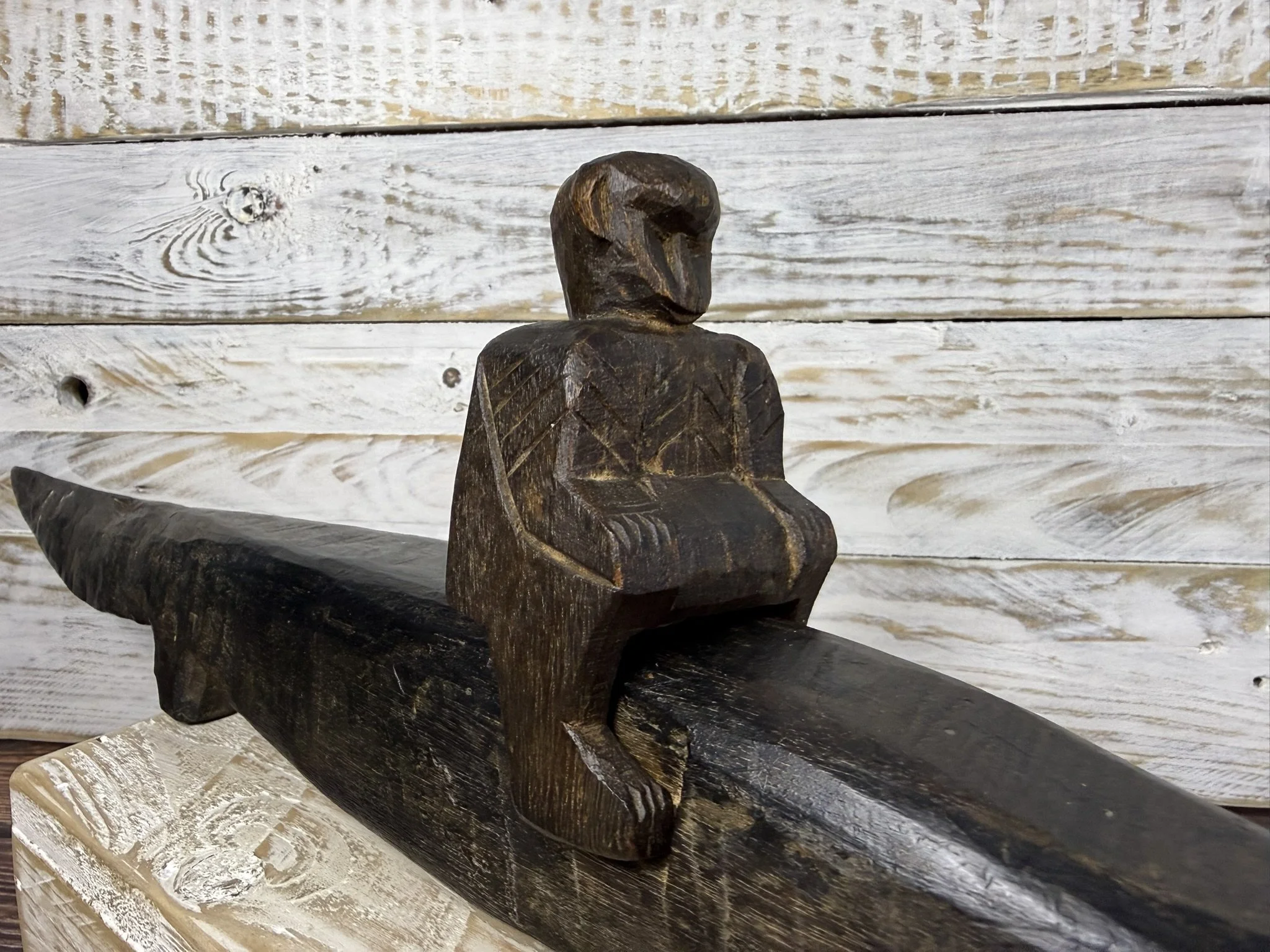
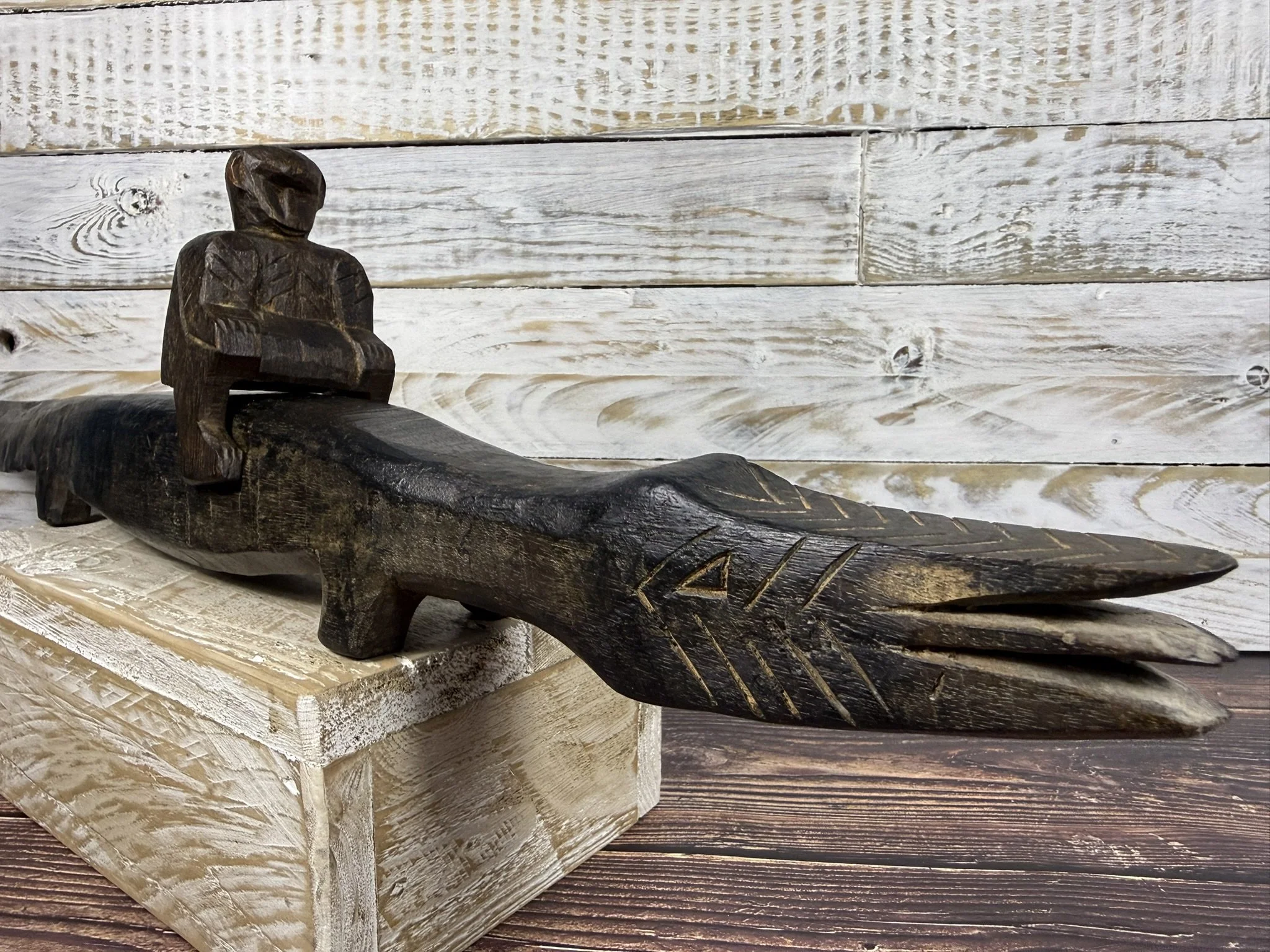
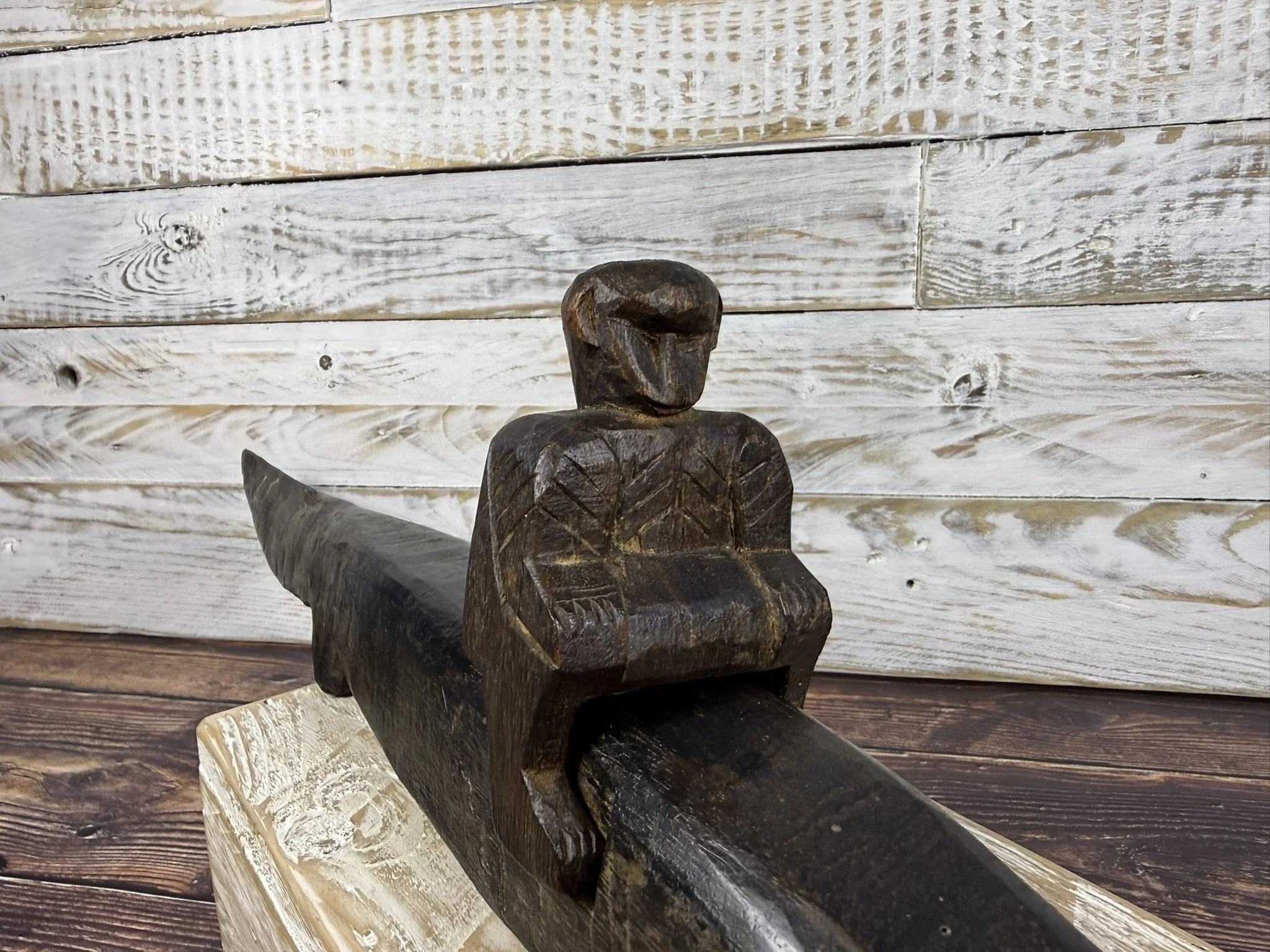
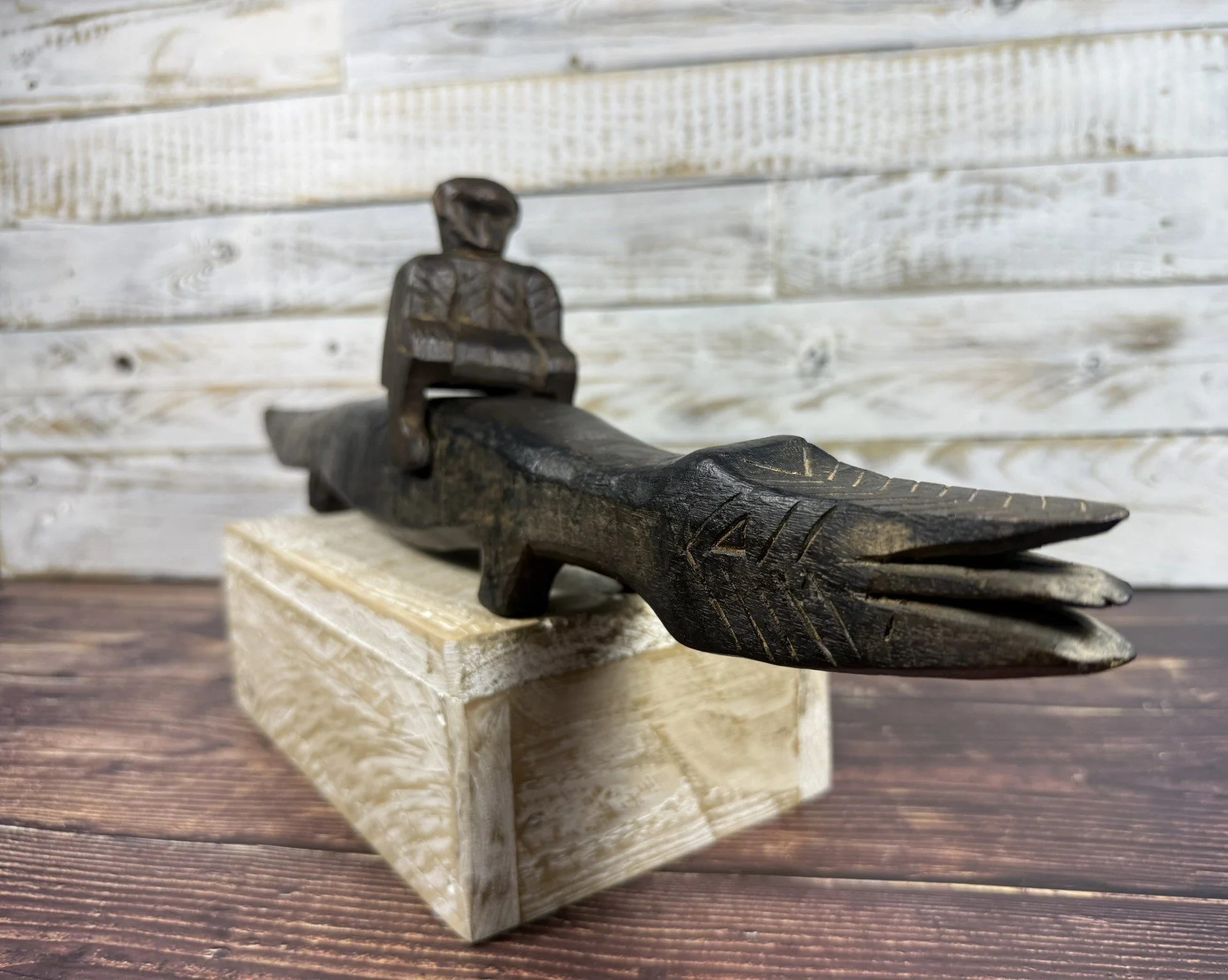
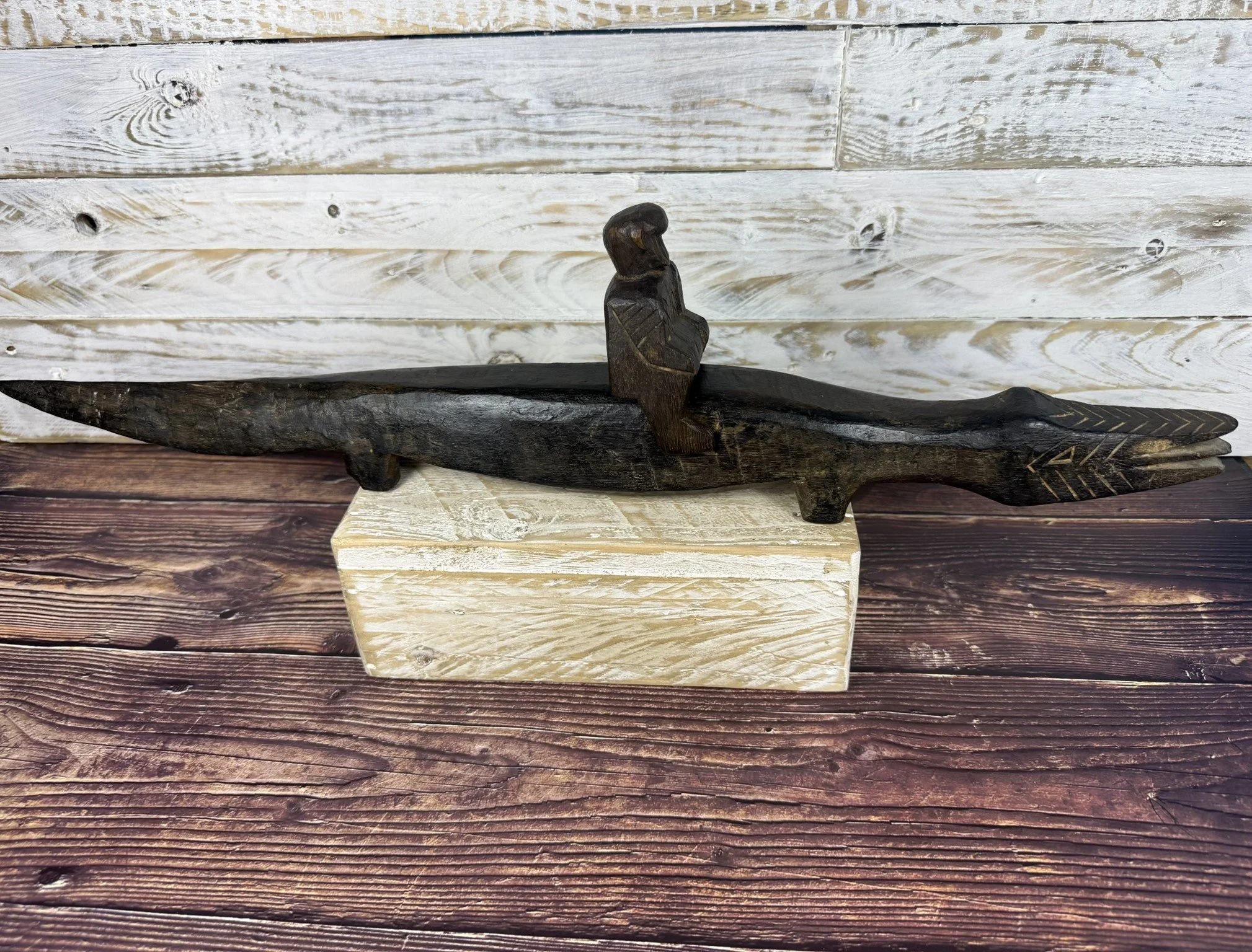
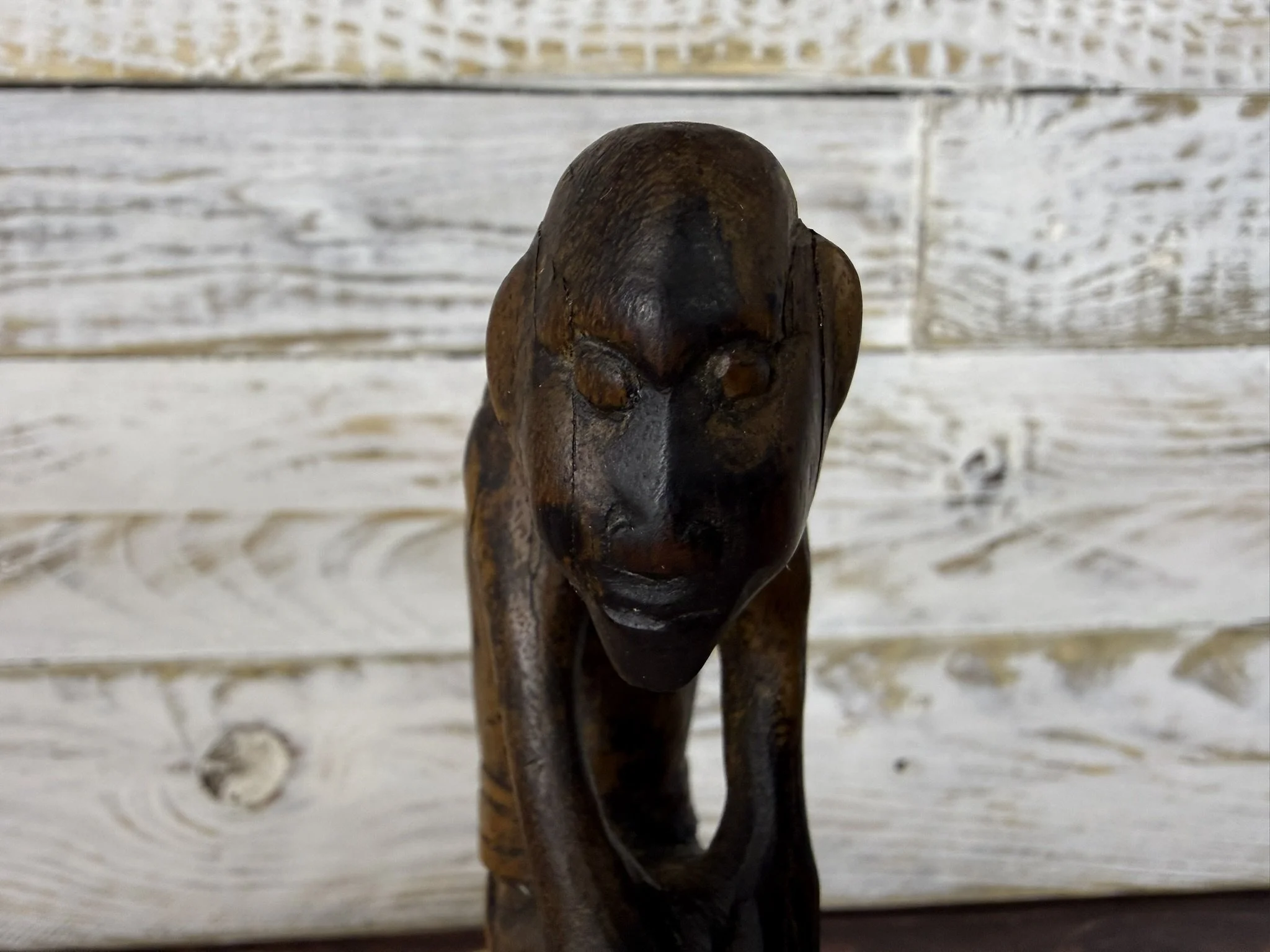
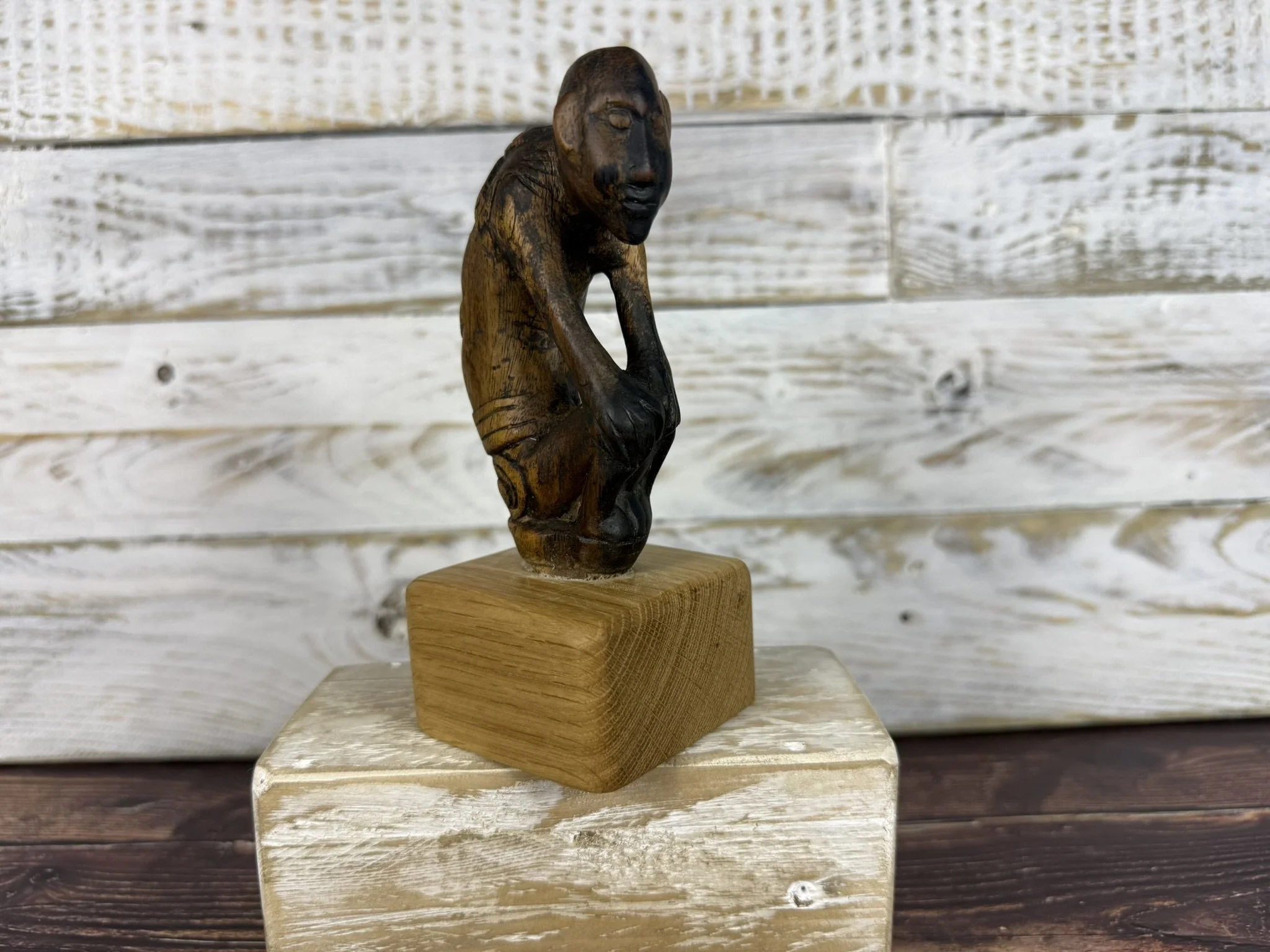
This hand-carved wooden sculpture originates from Thailand and depicts a seated human figure riding a crocodile, a powerful and recurring motif in Southeast Asian folklore. Boldly simplified in form, the piece emphasises gesture and narrative over fine detail, giving it a strong sculptural presence.
Carved from so that the man and crocodile are separate pieces, the work shows clear tool marks and an aged surface patina, suggesting it was made as a folk or vernacular object rather than decorative export ware. The elongated body of the crocodile and stylised human form reflect a storytelling tradition rooted in oral myth and symbolism.
At 62 cm in length and 15 cm in height, the sculpture reads as both an ethnographic object and a compelling piece of outsider or folk art.
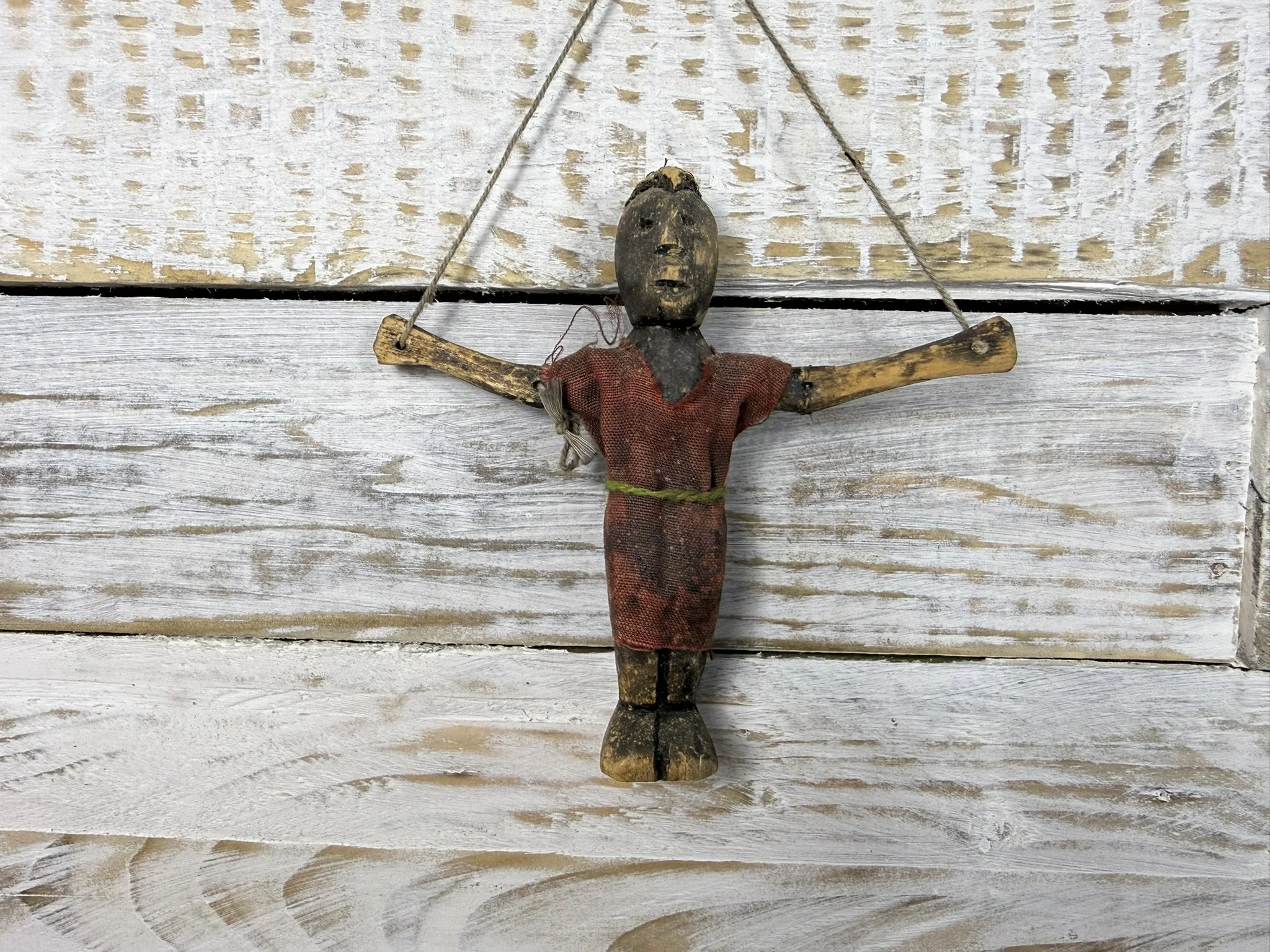
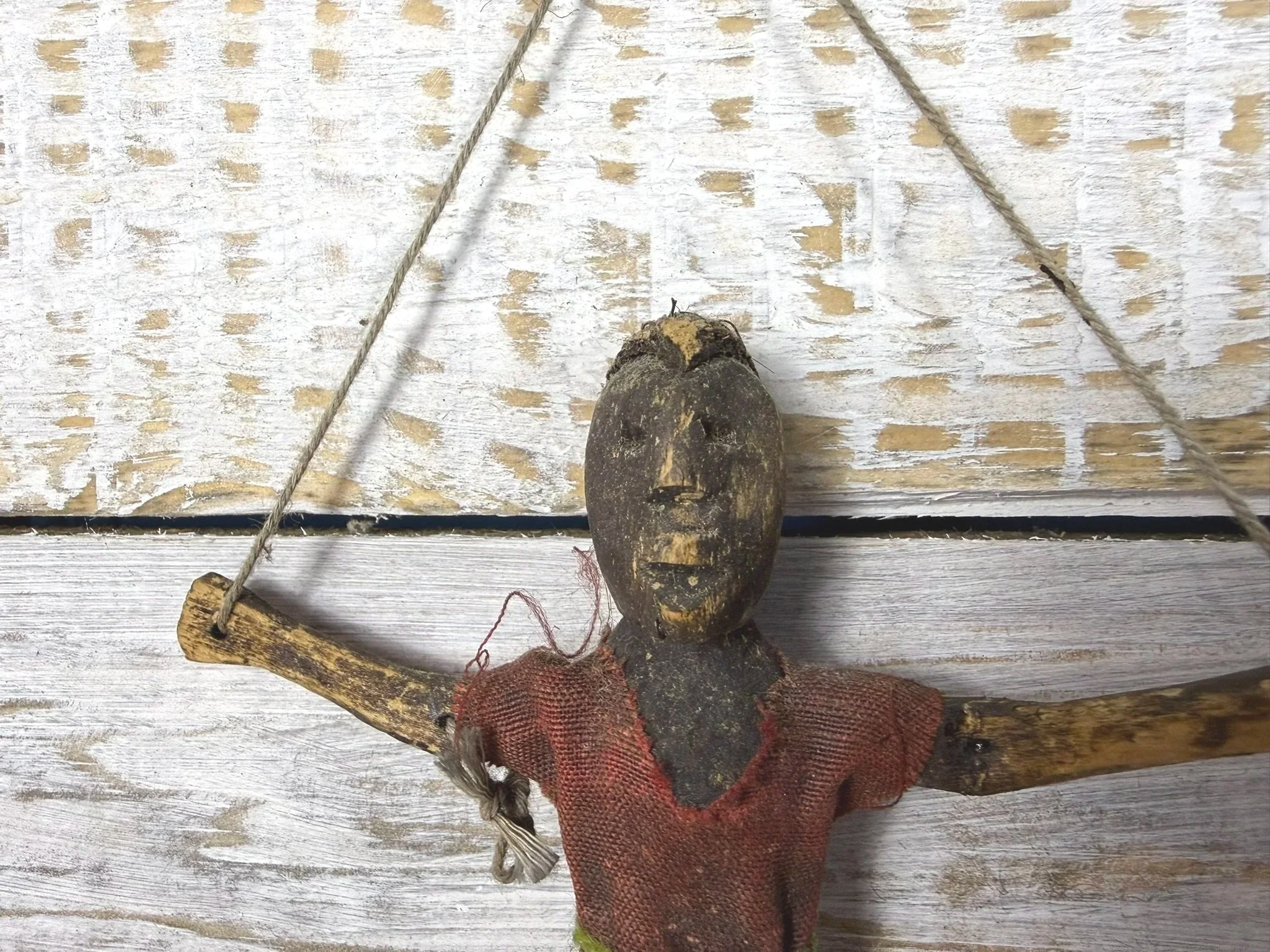
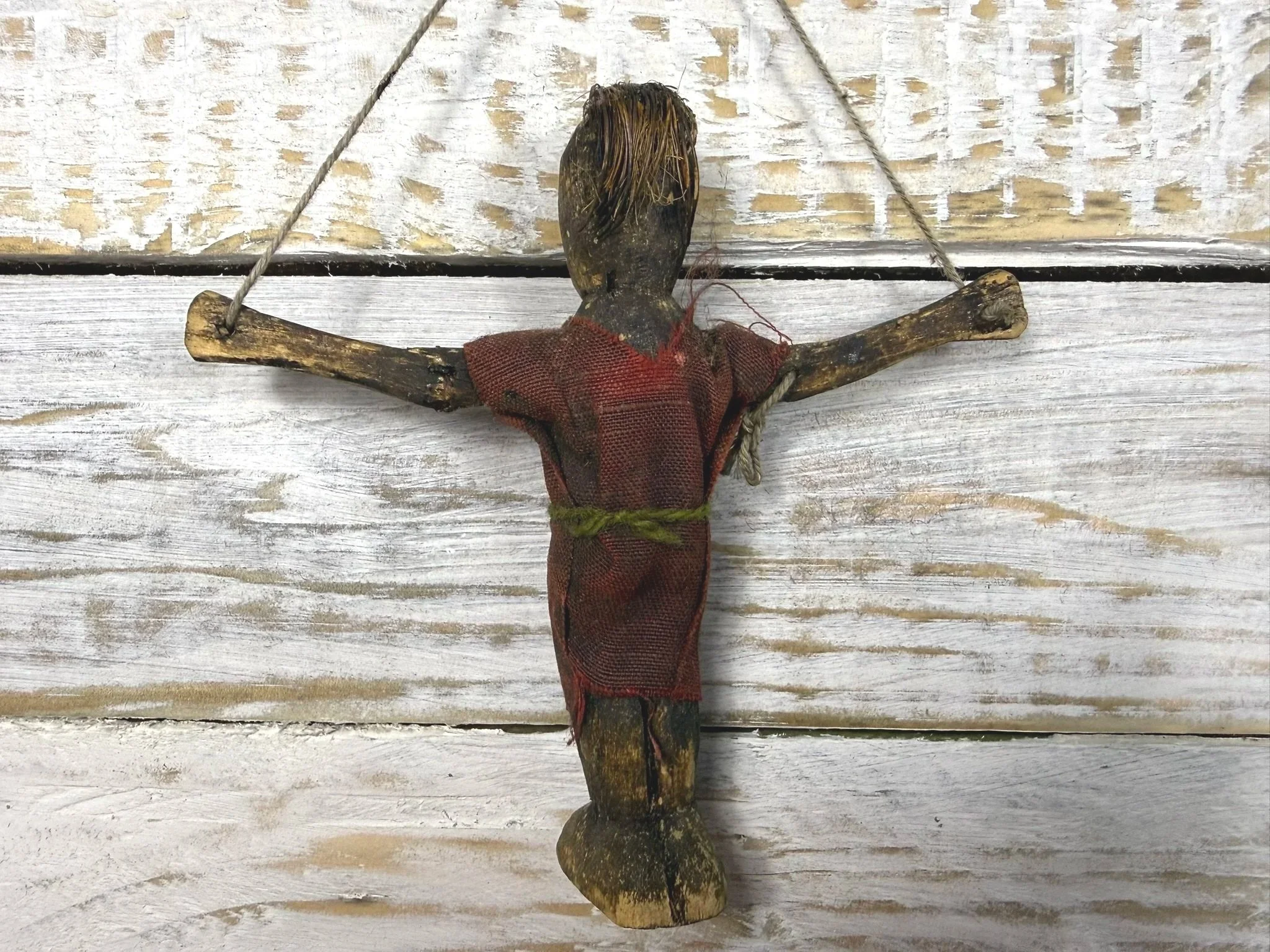
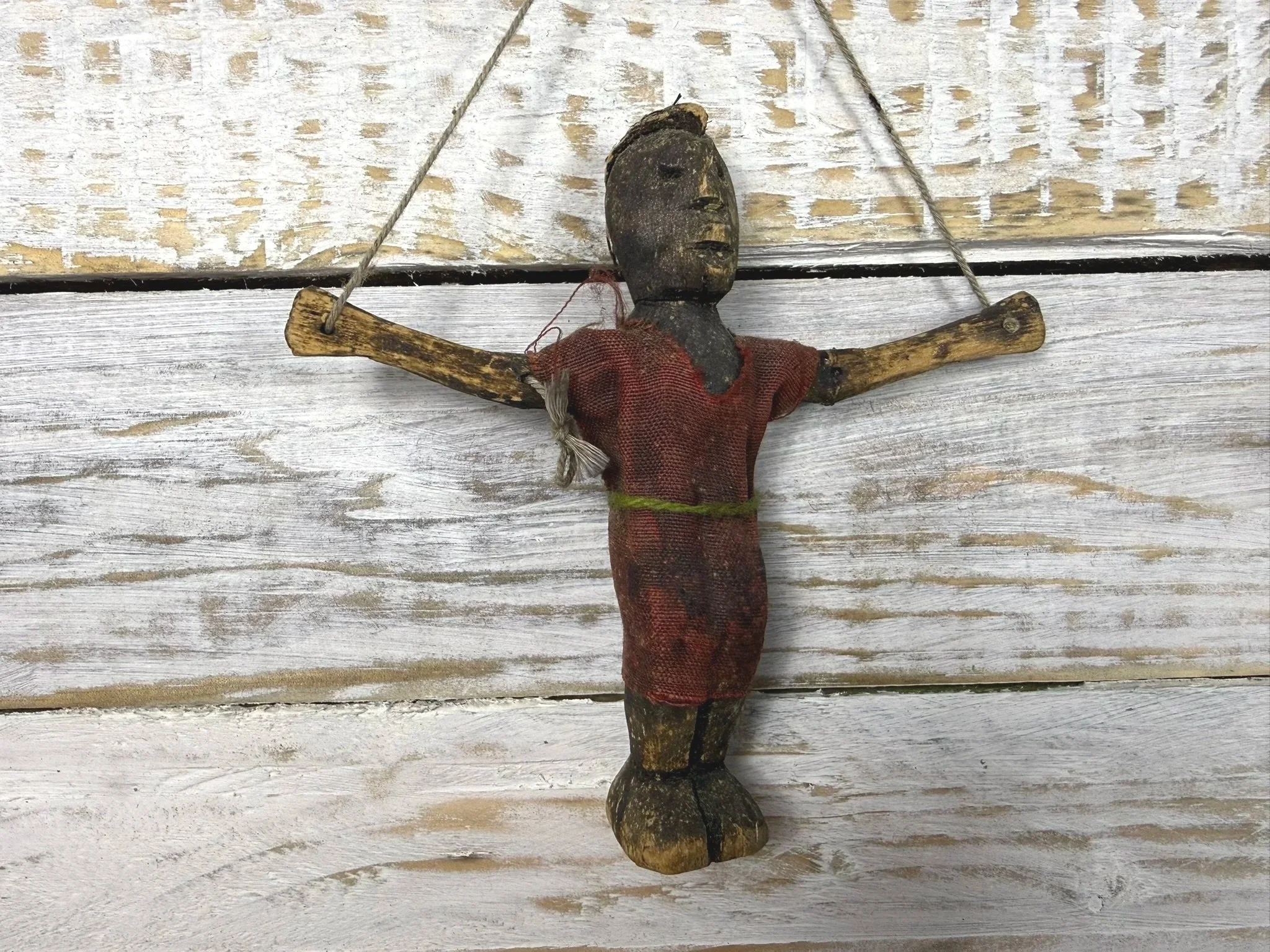
This evocative hand-carved wooden figure (12 x 12 cm) originates from Indonesia and reflects the long tradition of vernacular folk art found across the archipelago. Simply carved and dressed in a hand-stitched textile tunic, the figure has an expressive, pared-back form that emphasises character and presence over fine detail.
Figures of this kind were commonly made for household, ritual, or protective purposes, often suspended or displayed within the home. The outstretched arms and suspension cord suggest it may once have been hung on a wall or beam, where such objects were believed to offer protection, guidance, or a symbolic human presence within the domestic space.
The surface shows clear signs of age and handling, with a rich, worn patina to the wood and naturally aged fabric, giving the piece a strong sense of authenticity and quiet power.
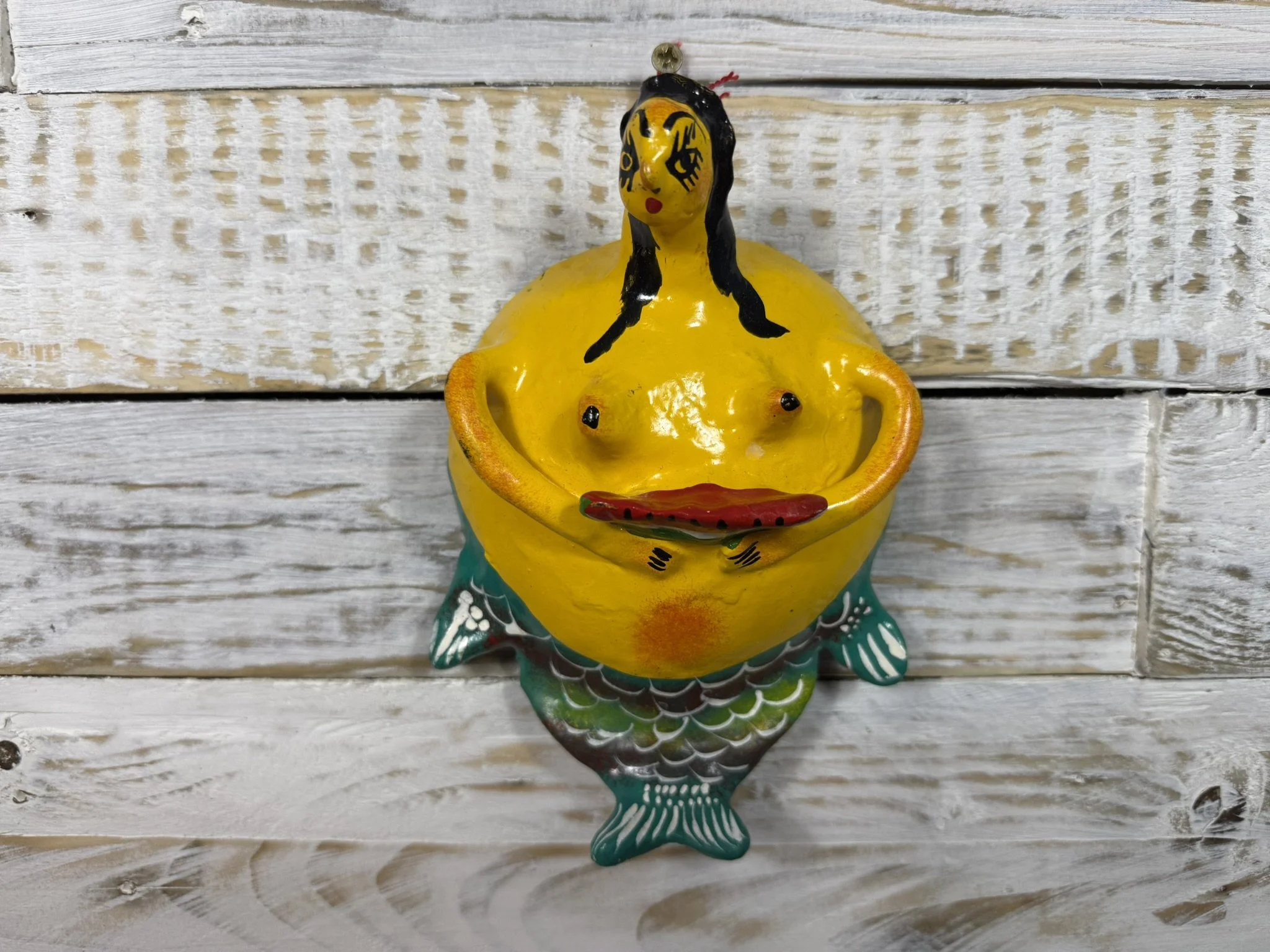
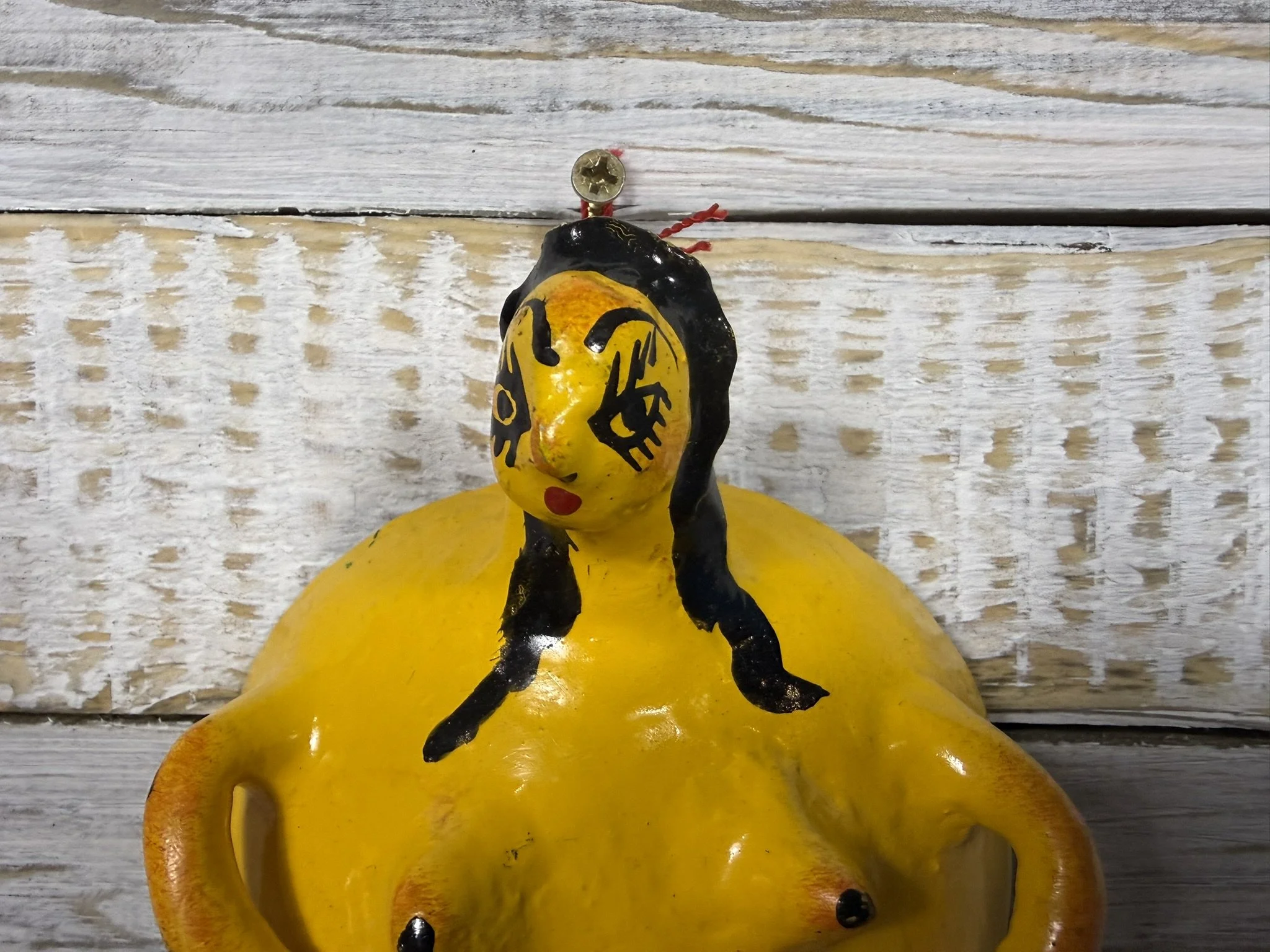
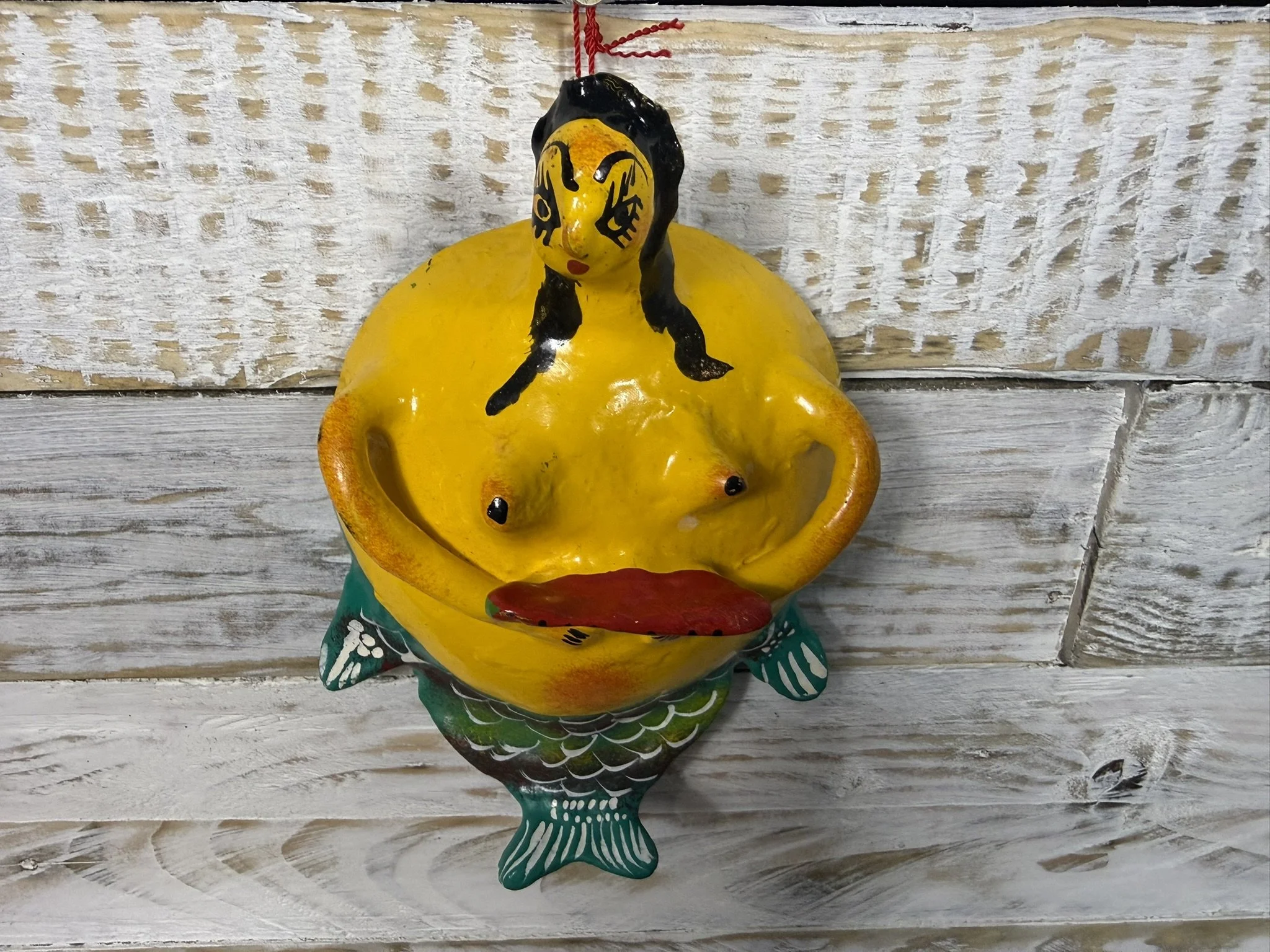
Although a modern piece, this Mexican mermaid figurine is a charming example of folk art, handcrafted from coconut shell and clay. Rich in texture and character, it combines natural materials with an imaginative, human touch, resulting in a piece that feels both playful and deeply rooted in craft tradition.
The mermaid’s form carries an appealing naivety, with subtle surface variations and hand-shaped details that make each piece inherently individual. Earthy tones and organic materials give it warmth and presence, allowing it to sit comfortably within both contemporary and collected interiors.
Material: The body is made from a carved and painted coconut shell, with other parts often molded from clay.
Style: It features a colorful, whimsical design, characteristic of traditional Mexican artesanía (crafts). The style can be associated with "sirens" (La Sirena) in Mexican folklore.
Use: These are primarily decorative items, often used as wall hangings or Christmas ornaments.
Size: 14 cm length, 7 cm width, 17 cm height.
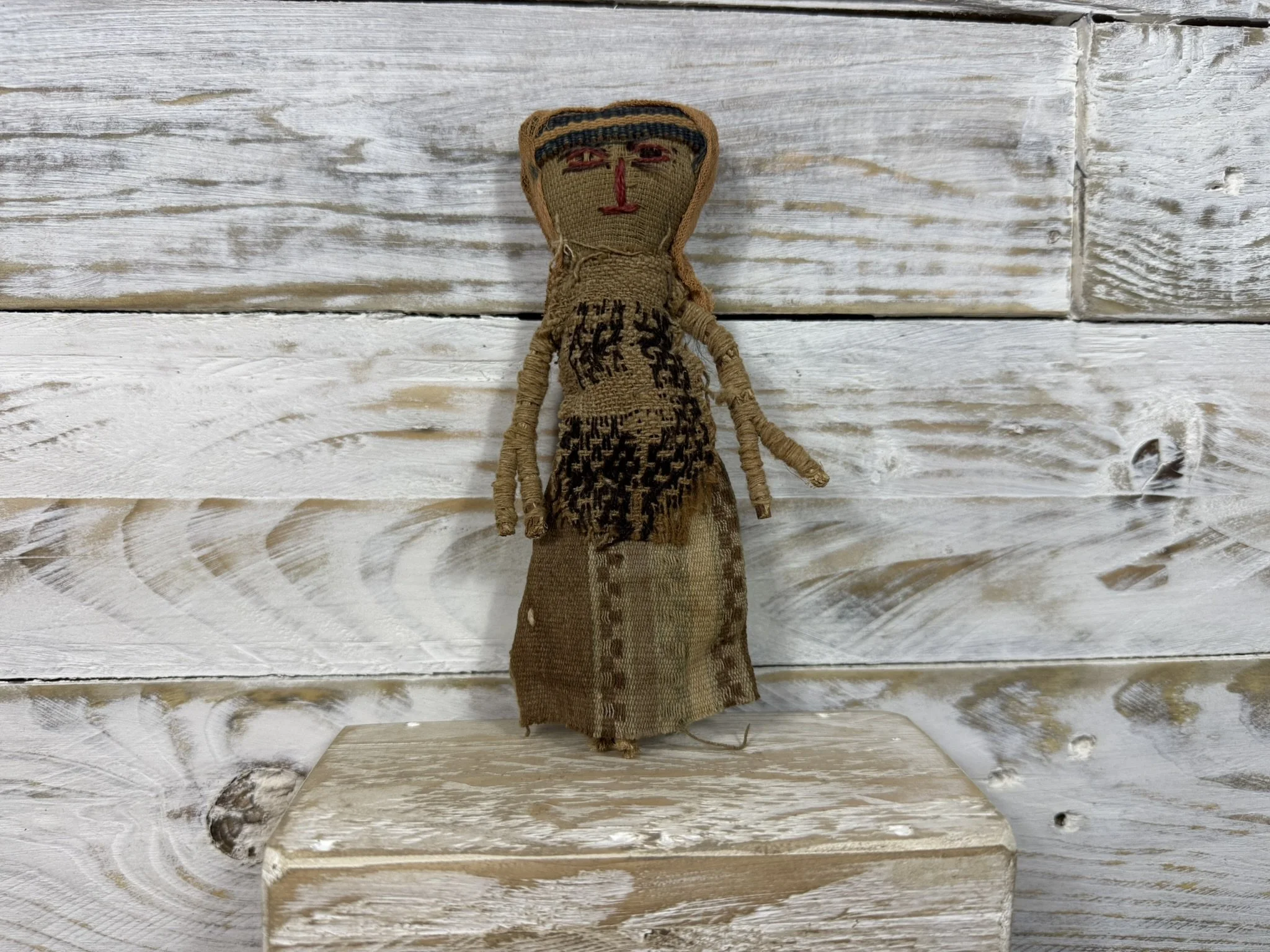
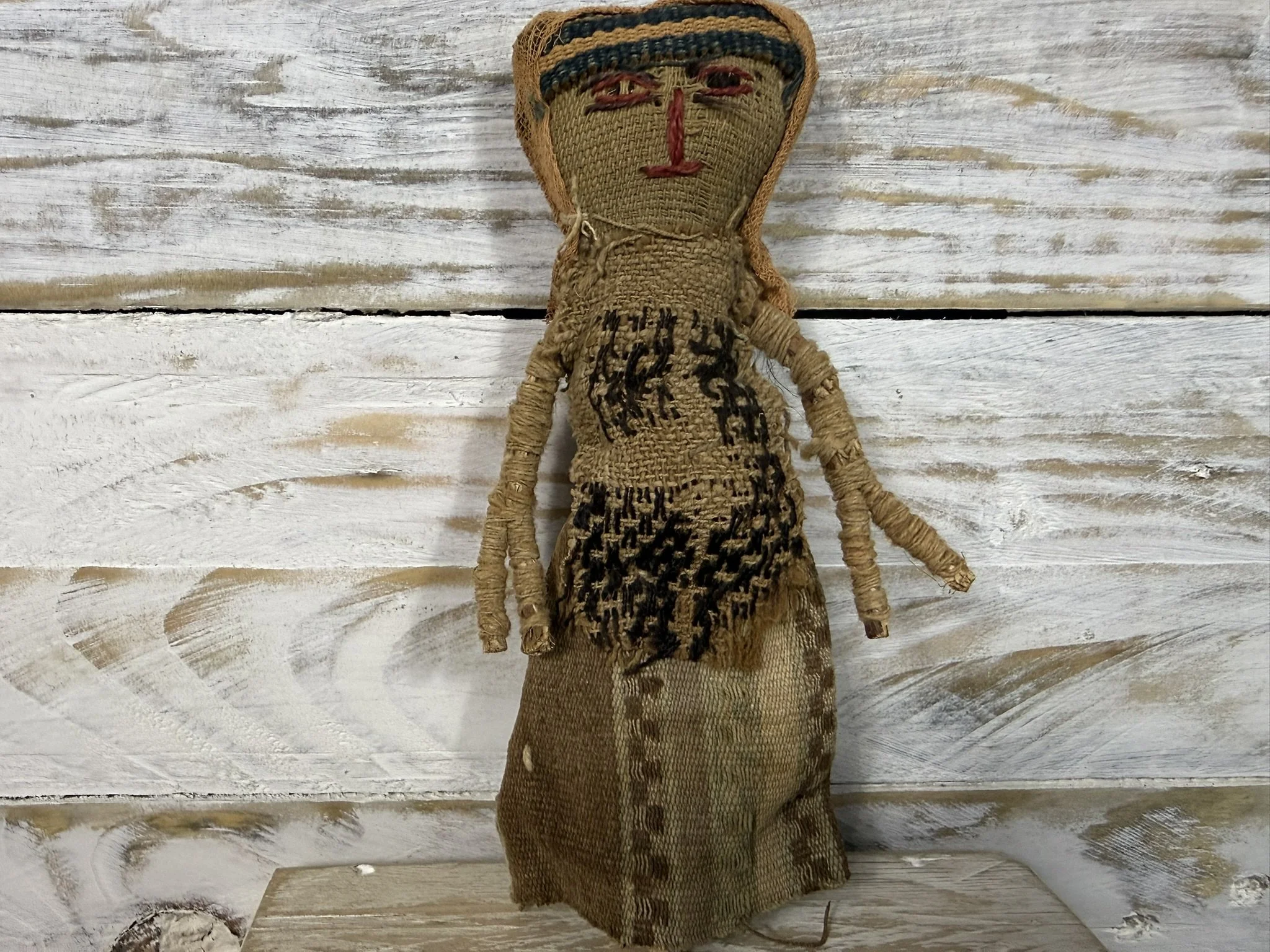
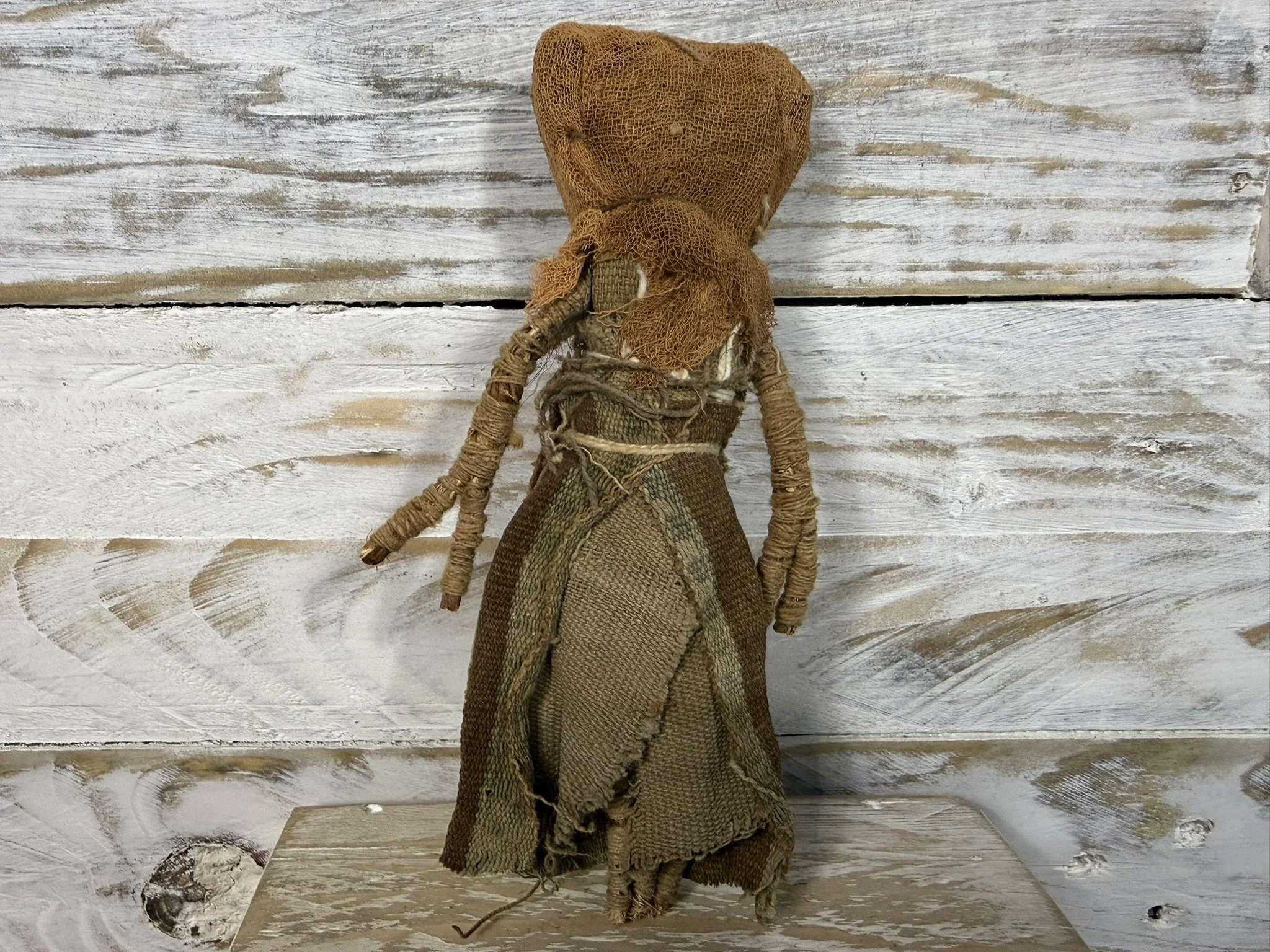
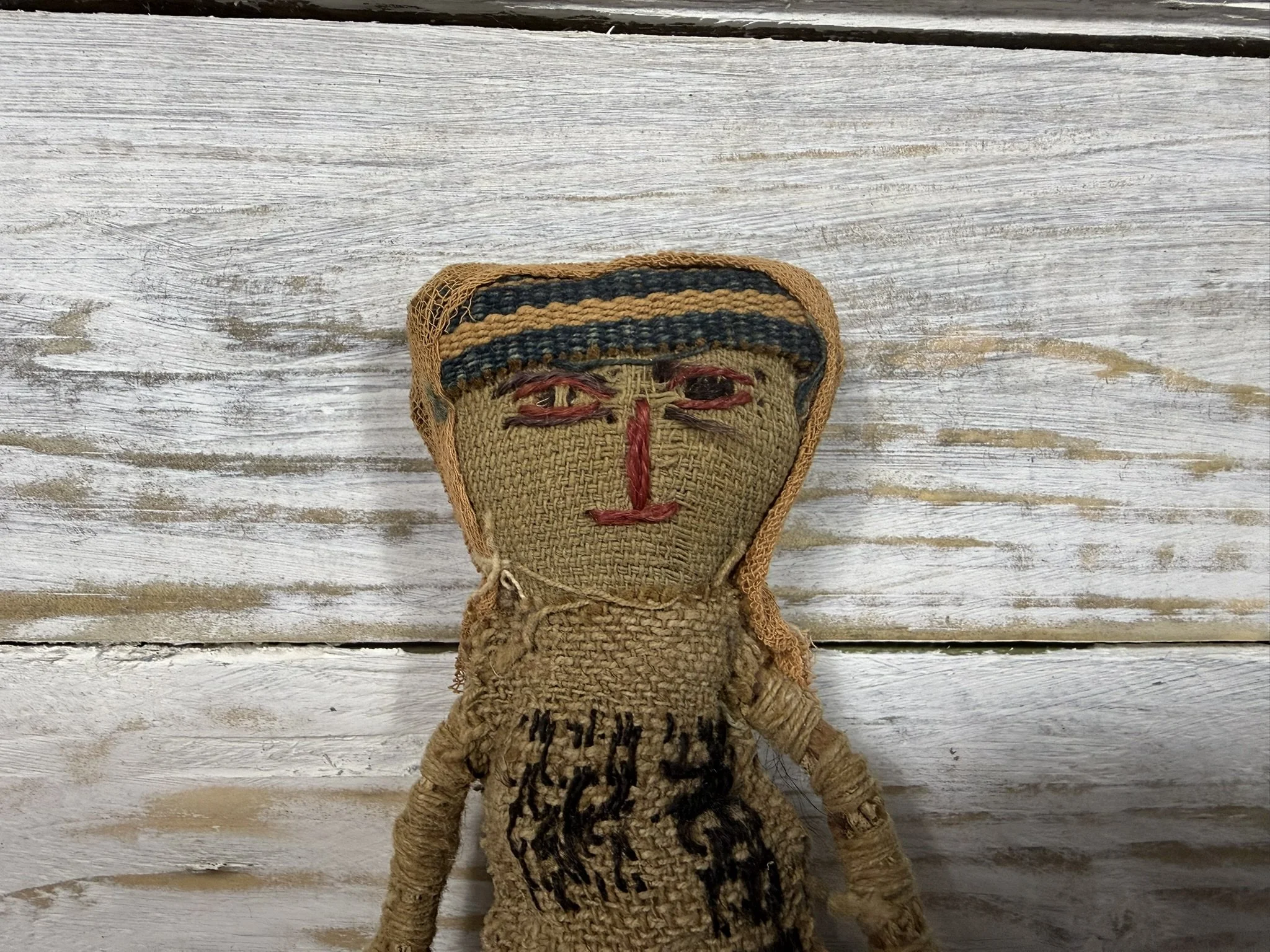
This Vintage Peruvian Chancay doll is a striking example of ancient textile expression, handmade from woven fibres and stitched with simple yet evocative detail. Its elongated form, wrapped body, and expressive face reflect the distinctive aesthetic of the Chancay culture, where textiles held deep social and symbolic importance.
Earth-toned cloth, visible stitching, and areas of natural wear give the figure a quiet presence, shaped by age and time rather than refinement. Both sculptural and intimate, it reads as an object of story and human connection, carrying a sense of the hands and traditions that formed it.
The figure is 15cm in height.
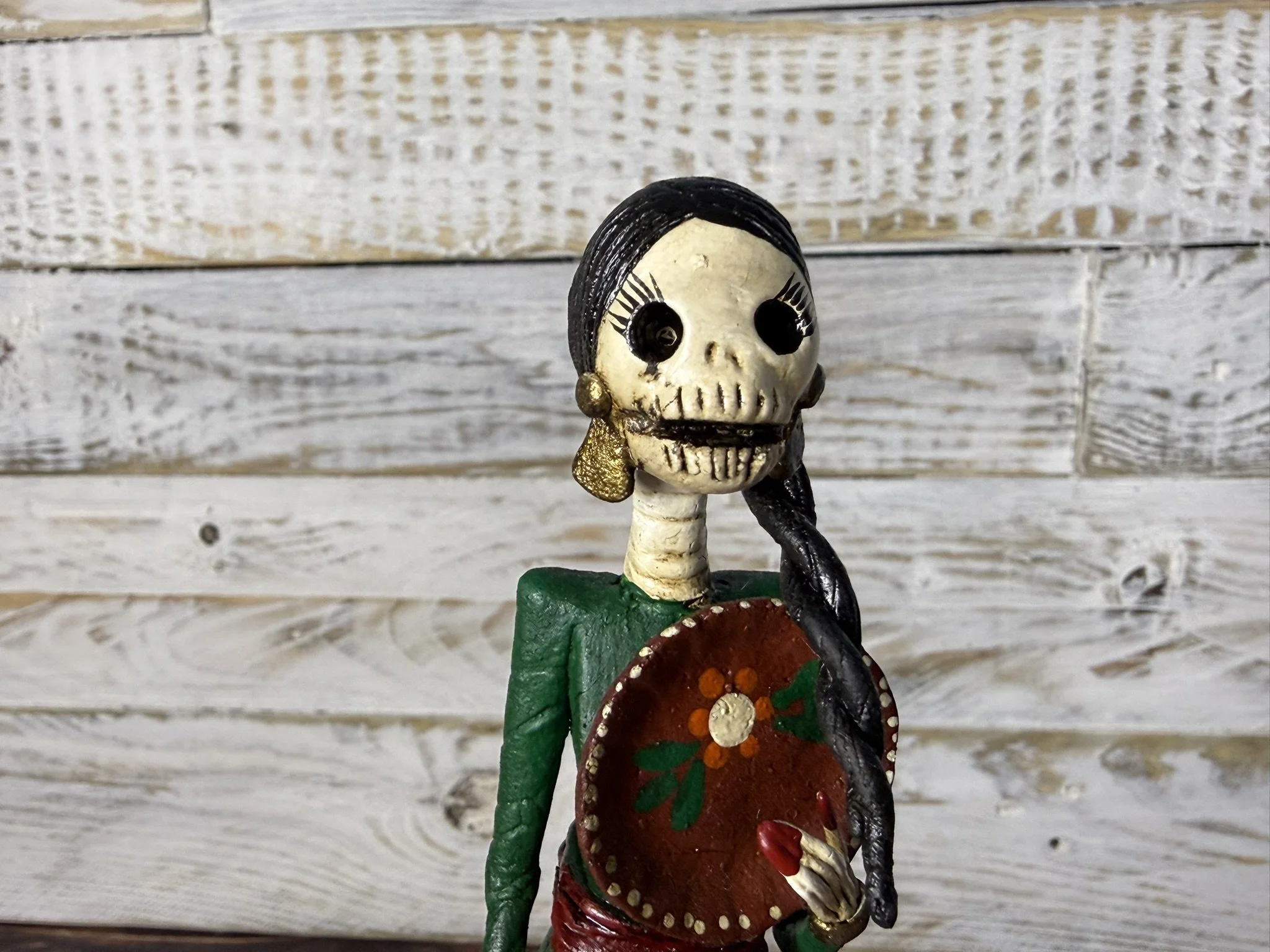
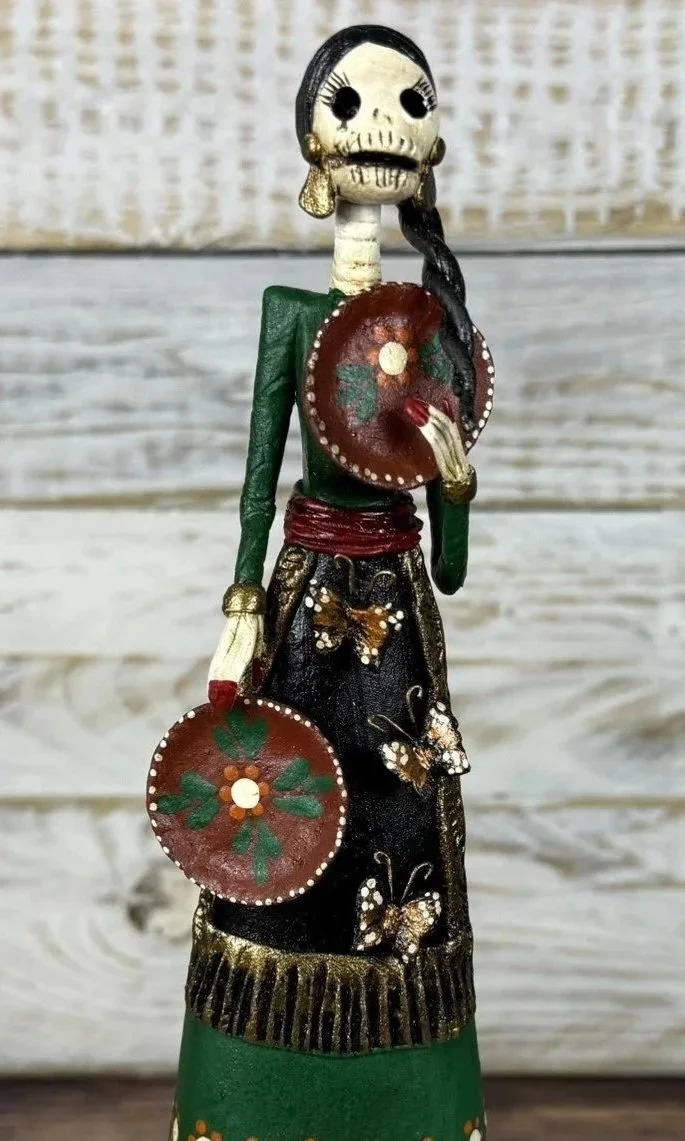
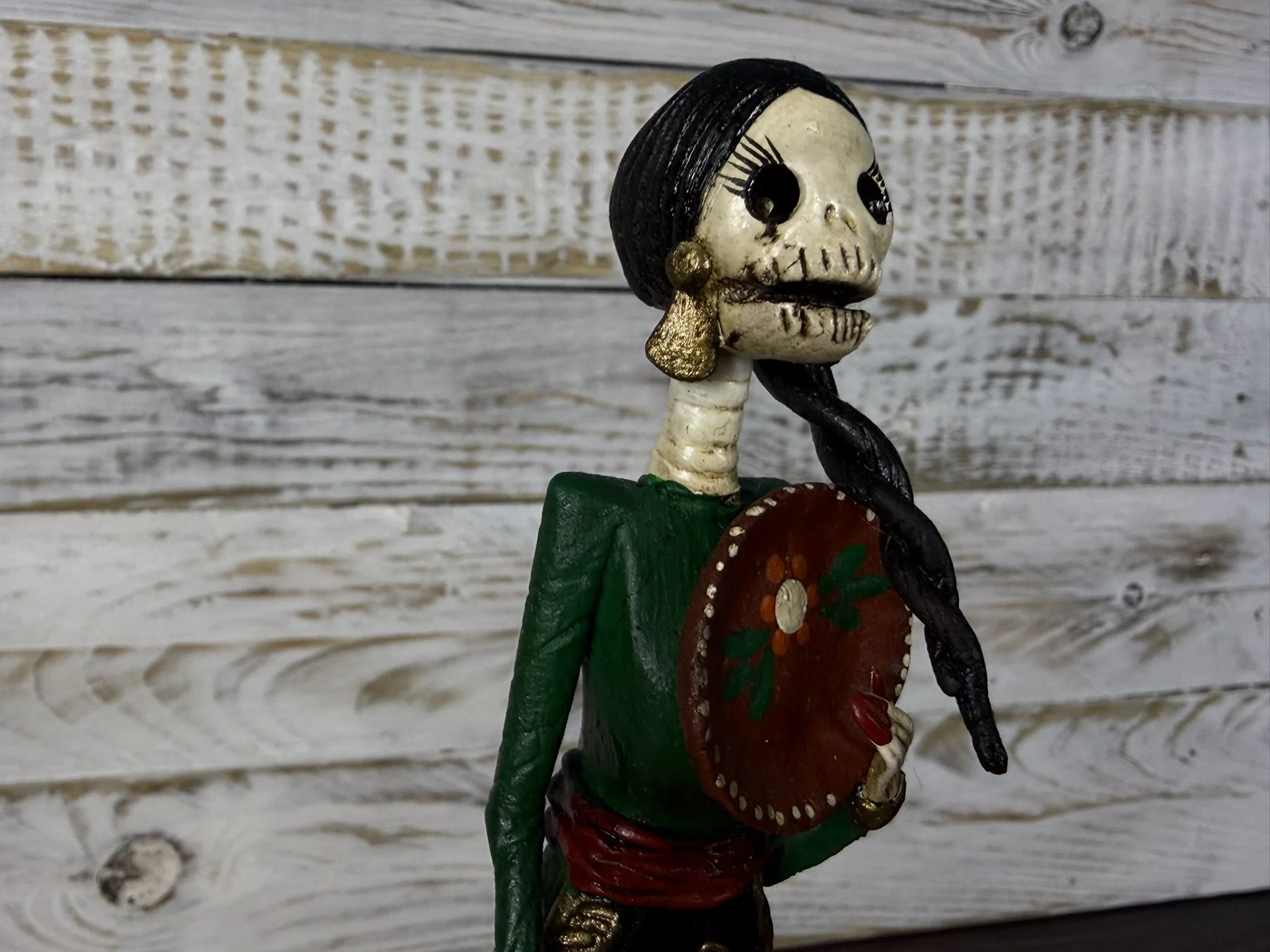
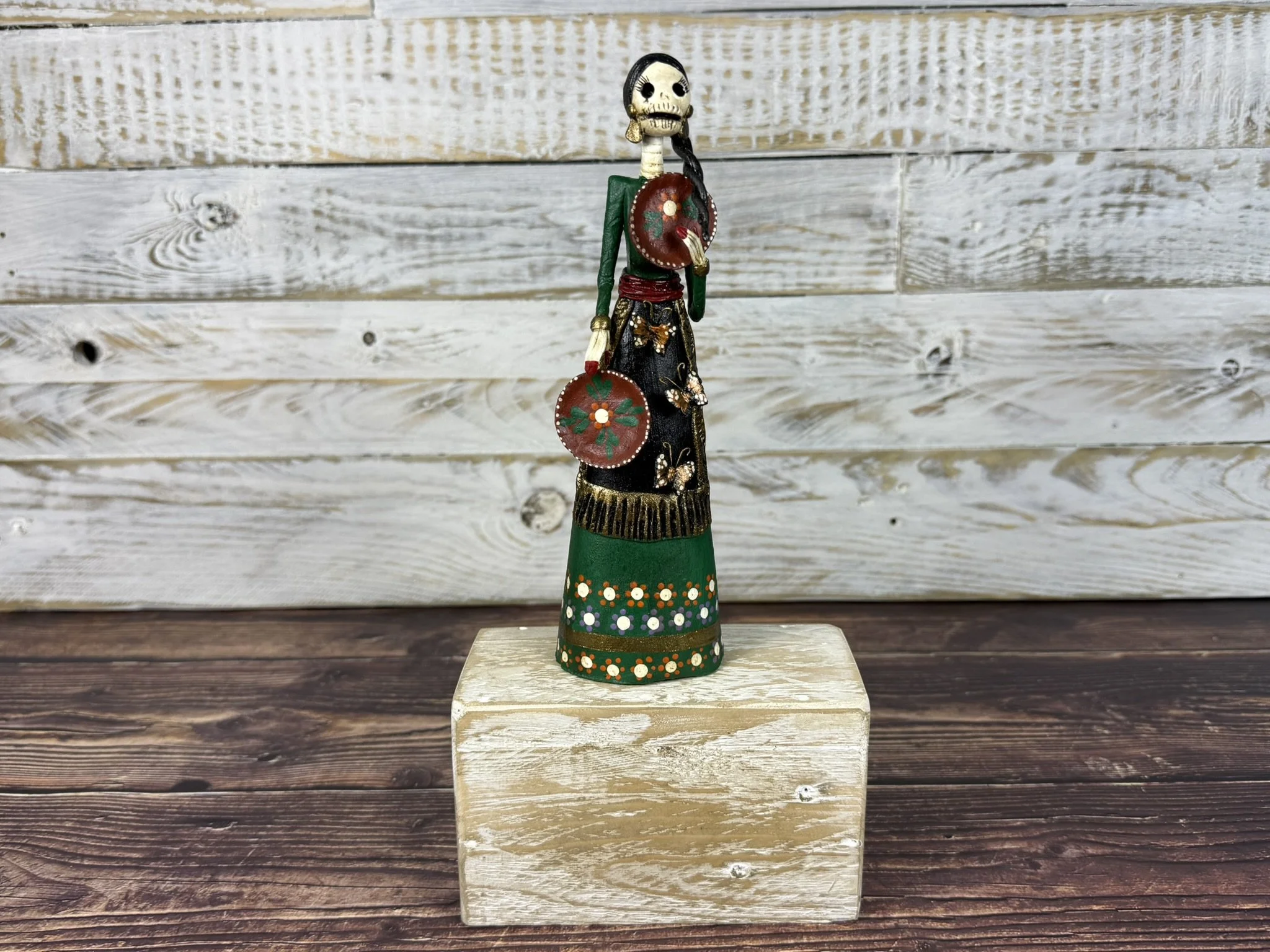
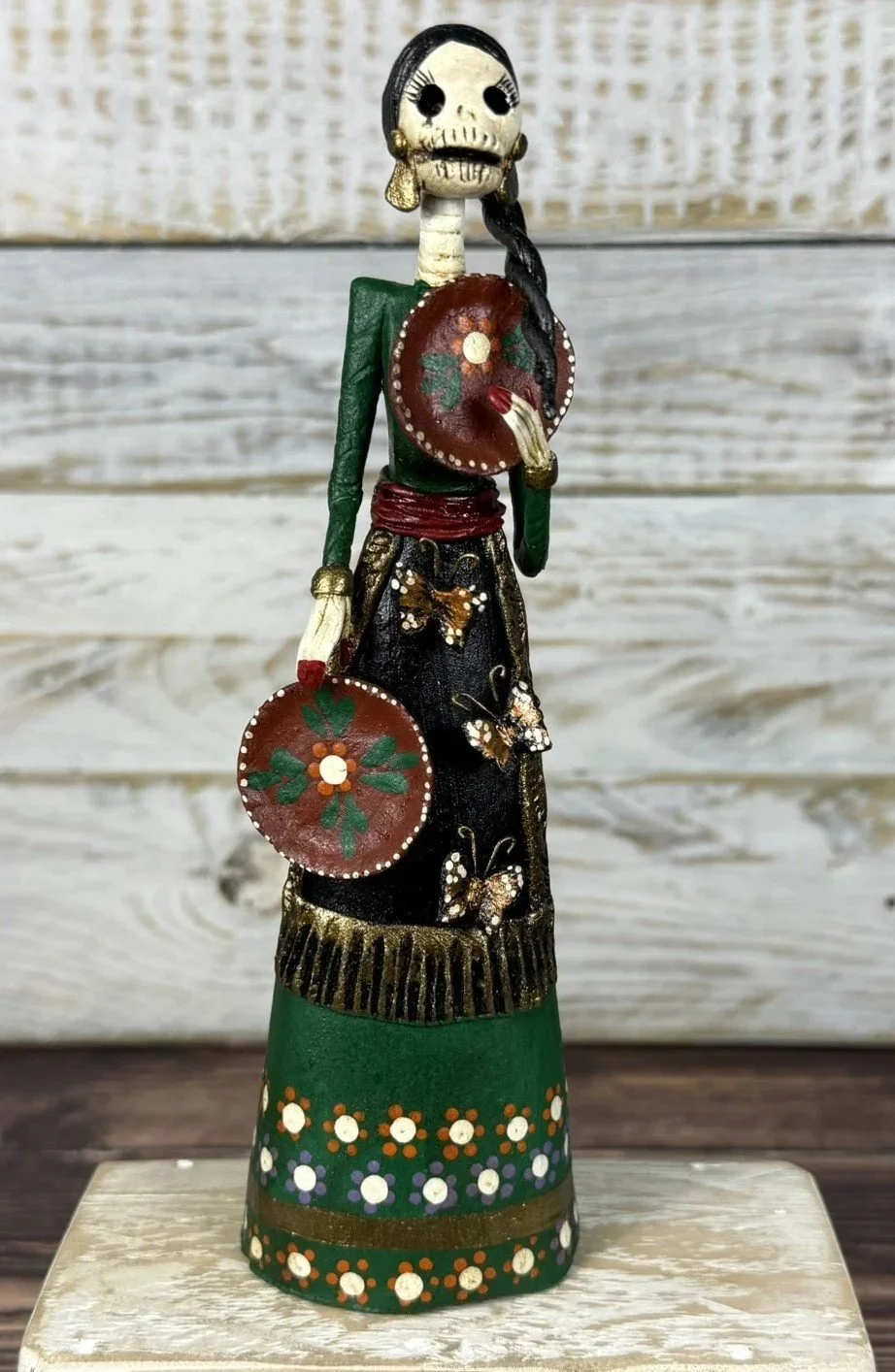
A beautiful handmade clay figure of La Catrina, the iconic elegant skeleton figure of Dia de los Muertos (Day of the Dead) in Mexico, a cultural fusion of indigenous traditions and Catholic holidays, celebrating life and death through vibrant art, costumes, and honouring ancestors, not mourning them as something scary.
This particular La Catrina was bought in San Diego and was made in Capula, Mexico.
The height of La Catrina is 21 cm.
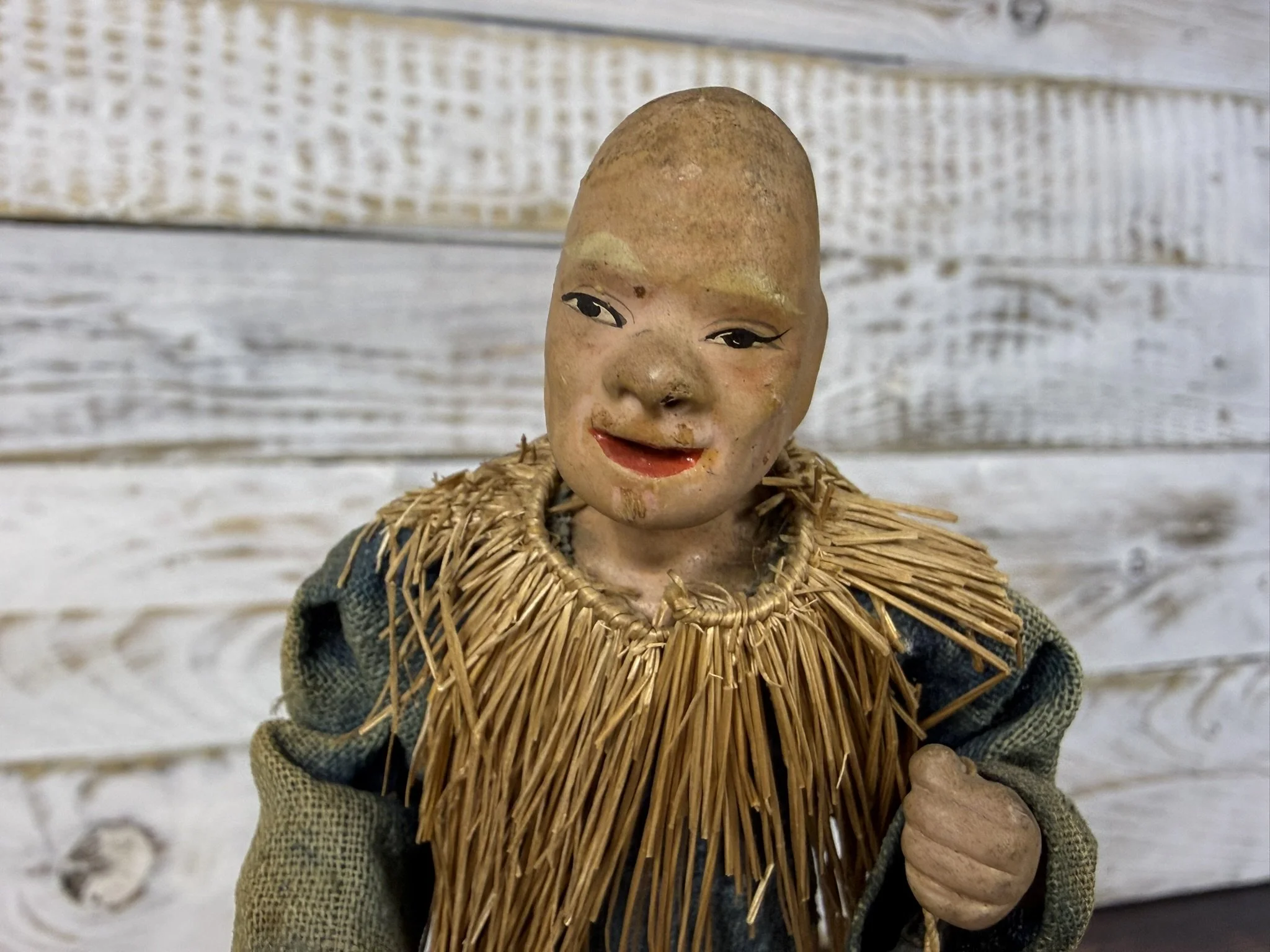
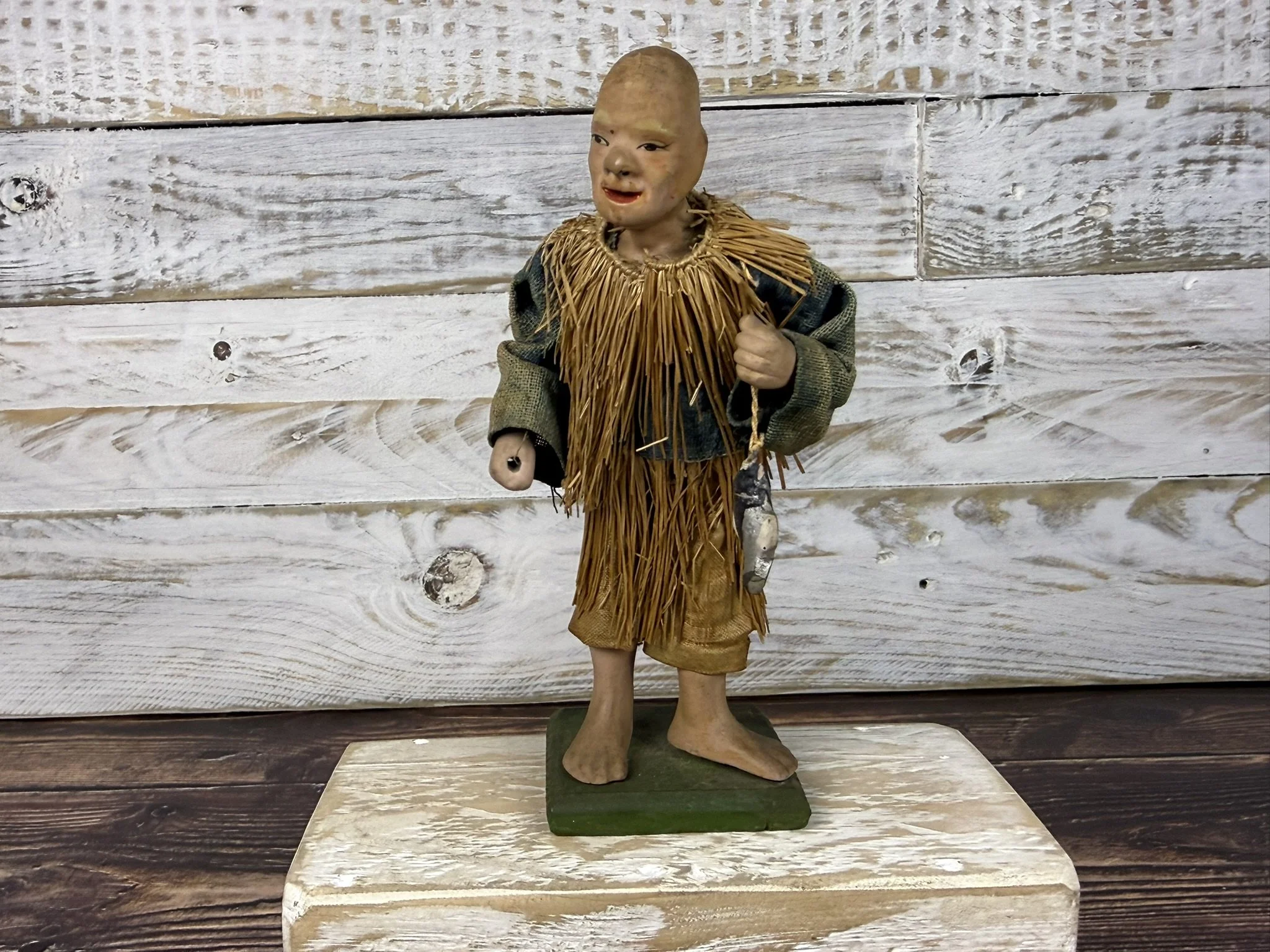
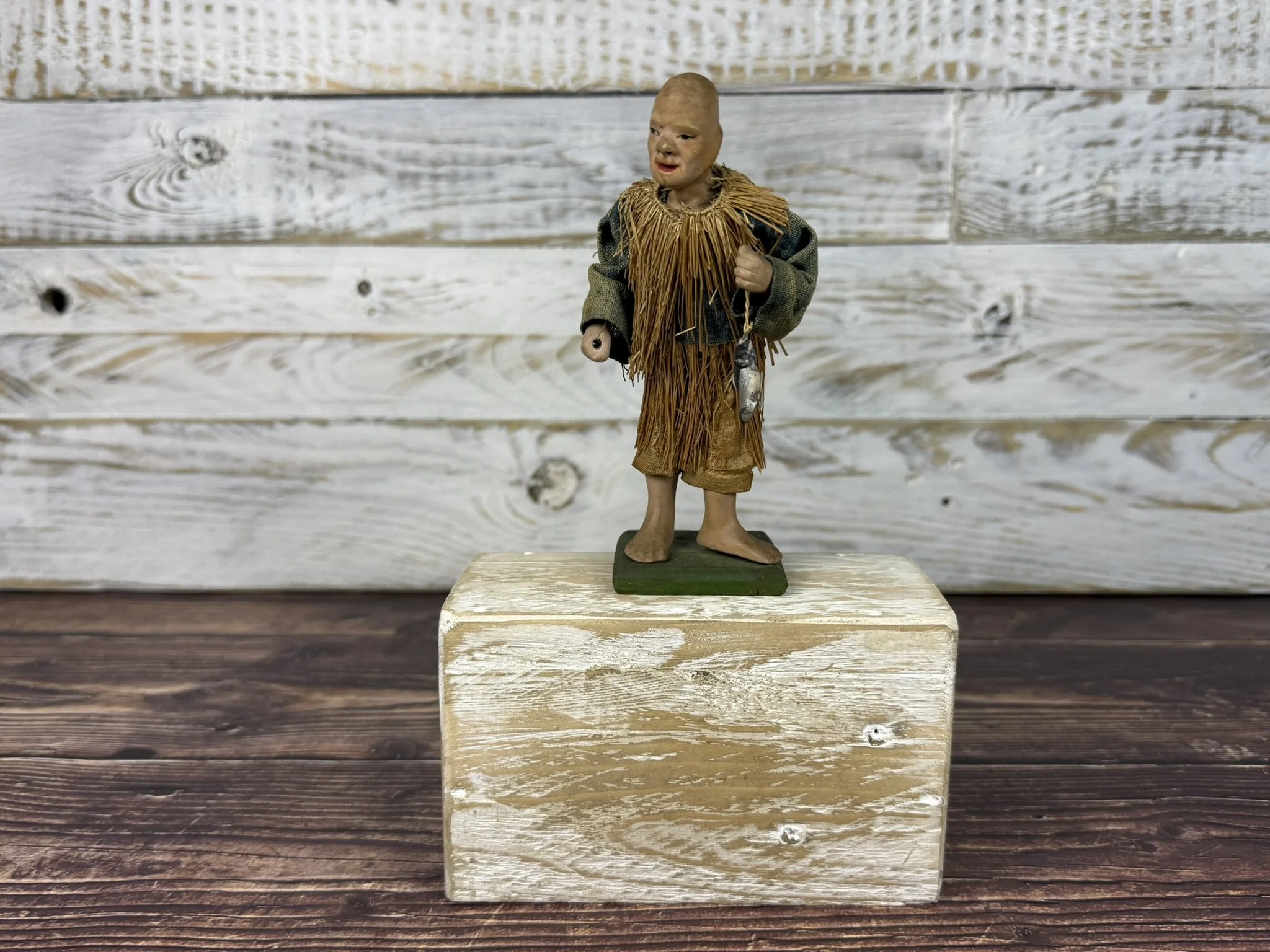
A small (14 cm height) figurine of a Chinese fisherman holding a small fish. Head, hands and feet are made from clay and the body is clothed in delicate fabrics and grass clothing. Thought to be made in the 1890s, he has a charming face, even if his clothes are showing their age and are a little threadbare in places.
A lovely addition to any collection featuring little people from around the world.